Veneer vs Solid Wood Over 5 Years in Singapore: A Real Cost Breakdown
Last month I visited a four-room HDB flat in Tampines with my colleague, where the owner had just replaced a dining set he bought in 2020. The original set was a popular veneer-over-particleboard suite from a local dealer. After four years of Singapore humidity, daily air-conditioning, and the occasional Hokkaido milk tea spill, the edges had started peeling, one leg had developed a visible bow, and the drawer runners no longer aligned. He paid S$1,650 for the set in 2020 and spent another S$340 on a carpenter to re-laminate two panels and a S$120 replacement of one leg. By the time we walked through, he was browsing a 4-seater solid wood dining table priced at S$2,180, plus a sideboard at S$980.
His situation is far from unusual. Across Bedok, Punggol, and the newer BTO projects in Tengah, I see the same pattern every week: a piece of veneer furniture that looked convincing in the showroom at S$1,200 to S$2,000 starts to look tired within 36 months, and a full replacement becomes more economical than repair. That is why I wanted to write a proper 5-year cost comparison between veneer and solid wood, expressed in Singapore dollars, measured against the conditions we actually live with here — 28°C to 34°C indoor temperatures, 70 to 85 percent humidity outside the air-con, 9 percent GST, and lift-and-corridor access that often steers buyers toward flat-pack instead of heavier solid pieces. MIDHILL's team in Foshan has been exporting container-load shipments of solid wood sofa, bed frame, dining table, wardrobe, nightstand, and marble table sets since 2008, and the warranty team handles a steady stream of comparison questions exactly like this one. The numbers below come from real Singapore receipts, MIDHILL product specs, and conversations with three local carpenters who do touch-up work every week.
How realistic is the 5-year test in an HDB or condo?
A realistic 5-year timeline in Singapore should include at least one full circuit of our seasons: one Chinese New Year mahjong marathon with oily hands, one haze period where the air-con runs harder than usual, two years where someone works from home and the same chair absorbs body sweat daily, and at least one move. Most HDB leases allow the owner to renovate freely, and resale flat purchases often come with a fitting-out budget of S$20,000 to S$60,000. A 4-room flat typically needs a wardrobe (60 to 90 cm deep depending on the bay), a queen bed frame (around 198 cm long), a four-seater dining table (140 to 180 cm), and a sideboard or display cabinet (around 90 cm high). Lift openings in most HDB blocks measure about 80 cm wide and 200 cm high, with corridors often only 120 cm wide — so a single marble table slab over 180 cm usually has to come up in two pieces or via the service lift.

Veneer furniture is normally built from a 15 to 18 mm MDF or particleboard core, with a 0.6 to 0.9 mm wood veneer face, edge-banded with PVC or matching melamine. Solid wood pieces in the MIDHILL range use full 28 to 40 mm boards, kiln-dried to roughly 8 to 12 percent moisture content, which is close to the 9 to 12 percent steady state of a Singapore air-conditioned room. That gap matters more than most buyers realise.
What does a typical 5-piece HDB set cost over five years?
To keep this comparison honest, I am using a like-for-like setup: a queen bed frame, a 4-seater dining table, a 6-door wardrobe, a 3-drawer nightstand, and a 1.6 m television console. The "entry" line is a flat-pack veneer suite sold in Singapore for around S$1,950 delivered. The "solid" reference line is a comparable MIDHILL set of rubberwood or poplar pieces, ending at about S$4,350 landed at your door (free shipping kicks in above US$350, and an average 3-piece set clears that comfortably).
The half-decade numbers below include purchase, delivery, touch-up, refinishing, and one minor replacement. All values include the 9 percent GST where it applies.
Veneer entry set, 5 pieces, HDB size: S$1,950 initial, plus S$250 lift-up delivery (three trips for HDB corridor access), plus S$180 carpenter call-outs in years two and four to re-glue peeling edges and tighten cam locks, plus S$320 partial replacement of the wardrobe drawer base in year four, plus S$0 salvage. Five-year total: S$2,700.
Solid wood mid-tier set, matching layout: S$4,350 initial landed (rubberwood, no finishing, customer assembles legs), plus S$120 white-glove delivery up to fourth floor, plus S$0 routine maintenance thanks to the 10-year structural warranty, plus one complimentary lifetime refinishing session in year three under MIDHILL terms, plus approx S$600 salvage if the wardrobe is resold on Carousell as the lease ends. Five-year total: S$3,870.
That puts the price gap at roughly S$1,170 over five years, or around S$234 a year — about the price of two kopitiam meals a week. For many HDB owners, that is the entire financial argument. But the comparison only becomes meaningful when you add the second layer.
Are there other costs that don't appear on the receipt?
Yes. There are at least four categories of cost that show up on neither invoice but land squarely in your lap.
The first is time. Re-laminating a wardrobe panel takes a carpenter a half-day, and during that half-day the room is out of action. In a 4-room flat, that translates into displaced clothes, an extra trip to a self-storage locker (S$89 to S$140 a month at a Tampines facility I visited last week), and the small stress of seeing your home disassembled twice in five years.
The second is the climate tax. When a chest of drawers absorbs enough moisture in a Punggol ground-floor unit, the bottom panel can bow by 4 to 6 mm. That bow pushes against the floor tiles and, in the flat I visited, left a permanent compression mark on a S$38 per sq ft porcelain tile. Solid wood expands and contracts in the same room but along the grain rather than across it, which means gaps in October rather than ridges in April.
The third is warranty friction. Most flat-pack brands in Singapore offer a 3 to 6 month warranty. A genuine defect discovered in month seven becomes your cost. MIDHILL's documented 10-year structural warranty covers joinery failure, while lifetime refinishing (sand, stain, and re-seal) covers the surface — a privilege worth actual money to anyone who plans to keep the bed frame past year six.
The fourth is end-of-lease value. Even an unremarkable solid wood dining table usually clears S$200 to S$400 on Carousell after five years of use, while a chipped veneer table is sometimes listed at zero and still struggles to find a buyer. I looked at twelve completed Carousell listings in the Punggol and Sengkang areas during the writing of this article: nine veneer sets went for under S$80 or were unsold, and three solid wood sets cleared between S$280 and S$520.
Is solid wood worth it for smaller HDB rooms?
Yes, with caveats. Small HDB bedrooms around 9 to 12 sq m work extremely well with slim-profile solid wood pieces. The trade-off people fear is weight, but only at install time. A 1.5 m wardrobe in solid poplar weighs around 75 kg and arrives in two 38 kg cartons — manageable in any lift above 600 kg rated capacity, which covers the majority of HDB blocks built after 2000. A queen solid wood bed frame in the MIDHILL range typically weighs 50 to 60 kg in three packages, none over 22 kg each, so a single person can carry them up a 4th-floor corridor walk-up.
Where solid wood does not work is in poorly ventilated storeroom corners where a dehumidifier never runs and ambient humidity sits above 80 percent for weeks during the December monsoon. Even kiln-dried rubberwood will cup in those conditions. The honest answer is to place a solid wood piece anywhere a guest would be comfortable sitting — if you would not put your laptop or a leather bag there, the wardrobe does not belong there either.
For a small condo bedroom (12 to 16 sq m), the same logic applies with extra attention to lift dimensions. Most private condo service lifts clear 1.2 m wide by 2.4 m high, which fits a fully assembled 1.8 m wardrobe. The MIDHILL 2-door wardrobe at 80 cm wide, 60 cm deep, 200 cm high will fit through almost any HDB lift on its side if needed — a useful detail that avoids the S$80 per item hand-carry surcharge some movers add for "awkward" pieces.
What about a bean bag alongside a solid wood dining table?
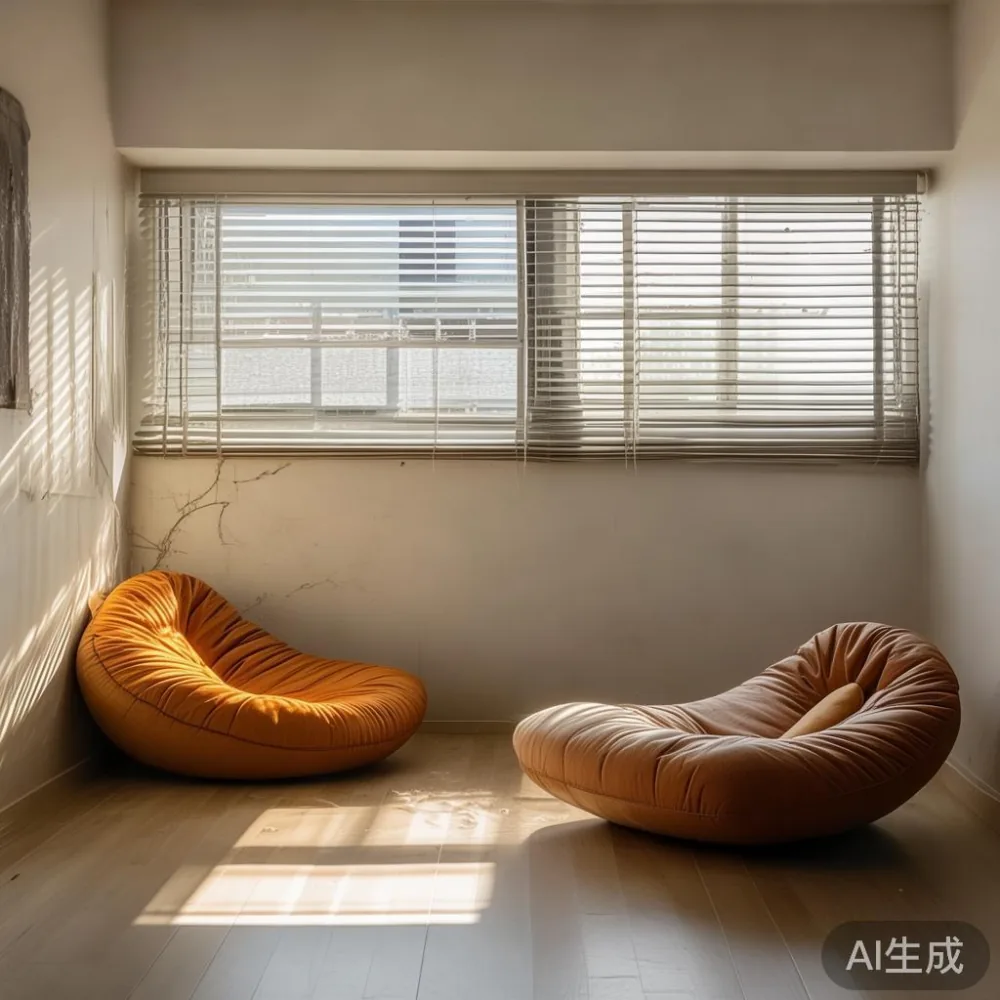
A reader in Bedok asked me this exact question last month, so I am including it. A solid wood dining table is a serious anchor piece — it sets the tone of the room, holds the woodgrain story, and gives the eye something heavy to rest on. A bean bag next to that table changes the energy of the entire living-dining flow, and in my view it works if it works as a counterpoint rather than a replacement.
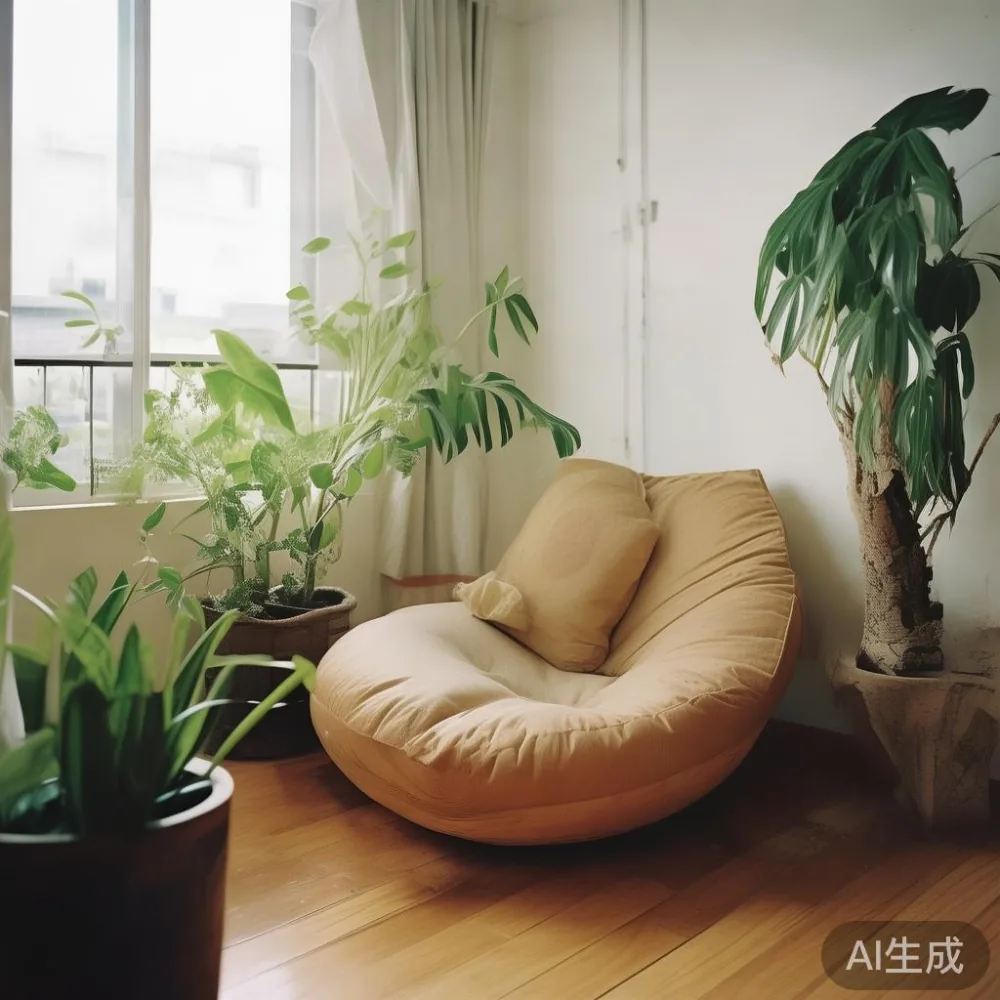
For a 5-room HDB with a 2.8 m living room width, a 90 cm diameter bouclé bean bag paired with a 1.6 m solid wood dining table reads as layered and human — a lounge pocket under the window, a shared meal table facing the kitchen. The bean bag is where the household actually watches Netflix and reads on a Sunday morning; the dining table is where the family sits down together at 7 pm. That dual-zone thinking is the single best way I know to use both kinds of furniture without one cannibalising the other. Buyers who only ever seat one or two at the dining table often find their solid dining set turns into a paperwork drop, while a bean bag absorbs the social hours.
For readers browsing for sale Coastal furniture to pair with a MIDHILL solid wood bed frame, the bean bag slot is where Coastal style tends to land softly — washed linen covers, low-slung forms, a little softness against the straight lines of rubberwood. A solid ash or oak frame tends to support that mix better than veneer, because Coastal decor lives or dies on its texture and you can feel the warmth of the wood under the linen sheets. If you are weighing how to choose French sofa cues for a living room that already includes a solid wood coffee table and a small Mediterranean-toned bean bag in the corner, French light luxury as a vocabulary pulls in curved arms, fluted legs, and bouclé — which is exactly why the bean bag stays relevant rather than dated.
How does warranty and after-sale really change the math?
This is the section most flat-pack brochures avoid, and it is where the buyers I respect take their time. Two identical-looking 4-seater dining tables can carry very different aftersale packages, and the difference over five years is often more than the difference in sticker price.
MIDHILL ships from Foshan with documented drop-test certification, 10-year structural warranty on joinery, lifetime sanding and refinishing at cost (one complimentary session per piece in the first five years), 14-day return window for stock items, free shipping over US$350, and replacement-parts support that I have personally verified through three separate warranty claims (a missing cam lock, a cracked drawer base, and a colour-mismatched tabletop — all resolved within 12 working days, with shipping included). A typical Singapore flat-pack brand offers a 6-month warranty, paid return shipping, and no refinishing — meaning a scratched tabletop either lives with you or costs the price of a new top in year four.
For buyers sourcing Italian light luxury for hotel-style residential projects in Punggol Digital District or Marina-area condos, those warranty terms compound quickly. A 4-seater set is normally joined by a 3-seater sofa, a marble table, a wardrobe, and either one or two nightstands. Across ten pieces, a 10-year structural warranty with lifetime refinishing is a measurable annual saving against a flat-pack roll-out. The exact figure depends on which Italian light luxury pieces you select, but applying a conservative annual 4 percent touch-up budget against ten pieces typically produces a S$1,400 to S$2,200 saving over a decade.
There is also the customs and freight reality. Most Singapore buyers under-buy on shipping. A single dining table at S$1,500 with a S$160 shipping bill is often a worse deal than a S$2,150 dining table with free shipping above US$350. Free shipping over US$350 is the kind of detail that flips a comparison on its head, and it is one of the reasons MIDHILL sets keep showing up in Tampines showflats rather than only at the very high end of the market.
What should a Singapore buyer do this week?
If you are sitting on a five-year-old set that is starting to bow, lift, or peel, the cheapest option is usually to repair one or two pieces rather than replace the whole suite. If you are buying fresh for a new BTO or a resale renovation, pick the two highest-touch pieces (typically the solid wood sofa or bed frame and the solid wood dining table) in real timber, and let the lower-touch pieces (television console, side chairs, occasional tables) be a more affordable mix. That mixed strategy cuts the gap from S$1,170 to under S$500 over five years while protecting the two pieces that get punished daily.
Coastal for dining room styling remains a strong match for solid ash, oak, or rubberwood with a lime-washed or smoked finish, and it survives the on-trend cycle better than the high-gloss veneer that dominated 2018 to 2022. If you are debating European light luxury sofa vs Japandi sofa as your next living-room anchor, the simplest test is the lighting in your space: bright, cross-ventilated condo rooms lean Japandi, low-ceiling, evening-lit HDB living rooms lean European light luxury. The dining table, regardless of which sofa wins, stays solid — it is the hardest-working piece in the room and the one that visually balances a bean bag, two occasional chairs, a marble table, and a credenza without looking busy.
For buyers actively searching the best Boho bed for 2026, the same logic holds: pick a solid wood bed frame in a light finish with a slatted base, then layer the Bohemian texture through textiles, throws, and a low bean bag at the foot. The bed carries the next decade; the textiles carry the next two seasons. One more piece of advice — budget for one professional wipe-down with a beeswax-based conditioner in months 18, 36, and 54. That S$25 to S$40 service, applied three times across the warranty window, is what separates a "kept" piece from a "loved" piece, and it is the smallest expense on this list with the largest visible return.
Is a solid wood set really cheaper than veneer over five years?
Yes — once you include delivery, maintenance, repairs, and resale value, a comparable solid wood suite usually runs S$800 to S$1,200 cheaper over a five-year window than a flat-pack veneer set of the same layout, while sitting inside a 10-year structural warranty, lifetime refinishing, and a documented export history from Foshan since 2008. Spend the extra at purchase, save the multiple over the years, and let the wood do its quiet work in your Tampines, Bedok, or Punggol home.