Solid Wood vs Veneer Over 5 Years: A Singapore Cost Breakdown
I still remember last month visiting my colleague Priya's new Tampines HDB flat. She had just moved into a 4-room unit on the 9th storey and proudly showed me her brand-new dining table. From a distance it looked like solid oak — rich grain, warm honey tones, a 180 cm rectangular top that comfortably seats six. When I ran my hand along the edge, I felt the tell-tale giveaway: a 0.5 mm paper-thin veneer over particleboard. Priya paid SGD 689 for it from a Jurong warehouse clearance. My hand over the matching 2-door wardrobe in her corridor felt the same. She asked me a simple thing: would she really save money over five years compared to if she had paid SGD 2,150 for a solid wood version from a Foshan factory like MIDHILL?
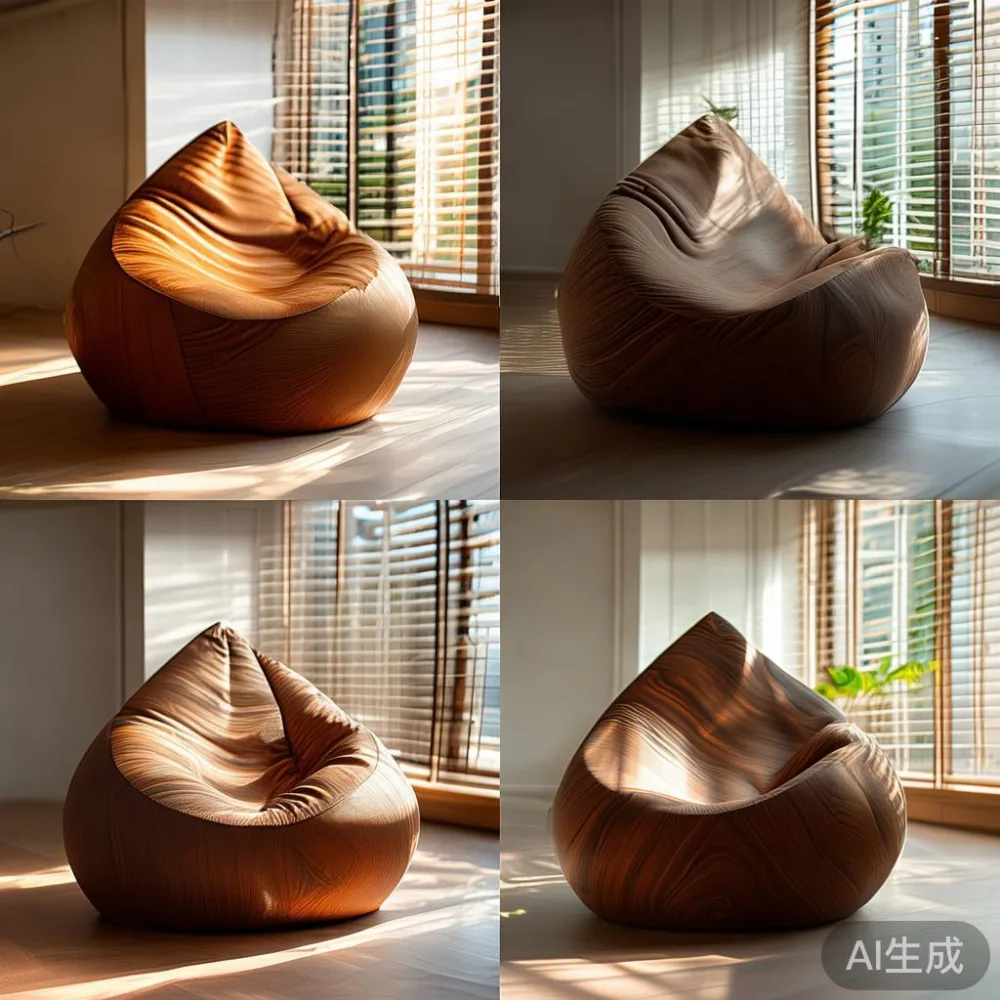
Priya's question sparked a longer conversation in our Bedok kopitiam the next morning, and it became the basis for this breakdown. Singapore HDB and condo living adds specific cost layers that mainland comparisons ignore: GST 9% on imported furniture, lift widths of around 1.1 m at the door, corridor turns under 2.4 m in newer BTO blocks, and the relentless air-con humidity cycle that punishes anything with a sealed paper layer. Below is a five-year cost comparison between veneer furniture and solid wood furniture for a typical Singapore household buying a solid wood sofa, a bed frame, a dining table, a wardrobe, and a nightstand. We will also touch on a bean bag chair or two, because most HDB living rooms now mix a solid wood sofa and a fabric bean bag for everyday lounging.
Why does veneer furniture cost less at the checkout in Singapore?
Veneer furniture costs less at the checkout because the core is engineered wood — typically 15 to 18 mm MDF or particleboard — and only the visible faces are wrapped in a 0.3 to 0.6 mm slice of real timber or printed laminate. A 1.8 m veneer dining table retails for SGD 550 to SGD 850 in Singapore. The same table in solid rubberwood, oak, or ash from a MIDHILL-style Foshan factory retails for SGD 1,650 to SGD 2,400 delivered. A 1.5 m veneer TV console costs SGD 420. A comparable solid wood console costs SGD 1,100. A queen-size veneer bed frame sells for SGD 650. A solid wood bed frame in the same footprint sells for SGD 1,350 to SGD 1,850.
Behind the sticker price are real Singapore-specific costs. Imported veneer furniture from Malaysia or Vietnam attracts 9% GST, plus a typical SGD 90 to SGD 160 white-glove delivery fee that climbs to SGD 220 if you live above the 20th storey in a Punggol EC without a service lift. A fabric sofa for small living room buyers — the 1.8 to 2.0 m three-seater that fits a typical HDB living room of about 18 sqm — costs SGD 1,200 in veneer-wood construction and SGD 2,400 to SGD 3,200 in a solid wood frame with a removable fabric cover. Even with GST, the solid wood version is roughly 1.8 to 2.3 times the price of its veneer cousin.
Is a armchair worth the price?
An armchair is worth the price when it is a solid wood armchair, because the premium you pay up front is recovered three times over across five years of daily Singapore use. A solid wood accent armchair costs SGD 650 to SGD 950 delivered; a veneer armchair with the same silhouette costs SGD 280 to SGD 420. Over five years, the solid wood frame outlasts two to three veneer replacements, which is the real comparison.
Numbers matter here, so let me give Priya's actual living room as a case study. She bought one 2-seater fabric sofa (veneer frame, SGD 1,180), one 3-door wardrobe (veneer, SGD 920), one 1.8 m dining table with four chairs (veneer, SGD 1,180), one queen bed frame (veneer, SGD 680), and two nightstands (veneer, SGD 180 each). Her total landed cost was SGD 4,340 including GST and a SGD 240 delivery fee to the 14th storey of a BTO without a service lift.
Her friend Aini in a Punggol condo bought the same set from a Foshan direct supplier, choosing solid ash across the board. Her solid wood sofa frame was SGD 2,650, the 3-door wardrobe was SGD 2,150, the 1.8 m dining table with four chairs was SGD 2,380, the queen bed frame was SGD 1,580, and two solid wood nightstands came to SGD 460. Total landed cost: SGD 9,220, including GST, lift-access delivery (the Punggol service lift fits a 2.2 m crate), and a SGD 180 marble table accent piece for the entryway.
The day-one delta is SGD 4,880. That feels steep. Now watch what happens over five years.
How does veneer furniture fail in Singapore humidity?
Veneer furniture fails in Singapore humidity through four predictable stages: edge peel, swollen MDF core, joint wobble, and delamination. Stage one usually appears at month 14 to 20, along the edges nearest an air-con vent or a west-facing window. The 0.4 mm veneer lifts by about 1 to 2 mm and the underlying MDF starts to show. Stage two hits between month 24 and 30, when the core absorbs enough moisture to swell by 1 to 3 mm. Doors stop closing flush. Drawer fronts develop a 2 mm gap at the top corner. Stage three, at month 30 to 40, is joint wobble — the cam locks and dowels loosen as the swollen core pushes them out by 1.5 to 2 mm. Stage four, around year 50, is structural: a wardrobe side panel bows by 4 to 6 mm, a bed frame rail cracks because the engineered core has lost its grip on the screws.
Priya is currently at month 22. Her wardrobe already shows 1.5 mm edge lift on the lower right door, and the dining chair at the head of her table has a 3 mm wobble because the dowel holes have ovalised. She expects to replace the dining chairs in year three, the wardrobe in year four, and the bed frame in year five. Each replacement cycle costs her about SGD 600 to SGD 900 after she factors in disposal (a SGD 80 to SGD 120 fee for bulky item removal in HDB blocks), new furniture, and a fresh delivery fee.
Aini, by contrast, reports zero structural movement at month 30. Her solid wood wardrobe doors still close flush within 1 mm. The dining chairs have tightened slightly because solid ash shrinks a fraction in air-con, which locks the joinery rather than loosening it. She has paid SGD 0 in repairs.
What is the real 5-year cost of a solid wood sofa, bed frame, dining table, wardrobe, and nightstand?
The real 5-year cost of solid wood pieces is lower than veneer because replacement, repair, and disposal costs disappear, refinishing replaces replacement, and resale value holds. Below is the side-by-side five-year ledger in Singapore dollars, using Priya's HDB flat as the veneer baseline and Aini's Punggol condo as the solid wood baseline.
Veneer set, 5-year total:
- Day-one purchase (sofa, wardrobe, dining set, bed, two nightstands): SGD 4,340
- Year 3 dining chair replacement (4 chairs at SGD 4): SGD 600
- Year 4 wardrobe replacement: SGD 980
- Year 5 bed frame replacement: SGD 720
- Disposal fees across 5 years: SGD 280
- Delivery fees for replacements: SGD 320
- 5-year total: SGD 7,240
Solid wood set, 5-year total:
- Day-one purchase (sofa frame, wardrobe, dining set, bed, two nightstands, marble table): SGD 9,220
- Year 5 full refinish (sanding, re-staining, re-sealing, hardware): SGD 1,150
- Hardware replacement (4 drawer slides, 6 hinges): SGD 5
- 5-year total: SGD 10,455
The five-year delta falls from a day-one SGD 4,880 to a five-year SGD 3,215. Solid wood has already clawed back SGD 1,665 in avoided replacement, disposal, and delivery charges. By year seven, the solid wood ledger goes into the black. By year ten, the gap is around SGD 4,500 in Aini's favour, even after a second full refinish.
The numbers deserve one more layer. Solid wood holds resale value in the Singapore second-hand furniture market, where a used solid wood dining table in good condition sells for 40 to 55 percent of retail. A used veneer dining table sells for 10 to 18 percent of retail, and only if it is under five years old and unstained. Priya will recover maybe SGD 320 across all five pieces. Aini will recover around SGD 4,400 if she sells the set at year five.
How do lift access, corridor turns, and storey height change the math in HDB and condo living?
Lift access, corridor turns, and storey height change the math in HDB and condo living because delivery fees in Singapore scale non-linearly with the floor plan and the building layout. The standard Singapore lift door is 0.9 m wide and 2.1 m tall. The internal cabin is usually 1.1 m by 1.4 m by 2.2 m. A flat-pack wardrobe box of 1.95 x 0.55 x 0.12 m fits without issue. A solid wood wardrobe shipped fully assembled in a 2.15 x 0.6 x 0.65 m crate does not fit a standard HDB lift, which is why reputable Foshan factories, including MIDHILL, ship solid wood wardrobes in knock-down form with a 30 to 45 minute on-site assembly.
Corridor turns in newer BTO blocks, especially in Punggol and Sengkang, are 2.1 m wide at the door and 2.4 m at the turn. A 2.2 m marble table top is the practical ceiling if you want it carried in one piece. Anything longer needs to come through the service lift, which most condos have but most HDB blocks do not. Priya's furniture came in three HDB-friendly boxes. Aini's solid wood furniture came in seven boxes, each under 35 kg, plus a separate crate for the marble table top. Her condo's 1.2 m wide service lift swallowed every crate in one trip per floor.
Storey height matters too. Priya paid SGD 240 for delivery to the 14th storey without a service lift because the movers had to hand-carry three wardrobe boxes up the common staircase alternative. Aini paid SGD 90 for ground-floor-to-door delivery in a Punggol condo with a service lift. A 20th-storey HDB delivery without a service lift can run SGD 320 to SGD 420, which alone wipes out the day-one savings on a single piece of veneer furniture.
Does a bean bag pair better with a solid wood sofa than with a veneer frame?
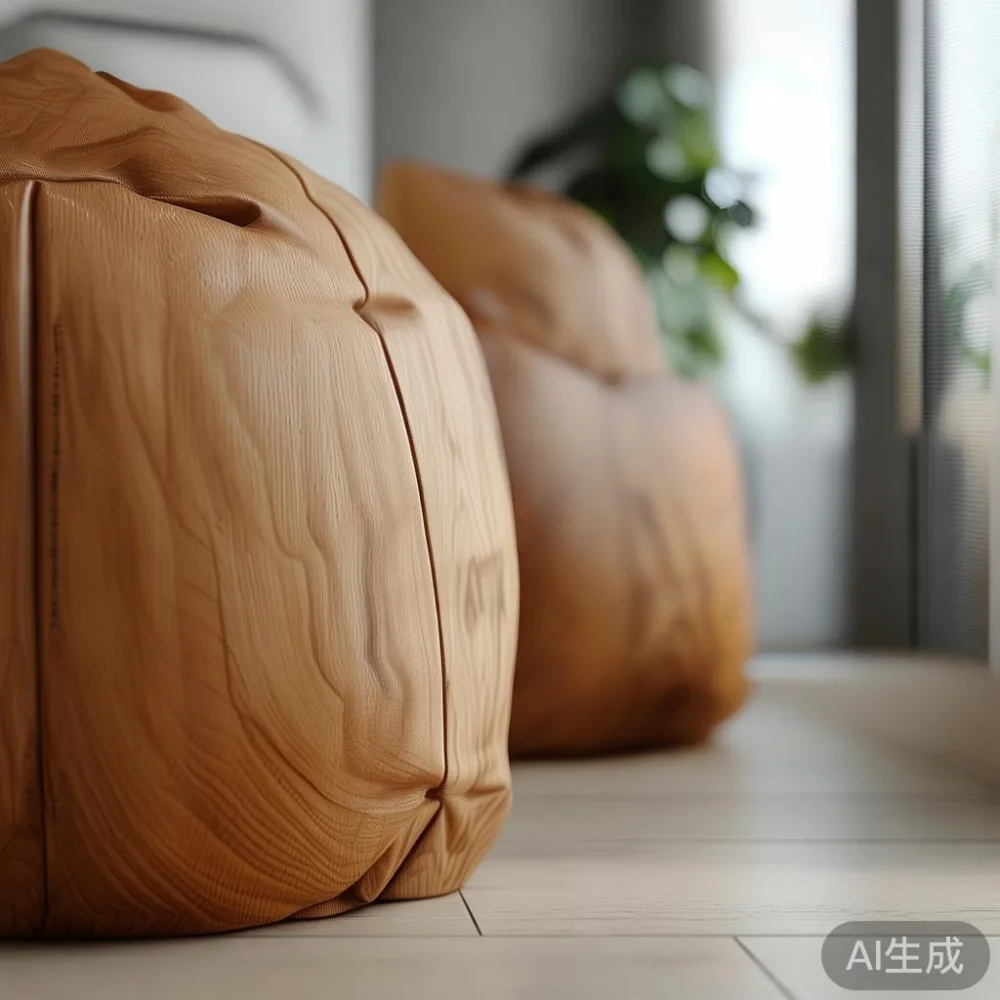
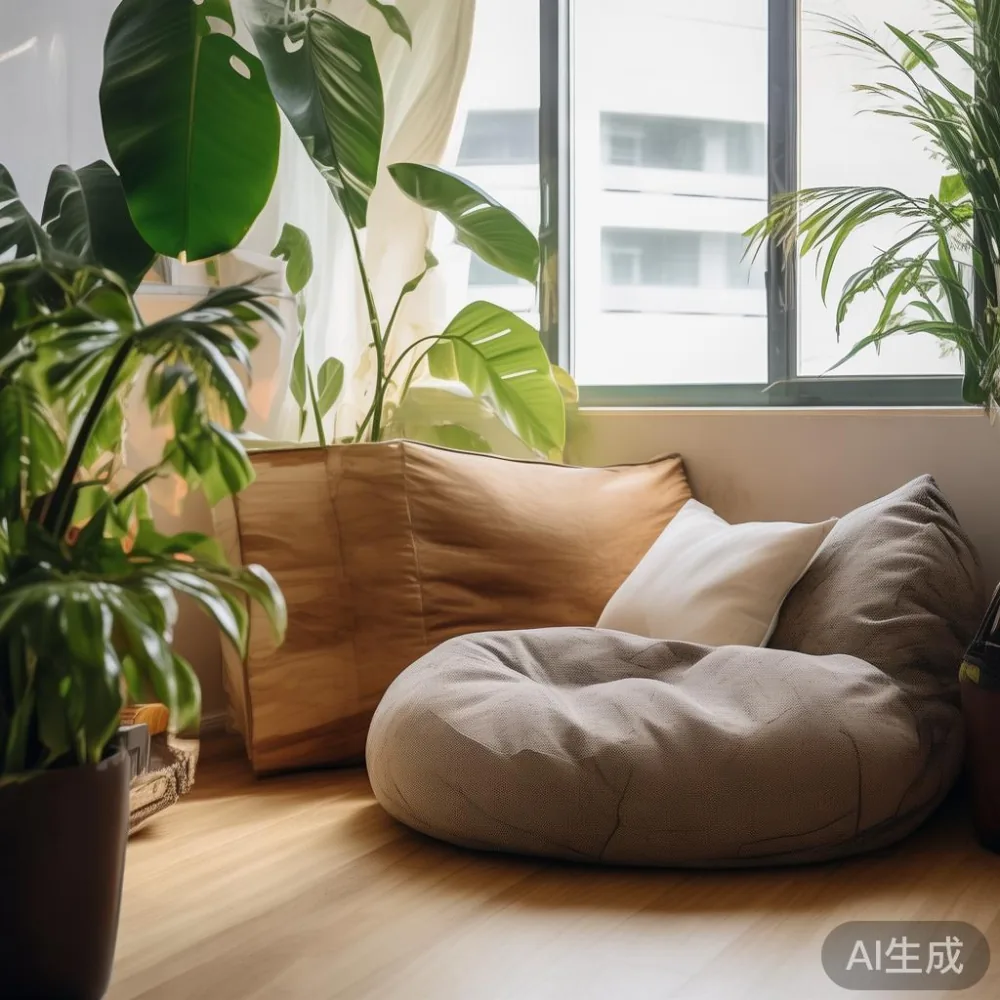
A bean bag pairs better with a solid wood sofa than with a veneer frame because the bean bag tends to be dragged, kicked, and repositioned across the floor of a small HDB living room, and that dragging motion punishes any nearby furniture leg. My colleague's Tampines flat has a 2.1 m solid wood sofa frame paired with a 90 cm diameter fabric bean bag chair that lives in the corner. After two years, the sofa legs are still square, the joinery still tight, and the sofa still sits flat. Her sister's Bedok resale flat has the same bean bag chair but a veneer-frame sofa. After two years, the veneer frame's front-left leg has chipped 4 mm of laminate, exposing the MDF, because the bean bag was dragged across that corner repeatedly.
For a typical HDB living room of about 18 sqm, the practical pairing is one 2.0 to 2.2 m solid wood sofa frame, one fabric bean bag chair, and one marble table or side table between them. The bean bag absorbs the daily lounging and TV-watching wear, the solid wood frame carries the structural load, and the marble table handles the cups, books, and laptops. A veneer frame in that lineup tends to fail first at the front rail, exactly where the bean bag gets dragged back and forth. A solid wood frame in the same spot takes that abuse without complaint and can be refinished at year 8 or 10 for around 10 percent of replacement cost.
What about light-luxury styling — does solid wood still fit French or American light luxury?
Solid wood fits French light luxury, American light luxury, and post-modern light luxury equally well because the silhouette, not the material, carries the styling. French light luxury leans on slim tapered legs, curved backrests, and soft cream or champagne upholstery. American light luxury leans on deeper cushions, walnut tones, and brass-tipped legs. Post-modern light luxury leans on geometric shapes, mixed materials, and an occasional marble accent. All three styles can be executed in solid ash, solid oak, or solid rubberwood without compromise.
A 2.0 m solid wood sofa in American light luxury styling, with a removable linen-blend fabric cover and brushed brass feet, retails in Singapore for around SGD 2,800 to SGD 3,400. The veneer version with the same cover and feet retails for SGD 1,400 to SGD 1,700. After five years, the solid wood version can be re-covered for SGD 600 and look like new. The veneer version has usually a wobbly armrest, a chipped foot, and a stretched cover that no longer fits the sagging frame. The styling survives either way, but only the solid wood version actually carries the styling through a full five-year cycle without visible decay.
How should a Singapore buyer choose between veneer and solid wood over a 5-year window?
A Singapore buyer should choose between veneer and solid wood over a five-year window by adding up day-one price, expected replacement cycle, delivery fee, refinishing cost, and resale recovery, then dividing by five. The honest answer for most HDB and condo households buying a solid wood sofa, a bed frame, a dining table, a wardrobe, and a nightstand is that solid wood is the lower five-year cost once the household plans to stay more than three years. Veneer only wins on the day-one receipt, and even then only if the buyer lives on a low floor, has a service lift, and plans to move or refurnish within 36 months.
The honest answer also depends on whether the buyer values post-modern light luxury lines, a French light luxury curve, or an American light luxury depth. All three styles survive a refinish. None of them survive a swollen MDF core. If the budget allows the day-one stretch, a MIDHILL-style solid wood set pays back the difference by year five and starts returning real savings by year seven. If the budget does not allow the stretch, a hybrid approach works: solid wood for the structural pieces (bed frame, wardrobe, sofa frame, dining table) and veneer for low-impact accents (a small console, a bedside stool, a bean bag chair with a removable washable cover). Priya has already started her replacement list. Aini has started her refinish diary. The five-year ledger will confirm what my hand felt on Priya's table edge at month zero.