What Really Drives the Price of Solid Wood Furniture in Singapore
I still remember the first time I dragged a solid wood dining table up to a fourth-floor HDB walk-up in Bedok. The lift opening measured roughly 1.1 m wide by 2.1 m deep, the table was 180 cm long, and the only way in was a tilted carry through the corridor. That was the day I stopped thinking about solid wood furniture in terms of colour or grain, and started thinking about kg, cm, and joint construction. Last month I visited a supplier showroom in Foshan with a colleague who was sourcing a dining table for her Punggol condo, and we spent three hours arguing about whether a S$1,800 oak table and a S$4,200 walnut table were actually different where it mattered. They were. Here is what I learned, and what every Tampines or Bedok buyer should know before paying a single dollar for a solid wood sofa frame, bed frame, dining table, wardrobe, or nightstand.
What Actually Goes Into the Price of a Solid Wood Piece?
Five things move the number, and they are not the five things most brochures mention. Strip away the marketing and the price comes down to wood species, board thickness, joinery, finish, and logistics. A pine bed frame in a flat-pack box might retail for S$900 in Singapore. A Burmese teak dining table in the same footprint will retail for S$6,500 or more. The visible material looks similar in photos, but the underlying cost drivers sit kilometres apart.
The first driver is the wood itself. Solid hardwoods are sold by the cubic metre, and the price gap between grades is enormous. In the Foshan export market I checked in October, FAS-grade white oak ran roughly RMB 9,800 per cubic metre, while common-grade oak ran about RMB 5,200. Walnut was around RMB 13,500, and Burmese teak topped RMB 22,000. Multiply that by the actual board feet in a single dining table and you already have a S$600–S$1,400 material swing before a single screw or hour of labour is added.
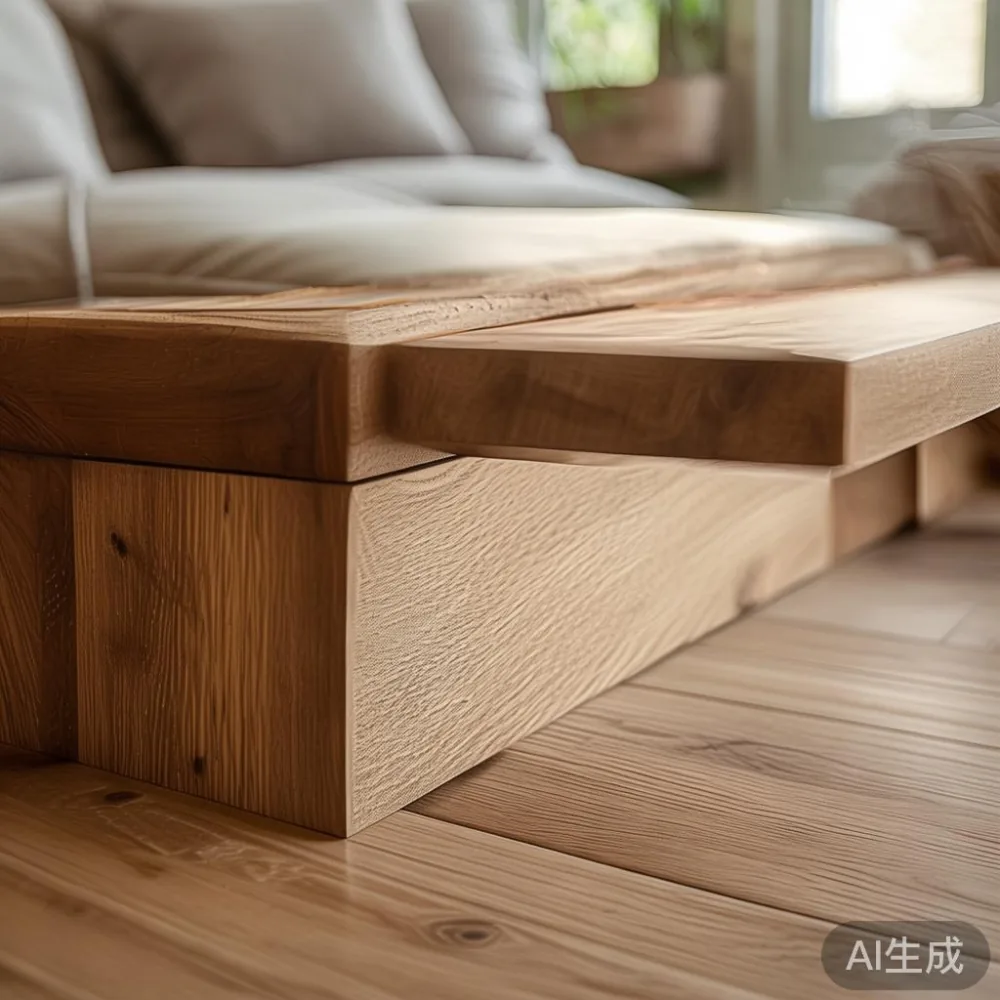
The second driver is board thickness and how the wood is cut. A dining table top made from 4 cm thick quartersawn boards behaves completely differently from one built around a 2 cm core with a 6 mm veneer skin. The thicker solid board resists warping through Singapore's 80–90% humidity months in a way that no engineered alternative can match, and the labour cost of glue-laminating, planing, and sanding those boards is roughly three times higher per square metre.
Why Does Joinery Matter More Than Wood Species for Long-Term Durability?
Because the joint is where a piece either survives the next ten years or falls apart in the next ten months. I watched a workshop floor in October where two identical-looking dining tables were being assembled. One used pocket-hole screws and a metal bracket at the apron. The other used mortise-and-tenon joinery, glued and draw-bored. The screw version took 18 minutes. The mortise-and-tenon version took 95 minutes. The retail price difference between them, on the showroom floor in Singapore, sat at about S$1,100.

For a bed frame, the same principle applies. A standard queen bed needs to hold around 180 kg of dynamic load (two adults plus movement). A bed frame held together with confirmat screws and corner brackets will squeak within three to five years. A bed frame with through-tenons at the side rails, hardwood corner braces, and a centre support beam at 6 cm thick will go silent for 15 to 20 years. This is exactly the kind of detail that explains why some Punggol families replace their bed frame twice in a decade while others never touch it.
Drawers tell the same story. A wardrobe drawer with a stapled fibreboard back and metal runners is a S$40 drawer to build. The same drawer with solid 1.6 cm thick sides, dovetail joinery on the front, and full-extension soft-close runners is a S$140 drawer. Over a three-door wardrobe with six drawers, that is a S$600 jump before the wardrobe carcass is even counted.
What is the Difference Between European Armchair and Modern Furniture?
The difference is mainly structural and stylistic: a traditional European armchair uses a hardwood frame, hand-tied webbing or sinuous springs, and natural fillings such as coir, horsehair, or down, while a modern furniture frame often relies on engineered panels, foam-only cushions, and lighter joinery to hit lower price points. Now that we have a clean answer, let us apply it to a piece you might actually buy in Singapore this weekend.
Take a solid wood sofa. A light-luxury solid wood sofa in the post-modern light luxury style tends to combine a kiln-dried hardwood frame (often ash or oak at 4–5 cm thickness), eight-way hand-tied springs or high-resilience foam at 32 kg/m³, and a linen-cotton blend cover. The frame alone, built to that spec, accounts for roughly 45% of the unit cost. Compare that with a fast-shipment sofa using rubberwood, plywood panels, and foam at 22 kg/m³. Both look acceptable on a Tampines HDB sofa on day one. By year three, the cushion rebound and the frame rigidity tell two completely different stories.
How Much Should a Marble Table or Solid Wood Dining Table Cost in Singapore?
For a six-seater solid wood dining table in oak or ash, with a top thickness of 3.5–4 cm, mortise-and-tenon joinery, and a hand-applied oil or matte lacquer finish, the realistic Singapore retail range sits between S$2,400 and S$4,800. Anything below S$1,800 is almost certainly using a veneer top, a thinner core, or a softer secondary wood like rubberwood or acacia. Anything above S$6,000 should come with verifiable FSC or PEFC certification, kiln-drying records, and a structural warranty measured in years, not months.
For a marble table, the pricing logic shifts. You are paying for the slab, the edge profile, and the base. A 140 cm round marble table with a 2 cm honed sintered stone or natural marble top on a solid wood or stainless base typically lands between S$1,900 and S$3,800 in Singapore showrooms. The slab weight alone is 60–90 kg, which matters when your HDB lift limit is around 300 kg and your corridor turn has a 1.6 m radius. A solid wood dining table in the same size class weighs 45–70 kg, so the delivery logistics are a touch friendlier for older blocks in Bedok and Marine Parade.
Do not forget to budget for the optional extras. A kiln-dried hardwood top adds roughly S$350–S$600 over standard construction. Soft-close table extensions add about S$280 per mechanism. A hand-finished French light luxury patina, where the wood is stained, sealed with shellac, and topped with a wax or matte lacquer, adds around S$450 over a standard spray finish. These numbers stack up quickly, which is why two visually identical tables can sit S$1,800 apart on the same showroom floor.
How Does Singapore Logistics Change the Final Price?
More than most buyers expect. A 2.4 m tall wardrobe will not fit through a standard HDB door frame, which is about 0.9 m wide by 2.1 m tall, unless it ships flat-packed and is assembled in the bedroom. Wardrobes that arrive fully assembled need to be tilted, and any wardrobe over 90 kg risks damaging the lift door bumper on entry. Responsible sellers price this in: the S$180–S$350 delivery fee you see on a Foshan-origin order covers two delivery specialists, lift protection blankets, on-site assembly, and debris removal.
Free shipping thresholds matter here. A local Singapore warehouse cut-off of S$350 sounds tiny next to a S$2,400 dining table, but it makes a real difference on a S$420 nightstand or a S$680 solid wood side table ordered separately. I have ordered a single nightstand to a Punggol Waterway address and watched the driver carry it up three flights because the building's service lift was reserved. That is the kind of small operational cost that quietly shows up in the retail price of every piece you buy.
GST is the final layer. At 9% on imported furniture, a S$3,000 dining table carries S$270 of GST, plus a customs duty that varies by wood species and whether the piece is flat-packed or fully assembled. Showrooms that absorb the duty and bundle the GST into a single landed figure are easier to budget against, even if the headline price looks slightly higher.
How Can You Tell If You Are Paying for Quality or Just for Branding?
Ask three questions, and demand three answers. First, what is the actual moisture content of the wood, and how was it kiln-dried? Quality makers target 6–10% moisture content for tropical markets like Singapore. Second, what is the joinery at the load-bearing points, and is it guaranteed for a measurable number of years? A 10-year structural warranty on frames is a strong signal; a one-year warranty is not. Third, what is the finishing system, and how many coats are applied? Hand-rubbed oil finishes with three to five coats take 40–60 hours of labour and will patina beautifully. Spray lacquer finishes take four hours and look perfect until they chip.
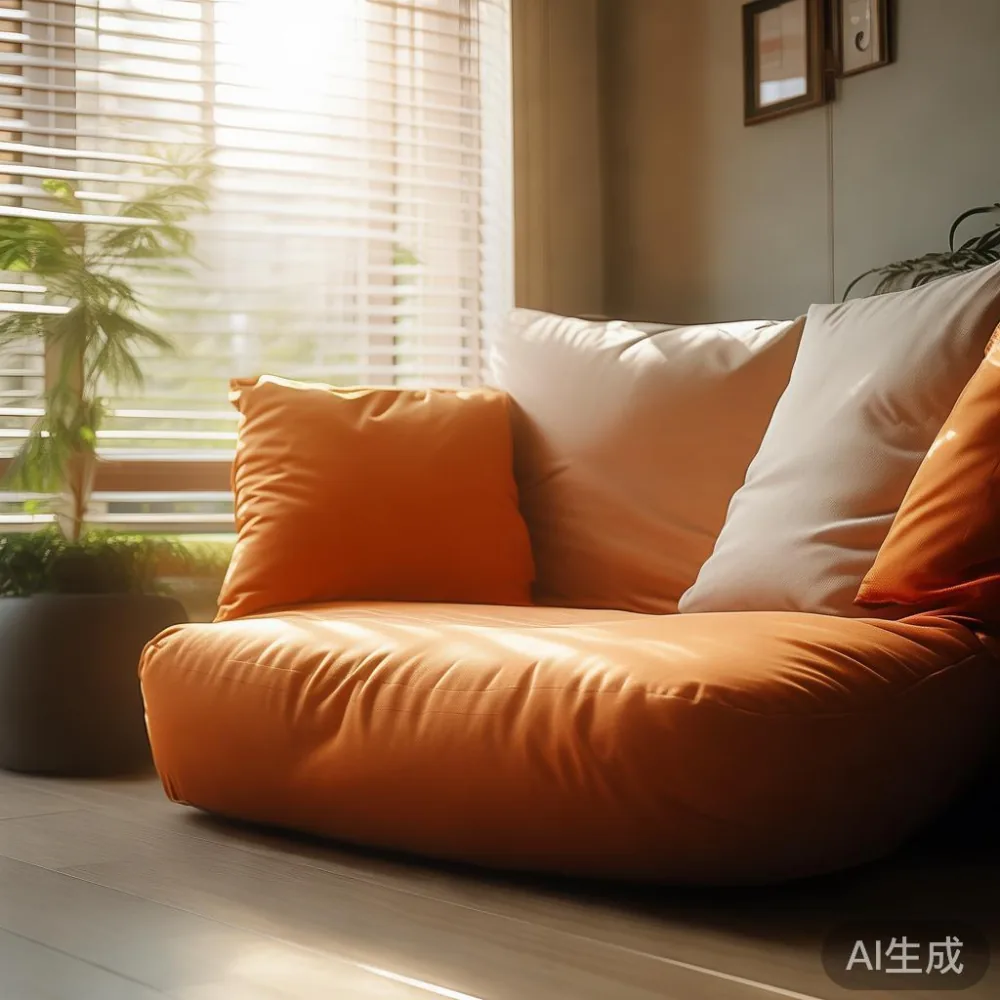
This is also where the bean-bag comparison becomes useful, and yes, we are still on topic. A bean-bag chair is the most forgiving piece of furniture you can buy because its shape comes from the filling, not the frame. A solid wood sofa or bed frame is the least forgiving, because every millimetre of frame geometry is on display every single day for the next 20 years. The bean-bag form absorbs poor construction; the solid wood form punishes it. So if you are willing to spend S$200 on a casual bean-bag for the kids' play area, that is one calculation. If you are willing to spend S$3,000 on a bed frame, that is a completely different calculation, and the price-to-quality ratio should be evaluated against the piece that will sit in your Tampines or Bedok home every morning for two decades.
One more reference point worth keeping in your back pocket. When sourcing for an American side table canada shipment last quarter, I watched a Foshan factory quote two SKUs that looked identical on the spec sheet: one at USD 220 FOB, one at USD 340 FOB. The cheaper one used 2.5 cm thick rubberwood with a single coat of NC lacquer. The pricier one used 4 cm thick ash with a hand-applied oil finish and through-tenon joinery on the apron. On the showroom floor in Mississauga, those same two side tables retailed at CAD 380 and CAD 640. The numbers scale, but the logic does not change.
Where Should Singapore Buyers Look for Honest Pricing?
Look for makers who publish the wood species, the moisture content range, the joinery type, and the warranty term on the product page itself, not buried in a downloadable PDF. MIDHILL, a Foshan solid wood furniture maker established in 2008 that exports to more than 15 countries, publishes those four numbers on every spec sheet I checked during the October visit. Their 10-year structural warranty and lifetime refinishing service are concrete commitments, not slogans, and the free-shipping threshold above US$350 (about S$480) actually applies to smaller pieces like a nightstand. For a Tampines family ordering a full suite, the landed price including 9% GST can usually be quoted within 48 hours because their Singapore consolidator is already set up.
If you want a quick gut-check on any quote, ask the seller for the kiln-dried weight of the heaviest carton. A 2.4 m wardrobe packed for Singapore should weigh between 110 kg and 160 kg if it is genuinely solid wood. A 60 kg wardrobe carton of the same dimensions is hiding something, and the price tag will be hiding it too.