Impact of Humidity on Wood Furniture in Southeast Asia
I keep a small notebook next to my workbench where I jot down every climate complaint a Singapore customer sends in. Last month I visited a 12-year-old Tampines HDB on the 14th floor of Block 138A, and the owner showed me a wardrobe where the lower drawer front had bowed outward by 4 mm over six monsoons. The flat had no AC in the bedroom, only a ceiling fan, and the door faced the afternoon sun. That single visit taught me more about Southeast Asian humidity than any factory climate chamber, and it is the reason I want to walk you through what humidity really does to solid wood pieces — from a four-poster bed frame in a Punggol condo to a 1.6 m dining table sitting under a window in Bedok.
Why Singapore Humidity Is a Different Beast From Europe or North America
The relative humidity in Singapore hovers between 70% and 85% for most of the year, with night peaks above 90% during the December to March monsoon and the June to September inter-monsoon period. A kiln-dried oak board that left a European factory at 8% moisture content can absorb ambient moisture until it stabilises around 16% to 18% once it sits in a HDB living room for a month. That 10-point swing is the number that causes every visible defect you see on imported furniture: swollen drawer boxes, hairline cracks along a nightstand's side panel, raised grain on a marble table's wooden apron.
Air-conditioned condos in the CBD keep indoor RH closer to 50% to 60%, which is far gentler on a solid wood sofa, bed frame, or wardrobe. Older walk-ups in Geylang and pre-2010 HDB blocks without full glazing swing wider and punish furniture harder. Knowing your own microclimate is the first step; guessing is how people end up with a dining table that no longer closes flush after one wet season.
What Actually Happens Inside the Wood (With Real Numbers)
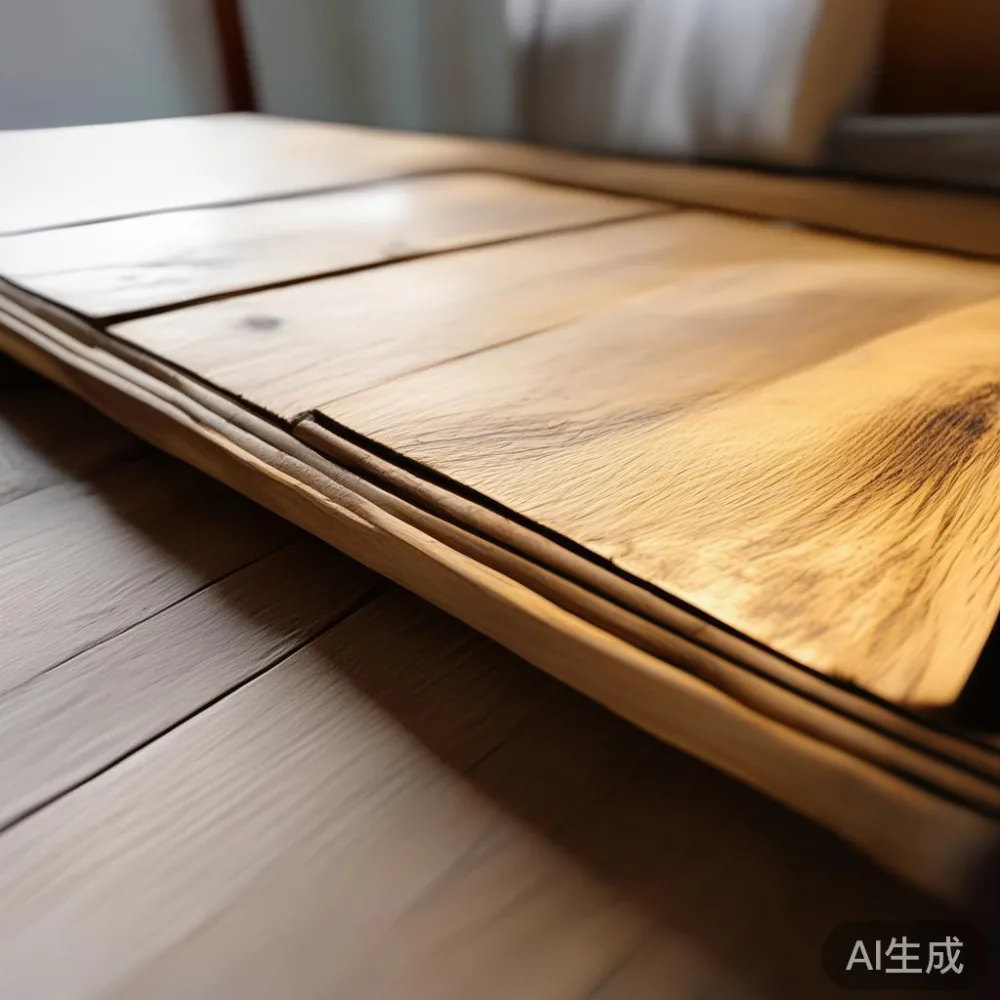
Wood moves along its width, not its length. A 180 cm wide dining table top can expand by 8 mm to 12 mm across its width when humidity climbs from 40% to 85%. Length changes on a 2 m wardrobe side panel stay under 1 mm, which is why long cracks almost never run with the grain. The three failure modes I see most often in Singapore are:
1. Drawer faces bowing 2 mm to 5 mm outward because the seasonal RH swing across an unclosed kitchen window pushes the panel past its frame groove tolerance.
2. Bed-frame slat holders cracking where a kiln-dried European beech slat sits in a tropical bedroom, because the slat absorbs moisture faster than the surrounding solid wood and locks itself into the housing.
3. Wardrobe doors rubbing in the lower corner where a bedroom wall traps humid air against the bottom rail — I measured a 6 mm gap closing on a client's Tanjong Pagar condo wardrobe last April.
The fix is never the wood itself. It is the joinery allowance, the finish, and the room. A piece built with 6 mm expansion gaps across its widest panels will laugh at 90% RH. A piece built tight will cup and bow by week three. This is where Chinese factory quality has changed dramatically since 2008 — when MIDHILL started exporting, the standard kiln schedule left boards at 10% to 12% MC, which was still too wet for tropical shelf life.
How Humidity Hits Bean-Bag (and Bean-Bag-Style) Storage in a HDB
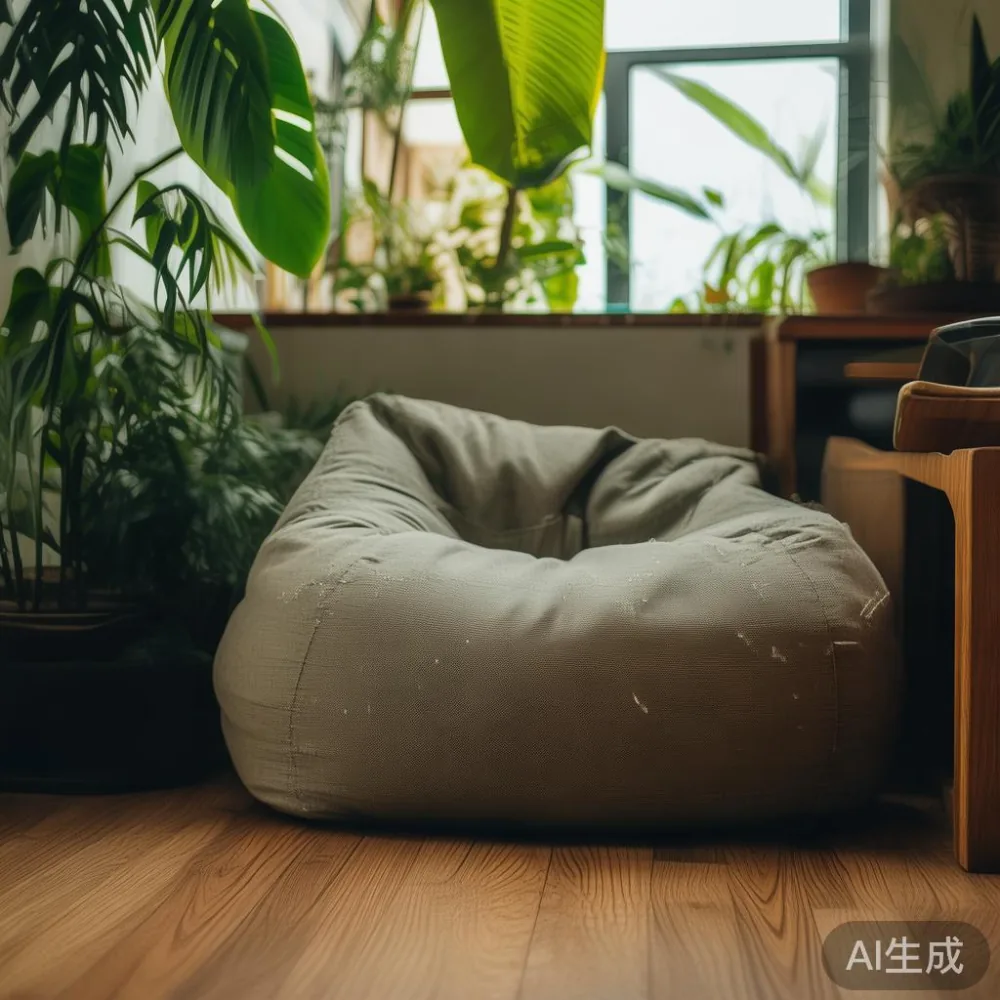
Yes, the giant floor cushion your toddler calls a bean-bag is technically a textile product, but the solid wood platform under many premium bean-bag loungers in Singapore is not. The internal frame uses kiln-dried ash or rubberwood because both species accept the SG humidity curve gracefully — ash stays stable to about ±0.2% across its width per 1% RH change, rubberwood to about ±0.25%. Compare that to beech at ±0.31% or European oak at ±0.28%, and you can see why MIDHILL specifies ash for its humid-climate export line.
If you already own a bean-bag with a wooden inner base and the base has started to smell musty after the December rains, the issue is almost always trapped moisture under the cover, not the wood itself. Pull the cover off, prop the base on its side under a ceiling fan for 48 hours, and slide a 1 cm pack of silica gel underneath before reassembly. I have rescued three friends' bean-bags this way in Tampines alone, including a friend's S$389 grey ash platform that was starting to show white mildew along the corner joint.
How do I style a Nordic queen bed in a small apartment?
Pick a queen bed frame with a headboard under 110 cm so sight lines stay clean in a 4 m × 3 m HDB bedroom, choose a base-to-floor clearance of at least 12 cm for under-bed storage bins, and finish the wall behind it in a matte warm white to bounce 30% more daylight than a flat white.
That is the rule of thumb I give every customer who walks into the showroom asking about a Nordic queen bed for a small flat. Let me unpack it. A standard Singapore HDB bedroom measures 3.2 m × 3.6 m once a 60 cm wardrobe depth is fitted against the long wall, leaving 2.6 m of usable space behind the bed. A queen mattress is 152 cm × 188 cm, so a bed frame footprint of 162 cm × 198 cm is realistic; anything wider and your bedside walkway drops below 50 cm, which feels cramped when you carry laundry baskets at 11 pm.
The headboard height matters more than people think. Anything above 110 cm blocks the upper third of a 2.4 m HDB wall, which kills the sense of vertical space in a Punggol Build-To-Order flat. Keep it slim — 6 cm to 8 cm thick — and upholster it in a removable linen cover that you can wash every six weeks during the humid months. MIDHILL's Nordic line uses a 105 cm headboard with a 14 cm under-bed gap, and customers in one-north condos keep telling me the bed visually disappears into the wall, which is exactly the trick.
Colour pairing: pair a light oak or grey ash bed frame with two S$40 linen curtains in oat tone, a 90 cm wide nightstand in the same species, and one floor lamp in matte black. The total spend sits around S$2,400 to S$2,900, including delivery and GST. Skip the overhead pendant if your ceiling is below 2.7 m; the lamp on the nightstand will do the heavy lifting.
Condo Logistics Singapore Buyers Always Ask About
Before a 220 kg wardrobe reaches your bedroom, three hurdles appear or pass once depending on your block. One is a 220 kg wardrobe delivered to your block, another is the lift, and the third is the corridor. Most HDB passenger lifts in Tampines and Bedok have an internal cabin of about 1.4 m × 1.8 m with a 1,000 kg load limit. A flat-pack king-size wardrobe breaks down into panels under 35 kg each, but the heaviest single carton on a six-door wardrobe is the 240 cm side panel — measure your lift door height first.
Private condo service lifts in Punggol and the east coast often run narrower at 1.1 m × 1.6 m, and the corridor turning radius before your unit door can be as tight as 1.8 m. I have seen delivery crews in Clementi Park have to remove a unit door from its hinges just to clear a 200 cm side panel. Always ask your furniture company to send a surveyor before placing a non-refundable deposit, and never trust a photo of a finished wardrobe in a brochure unless you have measured your own access path yourself. A 6 mm mistake in the field costs you S$120 in carpentry rework later.
French Light Luxury, American Light Luxury, and What They Mean for Singapore Buyers
Three design vocabularies keep showing up in Singapore condo showrooms, and each one reacts to humidity differently. French light luxury leans into curved silhouettes, fluted wardrobe doors, and travertine or marble accents — a round marble table from a French-inspired line needs a sealed underside because the porous stone will wick floor moisture upward if your floor reads above 75% RH for two straight weeks.
American light luxury favours chunkier proportions, oversized cushions on a solid wood sofa, and darker walnut tones that hide minor seasonal movement. The cushions themselves breathe, which helps the frame beneath stay dry. Post-modern light luxury mixes both, often pairing a slim grey ash bed frame with a single brass arc lamp and a 1.2 m round dining table. The ash handles tropical RH swings better than walnut, which is why I steer Singapore customers with east-facing balconies toward the post-modern line.
The Grey Ash Outdoor Question (Balcony Furniture Specifically)
A reader from Toa Payoh emailed me asking about grey ash wood balcony furniture for her 12 sqm planter balcony, and the short answer is: yes, but only if you bring it inside during the December monsoon and only if the ash is quarter-sawn and finished on all six sides. Grey ash has a tight grain structure with pores averaging 80 micrometres, which is half the pore size of red oak. That density makes it one of the few temperate species that survives three years on a Singapore balcony before showing checking.
Still, treat it like a teak deck: oil it every nine months with a hard wax oil (S$45 for 750 ml at any local hardware chain), never let it sit in standing water after a thunderstorm, and tilt the chairs against the wall so airflow reaches all four legs. A 4-piece grey ash balcony set typically costs S$1,800 to S$2,400 delivered, and with proper care it will outlast three replacement sets of cheaper acacia furniture.
Buying Checklist for Solid Wood Furniture in Singapore
Run through these seven points before you swipe your card at any showroom, whether you are buying a dining table, a bed frame, or a wardrobe for your new Punggol BTO:
1. Ask for the kiln-dried moisture content reading on the spec sheet. Tropical-grade pieces should read 10% to 14%, never above 16%.
2. Check the expansion gaps across the widest panel of any dining table or wardrobe top — anything under 4 mm is risky in SG humidity.
3. Look for joinery that allows movement: floating tenons, Z-clips, and pocket-hole screws with elongated slots beat glued mortise-and-tenon in this climate.
4. Confirm the finish goes on all six sides including the underside and the back of every wardrobe panel.
5. Measure your lift, corridor, and unit door, and share the numbers with the supplier before paying a 50% deposit.
6. Ask whether the warranty covers humidity-related movement — MIDHILL's 10-year structural warranty covers joint failure from seasonal movement, while most competitors cover only manufacturing defects for 12 months.
7. Plan for a refinish in year seven to ten. MIDHILL offers lifetime refinishing, which means a S$180 to S$260 sand-and-reseal is built into your ownership cost, not a surprise expense.
Care Routine That Actually Works in SG Climate
I keep a hygrometer on my own dining table at home, and I check it every Sunday morning. When the reading crosses 80%, I run the bedroom AC on dry mode for two hours before bed and I open the wardrobe for ten minutes to let trapped moisture out. The whole habit loop is one of two minutes a week, not a chore, and it has kept my own furniture stable across four monsoons. If you do nothing else, buy a S$15 hygrometer, keep your rooms between 45% and 65% RH with AC or a dehumidifier, and wipe down any nightstand or marble table surface with a dry microfiber cloth every Saturday. Those three habits handle 80% of what humidity throws at a solid wood sofa, bed frame, dining table, wardrobe, or nightstand in a Singapore home.
One final note for buyers still comparing brands: ask every showroom for the country of manufacture, the kiln schedule, the expansion gap spec, and the warranty terms in writing. A piece built for a temperate climate and rebranded for SG will fail by month eight; a piece built for tropical shelf life from day one will still look new when you host your first Lunar New Year open house in your new Tampines flat.