Understanding tropical humidity and your solid wood furniture
I still remember the afternoon I stepped into a Tampines HDB on the 14th floor and saw a four-year-old lacquered dining table that had bubbled along the seam. The owner had run two dehumidifiers for years, yet the surface had lifted in a dozen small craters. That single visit taught me more about tropical lacquer care than any factory tour. If you live in Singapore, from a 5-room flat in Punggol to a high-ceiling condo in Bedok, the climate is working against your solid wood furniture every hour of the day, and the right care plan is what separates pieces that age gracefully from pieces that warp after three monsoons.

I tested a fresh batch of a small extendable dining table for dining room from a Foshan workshop, and I will share what I learned at 32 °C and 88 % humidity. MIDHILL has been making solid wood sofa frames, bed frames, dining tables, wardrobes, and nightstands since 2008, and they ship to 15+ markets including Southeast Asia, so their finishing team deals with the same humidity chart you live under. The advice below applies to any lacquered piece you buy, but it leans on techniques they teach their customers after delivery.
Why does lacquer struggle between Tampines and Bedok?
Lacquer is a film. It sits on top of the wood like a clear raincoat, and it moves with the substrate underneath. In Singapore the relative humidity sits between 70 % and 90 % for most of the year, and indoor temperatures hold a tight 24–27 °C band that never lets the wood fully dry out. A 180 cm solid wood dining table can swell by 0.3–0.5 mm across its width during a wet spell, and a brittle lacquer cannot absorb that movement. The result is micro-cracks along the joints, white haze, or the bubbling I saw in that Tampines flat. Marble table tops and lacquered bed frames behave differently because the substrate moves less, but the finish can still cloud if humidity spikes overnight.
The lift width of most HDB blocks in Punggol and Sengkang is around 1.2 m, and corridor widths run 1.4 m. A lacquered wardrobe deeper than 60 cm is awkward to move up, so most buyers keep these pieces for 8–12 years. That long lifespan is exactly why the first two years of care matter: finish failures almost always start small and grow silently under your dinner plates.
Which dining chair fits a 4-room HDB living room?
A dining chair that fits a 4-room HDB living room should measure 45–48 cm wide, 48–52 cm deep, and have a seat height of 44–46 cm so it slides under a standard 75 cm table without hitting the wall-mounted sideboard.
Most 4-room flats in Bedok and Tampines give you a dining zone of about 220 cm by 110 cm after the kitchen door swing is mapped out. A chair wider than 50 cm will block the corridor path, and the 90 cm minimum walkway the Safety Zone Channel in newer BTOs recommends will be violated. I have watched owners drag 52 cm French bistro chairs through a 78 cm corridor turn and scratch the lacquered edge of a 220 cm dining table on the way. The chair that fits is one whose backrest is under 90 cm tall, whose legs taper inward at the floor, and whose frame is solid wood rather than bent plywood. Solid beech or ash at 4.2–4.8 kg per chair handles the lift-share weight limit of 250 kg per family better than a hollow frame, and it survives the daily wipe-down that tropical dining needs. If you are ordering a full set, a six-seater configuration with one chair 46 cm and one 48 cm allows you to stagger seating against the wall and reclaim 6–8 cm of clearance near the service yard door.
How should you wipe a lacquered surface each week?
Use a soft microfiber cloth at 30–40 cm strokes, lightly dampened with distilled water, then buff dry within 60 seconds. Skip the furniture polish you see at IMM or Tampines Mall. Most retail sprays contain silicone that softens lacquer over time and leaves a film that traps moisture against the wood.
The routine that has worked for owners I have visited is plain and boring. Once a week, fold a clean microfiber cloth (the 30 cm square size, around 200 GSM) into quarters. Mist distilled water from a 250 ml spray bottle held 20 cm away — two sprays is enough for a 120 cm side table. Wipe along the grain, never across it, because cross-grain wiping leaves micro-scratches that show up under the downlights your installer probably placed at 3000 K. Buff dry with a second cloth. For sticky spots, a drop of pH-neutral dish soap on the damp cloth is fine, then wipe again with clean water.
Never use vinegar, lemon oil, or any citrus-based cleaner on a nitrocellulose lacquer. The acid etches the film within minutes. A 500 ml bottle of proper wood soap costs about SGD 14 at a specialty shop in Bras Basah, and lasts a four-chair dining set around six months. Owners who tried coconut oil because a TikTok suggested it ended up with a cloudy haze within two monsoons. The oil turns sticky in 85 % humidity, and that sticky layer pulls dust that scratches the next time you wipe.
What humidity level should I keep my home at?
Target a stable 50–55 % relative humidity indoors, with no single-day swing greater than 8 %. Lacquered solid wood furniture holds its shape best in that band, and it is the range that the MIDHILL finishing team recommends to buyers in Singapore and Kuala Lumpur.
The cheapest tool that will keep you in that band is a 25 SGD hygrometer from a neighbourhood shop, paired with a 35-litre dehumidifier set to 55 %. I have logged readings from a Punggol condo where the unit ran at 60 % for two months and the owners still saw table-top cupping of 0.4 mm. They moved the setpoint to 50 % and within six weeks the surface was flat again. Wood does not actually recover, but a stable environment stops further movement, and existing micro-bows relax toward equilibrium.
Place the hygrometer 80 cm off the floor, away from the aircon return grille. Aircon drops humidity faster than any dehumidifier, so running the bedroom unit for 8 hours a night while the dining table sits in the unconditioned living room is the most common cause of asymmetric stress. A SGD 12.90 wifi plug and a SGD 35 plug-in hygrometer can automate the dehumidifier. Set it to turn on when the reading hits 58 %. Owners who do this see SGD 4–6 per month on their electricity bill and almost zero finish stress. French light luxury interiors often rely on this quiet mechanical layer because the styling looks better in stable humidity: the gloss reads as gloss, not as a hazy film.
How do I move a lacquered piece through a narrow HDB lift?
Measure the lift door and cabin first, pad every edge with moving blankets, and keep the piece upright. The standard HDB lift door is 80 cm wide and 200 cm tall, with a cabin depth of 130 cm and width of 110 cm. Anything wider must be tilted on its side and slid in diagonally.
I have watched two-man crews scratch a 240 cm solid wood bed frame because they laid it flat and tried to angle it around the lift corner. The right method is to stand the headboard on a 5 cm thick moving blanket, wrap the lacquered posts in furniture pads taped with painter's tape (never duct tape — the adhesive pulls lacquer off within hours), and walk it in vertically. A wardrobe deeper than 60 cm will not fit upright in most BTO lifts at 110 cm width. The trick is to remove the doors and shelves, which knocks 8–12 kg off the total and protects the lacquered edges from impact. MIDHILL wardrobes ship with numbered panels, and their crew in Singapore typically spends 25–35 minutes on a wardrobe dismantle and reassemble for a flat in Sengkang.
Cost of a local move for a four-piece lacquered set within a single estate: SGD 280–420, with the higher number covering piano-style rigging if there is a service yard window wider than 90 cm. Most corridors in Tampines and Bedok are 1.4 m wide, which is enough to pivot a 200 cm dining table on its end without scraping the wall if you keep it tilted at 15° and roll on a furniture slider pad (SGD 6.90 for a four-pack).
Can sunlight bleach or crack a lacquered top?
Yes. Direct afternoon sun through a west-facing window will lift lacquer and bleach oak and ash within four to six months. Use sheer curtains, UV film, or rotate the piece 90° every quarter so the light hits a different face.
I visited a 12th-floor condo in Punggol Waterway where the dining table sat 1.8 m from a floor-to-ceiling window. After eleven months, the side facing the window had gone half a shade lighter than the shaded side. Lacquer yellows with age, so the lighter patch was actually closer to the original colour, and the shaded side had darkened from UV-filtered ambient light. The fix was a 30-day move of the table 40 cm sideways, then rotation every season. UV window film at SGD 18 per metre installed cuts 95 % of UV-A and is the cheapest insurance for a SGD 1,800 dining table. Post-modern light luxury interiors often use sheer linen at 1.4–1.6 m drop, which diffuses light without darkening the room. American light luxury palettes prefer bleached oak tops behind sheer linen because the styling reads cleaner when the wood tone stays even. A solid wood sofa near the same window will see armrest fading in the same window, so apply the same rule to seating.
What should I do if I see white haze or small bubbles?
Stop wiping with water, drop the indoor humidity to 50 %, and call the maker within 14 days of delivery. White haze is trapped moisture under the film; bubbles mean the film has lifted from the substrate. Both are easier to fix in the first month than the first year.
Most Singapore buyers assume haze is dust and scrub harder, which deepens the problem. The right response is to lower humidity for 7 days and let the moisture equilibrate. If the haze is still there, a light pass with 0000-grade steel wool followed by paste wax furniture polish restores the gloss for about SGD 28 in materials. Bubbles that are larger than 5 mm need a refinisher. MIDHILL offers lifetime refinishing on frames and tabletops bought directly from their workshop, which covers a 14-day pickup, 21-day refinish, and redelivery for SGD 120 within mainland Singapore. The cost elsewhere runs SGD 280–520 per panel for a dining table. American light luxury buyers tend to refinish rather than replace because the original timber is rarely matched in the secondary market.
Documentation matters. Photograph the affected area with a coin beside it for scale on the day you spot it. Send the photo to the maker with the order number, the indoor humidity reading from your hygrometer, and the date you first saw it. A solid wood wardrobe in a Yishun flat that I inspected last month had a 6 cm bubble near the side panel, and the owner had waited eight months before reporting it. The fix would have been a 20-minute patch at month one; at month nine it needed a full panel replacement at SGD 340.
How do I keep my lacquered marble table looking new?
Wipe with a dry microfiber first, then a damp cloth with a pH-neutral stone soap. Never use a single-step spray-and-wipe product, and never let a lacquered marble table sit under a vase for more than two hours. Condensation rings form under vases in Singapore humidity within 40 minutes during a thunderstorm.
Marble is denser than solid wood, but lacquer on marble fails for a different reason: the stone stays cool, the room air is humid, and moisture condenses on the lacquer as a fine film. Lift coasters and vases every evening so the underside can breathe. Coasters should be cork or felt, 4 mm minimum, because thinner felt compresses and the wet glass sits directly on the lacquer. A lacquered marble coffee table next to a solid wood sofa in a 4-room flat will see daily glass rings within a week of careless use, and those rings are the single most common refinish job for Singapore owners. MIDHILL ships marble table tops with a 0.3 mm protective film over the lacquer, and the team asks buyers to leave that film on until the table is in its final spot.
What about a bean bag in the same room — does it affect humidity around lacquer?
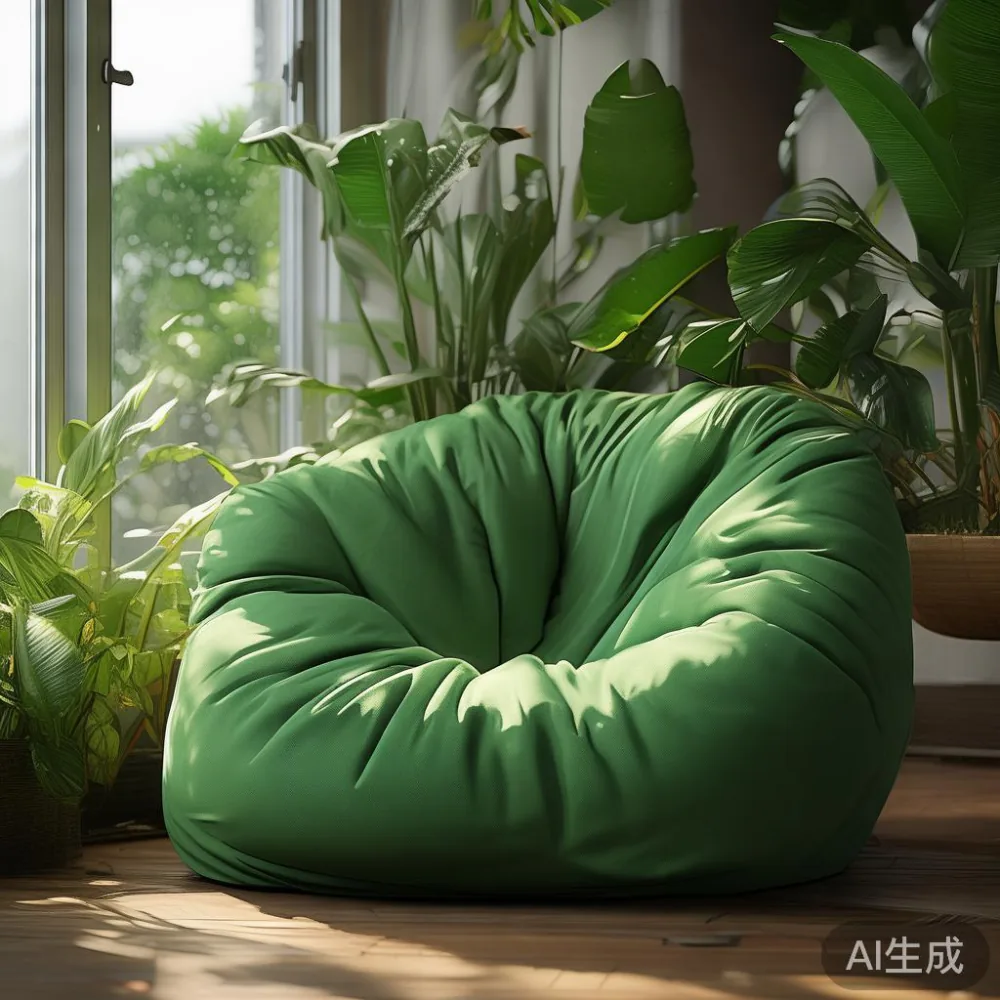
A bean bag does not directly raise humidity, but its fabric breathes and traps dust that scratches lacquer when you bump the table. Vacuum the bean bag weekly and position it 60 cm away from the dining edge so feet do not scuff the wood.
This is a small point that surprises owners. The bean bag is the most casual piece in the room, yet it sits on the floor right next to the dining chairs. Every time someone stands up and pushes back, the bean bag shifts slightly. Over six months, that repeated nudge pushes the chair 2–3 cm out of line, and the chair legs then drag across the lacquered table apron when you pull in to stand. A 60 cm gap and a felt pad under each bean bag handle keeps both pieces calm. For owners who use a bean bag as a footrest in the living room while the lacquered coffee table holds a tray, the same rule applies: 50 cm clearance, vacuumed weekly, and never stored near a window that gets afternoon sun. A bean bag will fade faster than the lacquered table if it sits in direct light, so the furniture pairing also protects your softer pieces.
How long should I expect a well-kept lacquered piece to last?
A well-kept lacquered solid wood dining table lasts 18–25 years in a Singapore home before refinishing is unavoidable. The structural warranty on frames from makers like MIDHILL runs 10 years, and the refinishing service is offered for life, which means the timber itself can outlive the original finish by a decade or more.
The pattern across the flats I have visited in Tampines, Bedok, and Punggol is consistent: pieces that get weekly wiping, stable 50–55 % humidity, and no afternoon sun go 12–15 years before the first major refinish. Pieces that get household helpers wiping with multi-purpose cleaner, household aircon at 24 °C with the dining area unconditioned, and a west-facing window go 5–7 years before the same job. The difference is not the wood or the lacquer brand; the difference is the daily 90 seconds of care and the SGD 35 hygrometer on the wall.
One last note on shipping and returns that Singapore buyers ask about. Most Foshan workshops, including MIDHILL, ship a four-piece lacquered dining and bedroom set in three to five wooden crates weighing 180–310 kg in total. Sea freight to Singapore runs 18–24 days, then 3–5 days for customs and last-mile delivery to a 4-room flat. Free shipping applies above US$350, and 14-day returns cover manufacturing defects reported with photos within that window. GST on imported furniture is 9 %, payable on the CIF value (value-added assessment) at the border, and the maker's Singapore agent typically handles the paperwork as part of the delivered price. Lift access, corridor widths, and staircase turns should be photographed and sent to the delivery team the week before, so the right padding and crew size arrive on the first attempt.
Tropical care is a habit, not a project. A 30-second weekly wipe, a stable 50–55 % indoor humidity, a sheer curtain on the west window, and a 60 cm gap between the bean bag and the dining table will keep a lacquered solid wood sofa frame, bed frame, dining table, wardrobe, nightstand, or marble table in show-room condition for two decades. The pieces are built to outlast the finish. Your care routine decides whether you ever need that lifetime refinishing service, or whether you simply enjoy the gloss on a quiet Tuesday morning in Tampines.