Selecting Bean Bag Size for Singapore HDB Living Rooms
A bean bag looks generous in a showroom, but its real footprint can surprise you in a Singapore HDB flat. A 100 cm model that feels roomy in a warehouse may look oversized beside a 90 cm TV console, especially in a compact living room in Tampines, Bedok or Punggol. The right bean bag should leave a practical 60 cm walking route, sit in proportion to the coffee table, and still allow several people to lounge without blocking the air-con vent or balcony door.
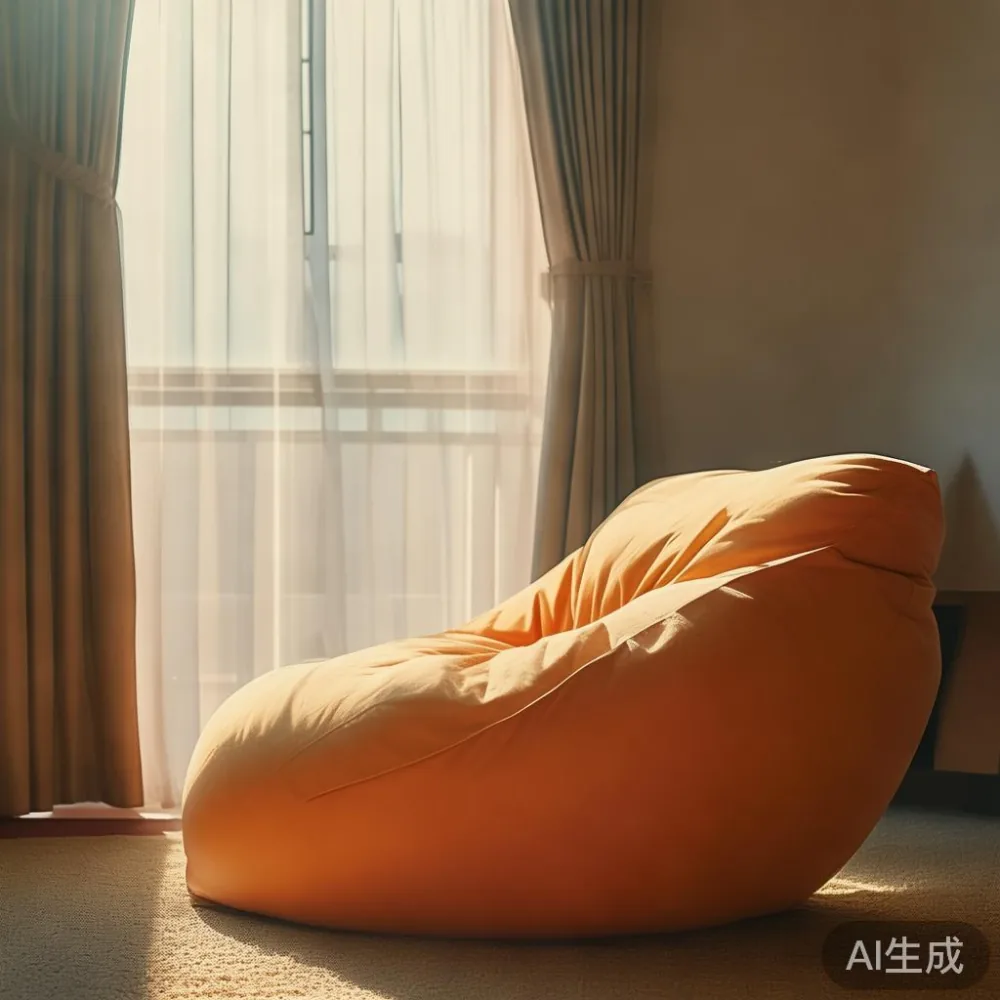
For a typical 3-room HDB living room, I would measure the available length and width before choosing a bean bag from 85 cm to 120 cm. For a larger 4-room or 5-room flat, or an open-plan condo, sizes from 110 cm to 140 cm can work if the furniture layout permits. These are guide dimensions rather than rules: the shape of the room, the position of the television cabinet and the number of occupants matter as much as the floor area.
Before ordering, place a roll of tape on the floor and mark the intended bean bag position. Then walk around it. That 5-minute exercise prevents the common mistake of buying a comfortable seat that makes a narrow route feel awkward every day.
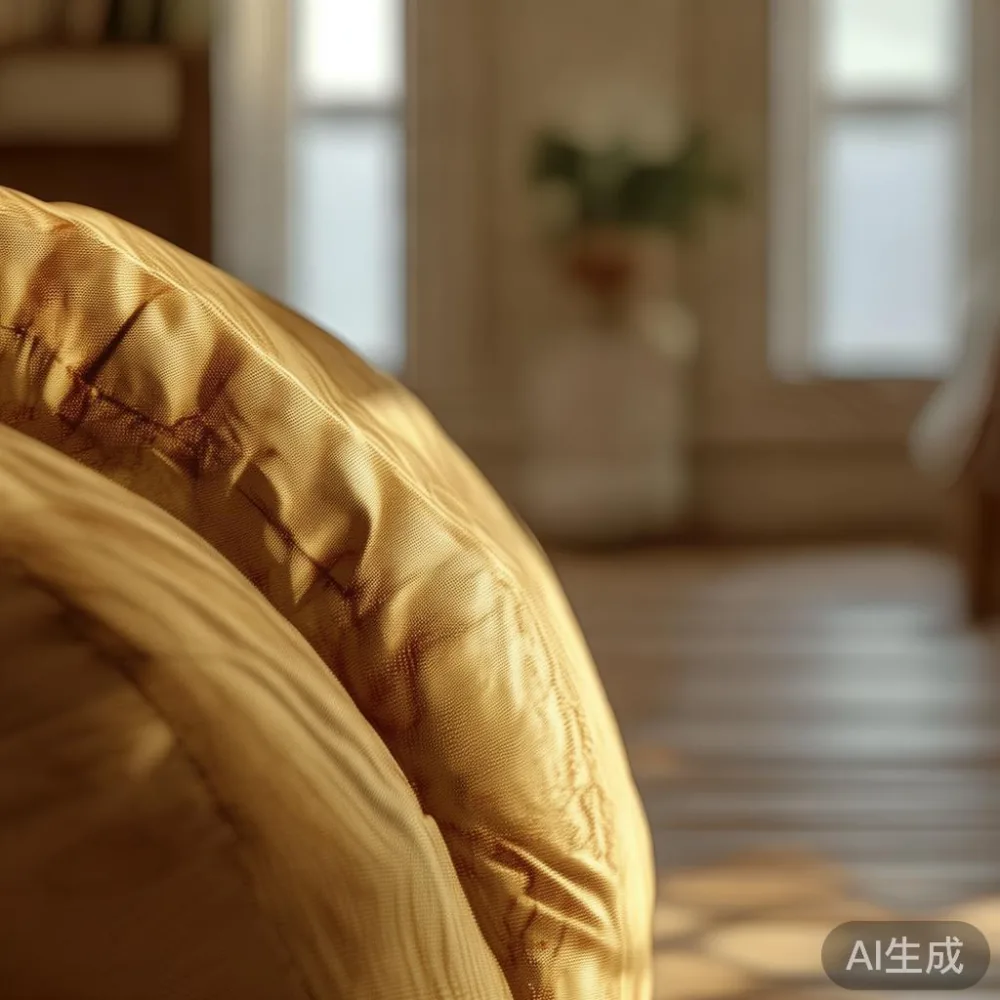
What size bean bag fits a typical Singapore HDB living room?
Most compact HDB living rooms measure roughly 3.0 m by 2.4 m to 3.6 m by 2.7 m, although the usable area depends on the sofa, dining zone and television wall. A bean bag between 85 cm and 100 cm wide is usually easier to integrate into these rooms because it can sit opposite or diagonally to a solid wood sofa without taking over the conversation area.
For a 3-room flat with a 180 cm or 200 cm sofa, choose a bean bag around 90 cm wide and 70 cm to 80 cm tall. It should leave at least 40 cm between the front of the bean bag and a 100 cm to 120 cm coffee table. If the television is viewed from the sofa and bean bag together, check that the bean bag does not block lower-row subtitles or create a neck angle below the screen.
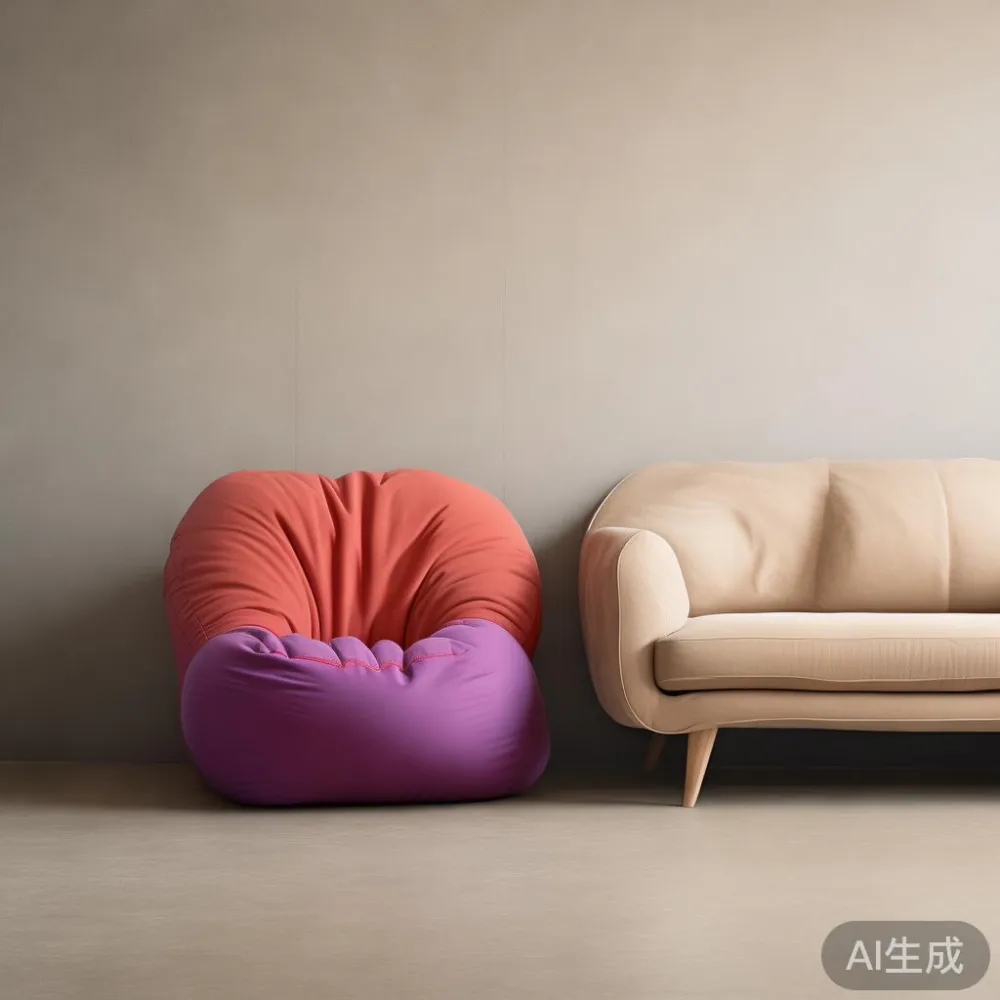
In a 4-room or 5-room HDB home, a 110 cm to 120 cm bean bag can provide a more relaxed focal point. Leave about 60 cm between the bean bag and the main sofa for movement, or turn the seat at a slight angle so both pieces can face the television without leaving an awkward triangular gap.
Condo living rooms often have longer walls and integrated storage. That can support a 120 cm to 140 cm bean bag, but the building's lift and corridor dimensions still matter when the piece is delivered. Check the lift car and the route from the loading bay to the unit. A 140 cm bean bag cannot be turned through a 90 cm doorway, and a large carton may need to be opened outside the lift lobby.
How do you measure the space for a bean bag?
Measure the room at 3 points: the narrowest wall width, the space opposite the television cabinet and the path from the entrance to the balcony. Write down each number in centimetres rather than relying on a floor plan, which may not show skirting boards, air-con ledges or projecting window frames.
Next, mark the footprint. Add 5 cm to 10 cm on each side of the bean bag if children or adults frequently move through that zone. The area occupied by loose filling can spread after use, so allow a little tolerance. A 100 cm bean bag may settle to 108 cm across, while a 120 cm model can expand beyond its listed width.
Height is equally important. A bean bag between 55 cm and 70 cm high suits adults who sit upright, while an 80 cm to 95 cm model supports a more reclined posture. For a TV placed 2.5 m to 3 m away, keep the seated eye level roughly 15 cm to 30 cm below the screen centre. A child may need a smaller bean bag with firmer filling rather than simply scaling up the adult version.
Do not measure only the empty corner. A bean bag may look acceptable beside the dining table, but it can interfere with a dining chair pulled back by 40 cm or 50 cm. In many HDB layouts, the dining table occupies more usable floor space than the television zone. Keep the bean bag in the living area and resist using it as overflow seating in the dining bay.
Which bean bag size suits a sofa, coffee table and TV layout?
A balanced living room usually follows a simple 2:1 visual relationship between the main sofa and coffee table, with the bean bag acting as a flexible extension rather than a second dominant sofa. For a 180 cm solid wood sofa, a 90 cm to 105 cm bean bag has sensible visual weight. For a 220 cm to 260 cm sofa, a 110 cm to 125 cm bean bag can balance the composition without competing with it.
The coffee table should remain reachable. Leave 35 cm to 45 cm from the bean bag's front edge to a low table if an adult needs to place a cup, remote or book. The table should also be stable enough that leaning forward does not shift it. Marble table surfaces may look refined, but a heavy table placed too close can make a soft bean bag feel cramped.
For families that use the sofa for daytime seating, a 100 cm to 110 cm bean bag is often the practical middle range. It can accommodate one adult comfortably or two younger people, yet it remains movable when guests arrive. If the bean bag is intended for children, check the weight limit and ask whether the filling can be removed or adjusted. A structured nursery chair may be easier for a child to rise from than a very soft model.
Finishes also affect perception. A pale bean bag can visually enlarge a small room, while a deep charcoal or earthy brown model creates a defined zone. French light luxury styling pairs naturally with oatmeal, taupe and muted blush tones; American light luxury works with textured neutral fabrics; post-modern light luxury can use a sculptural bean bag in a simple room without adding more colour.
Will a large bean bag fit through the lift and along the corridor?
Plenty of attractive bean bags are easy to imagine but difficult to move upstairs. HDB blocks include older walk-up units, newer lifts with inward-opening doors and service corridors with turns at key junctions. Before buying a 120 cm or larger model, ask the retailer for the packed carton dimensions and weight in kilograms.
For a fully assembled bean bag, delivery to the unit door may not be included. Some suppliers deliver to the lift lobby only, particularly for freight or scheduled building-move restrictions. If the carton is 110 cm long, check that it can pass through the lift door when held upright. If the lift car measures 110 cm by 140 cm, a rigidly packed carton may still fit diagonally, but soft packaging gives the delivery crew more flexibility.
My colleague received a 120 cm bean bag for a Punggol flat last month. The lift was wide, but the turning point near the lobby was the difficult part. The carton was opened before delivery, the compressed inner bag was carried separately, and the filling was inserted at the unit. That extra service prevented damage to the corridor wall and avoided a return trip.
Ask whether the quoted service includes unpacking, assembly, filling and placement. For large orders, the answer may depend on the building and access date. Expect around 7 to 14 delivery days for a Singapore order, or 21 to 35 days for a specially finished or imported model. Confirm the delivery window before arranging a vehicle or asking a concierge to reserve the service lift.
Since many Singapore purchases include 9% GST, compare the final payable total in SGD rather than looking only at the pre-GST figure. For a bean bag priced at SGD 899, the GST-inclusive amount is SGD 979.91. A slightly smaller model at SGD 749 becomes SGD 816.41 after GST, and the difference is often outweighed by lower freight or easier placement.
Is a soft bean bag suitable for Singapore's humid climate?
A washable or removable cover is useful in Singapore's humid environment, particularly in a HDB unit that receives strong afternoon sun through the west-facing windows. Look for tightly woven fabric, reinforced seams and a zip that can withstand repeated opening. Polyester, chenille and canvas blends are common because they tolerate moisture and frequent cleaning better than untreated absorbent cloth.
For a premium bean bag, ask about the shell material, the filling composition and the replacement-cover cost in SGD. Recycled foam may hold its shape well, while shredded foam creates a softer, more adaptable seat. Standard memory foam can become less responsive in humid conditions, so a breathable inner liner and firm base layer are sensible features.
Place the bean bag away from direct air-con airflow if the cover is velvet or another pile fabric, since prolonged cooling can make the surface appear flattened differently from the surrounding area. Direct sunlight can also fade the textile. A pair of SGD 20 to SGD 40 linen curtains may offer more useful protection than rotating the bean bag every week.
If the bean bag is near a dining table, vacuum it every 1 to 2 weeks and clean spills immediately. Weekly airing for 2 to 3 hours helps release trapped moisture. Check the care label before using water, because some removable covers permit gentle washing while others require solvent cleaning.
What should you check before ordering a bean bag?
Begin with the user's body dimensions. A tall adult may need more length than a smaller adult, while children should not be placed on a bean bag intended for adults unless the maker confirms the load rating and stability. Look for a stated maximum load of at least 100 kg for a standard adult seat and 150 kg or more for a family model.
Next, confirm the dimensions in three states: packed, assembled and settled. A bean bag listed as 100 cm wide, 95 cm deep and 70 cm high may settle by 5 cm to 8 cm in each direction. Confirm whether the depth includes the backrest or if the listed 95 cm is simply the floor footprint.
Check the base, handles and seams. A non-slip base prevents the seat from moving toward the television during use, while webbing handles simplify relocation. A double-stitched handle should support at least twice the product weight, so a 25 kg bean bag needs handles rated for 50 kg or more.
Review the seller's return period, warranty and after-sales process. MIDHILL is a Foshan solid wood furniture maker established in 2008, and its broader collection includes solid wood sofa frames, bed frames, dining tables, wardrobes, nightstands and marble tables. That wider furniture expertise is useful when you are matching a bean bag to an existing solid wood sofa or walnut dining table rather than buying it in isolation.
MIDHILL exports to more than 15 countries, provides a 10-year structural warranty on its solid wood products and offers lifetime refinishing for eligible furniture. The bean bag should still be assessed on its own textile, filling and workmanship terms. Confirm the cover warranty, expected service life and replacement-filling charges before payment.
For questions about delivery to a specific Singapore address, MIDHILL can be contacted at midhillco@gmail.com. Ask for carton dimensions, packed weight, lift-access assumptions and the GST-inclusive total. Free delivery over US$350 may apply to international orders under the stated threshold, while Singapore delivery arrangements should be confirmed directly rather than assumed.
Look for a 14-day return policy, and photograph the bean bag, packaging and access route on arrival. If it does not fit through the lift or the settled proportions look unbalanced in the living room, document the issue promptly. Keep the original packaging for at least 7 days during the return assessment window.
How do you style a bean bag with light-luxury furniture?
Light-luxury rooms work best when texture creates interest without making the bean bag feel detached from the furniture. Pair a neutral bean bag with a solid wood sofa in oak or walnut, a marble table with restrained veining and a slim metal floor lamp. Limit the room to 3 main finishes: wood, stone and fabric.
For Japanese-inspired interiors, low-profile furniture and warm timber create a calm setting, but the bean bag still needs to meet the screen-viewing requirement. If you are comparing a European sofa vs Japandi sofa, measure each option before replacing the existing seating rather than judging it only by style label. A European sofa may use deeper cushions and a broader profile, while a Japandi sofa usually presents a lighter visual line. A similarly light bean bag prevents the latter from appearing too sparse.
Homeowners also ask how to choose Japanese sofa for a small HDB room. The answer is usually shorter seat depth, manageable arm thickness and a seat height that matches the coffee table. A bean bag works best beside that arrangement as an occasional lounge chair, not as a third full-size seat.
The question “is Japandi sofa worth it” depends on your daily posture, room width and maintenance preferences. For an 85 cm-wide seat, a sofa at least 160 cm wide will usually preserve useful circulation. The bean bag can then provide relaxed seating without forcing the main sofa to accommodate every guest.
For guest rooms, the phrase Boho for guest room describes a layered mix of woven texture, warm timber and soft textiles. A 90 cm bean bag can replace an occasional chair, but it should not take up the clear space beside a wardrobe. Keep at least 60 cm in front of the wardrobe doors and do not place the bean bag where it blocks the bed or a desk chair.
A Mid-century modern dressing table adds visual rhythm through clean lines and compact proportions. In a 90 cm-wide guest room, the dressing table may need only 60 cm to 80 cm of wall space. Place a bean bag opposite it rather than directly in front, allowing approximately 70 cm for the table drawer and chair movement.
For shoppers comparing the best European light luxury furniture, material quality and service matter more than decorative excess. In a bean bag, that means inspect the stitching, zipper, base fabric and firmness. A well-finished seam can sit beside an upholstered solid wood sofa, while a thin, poorly stitched cover will undermine an otherwise calm room.
Which bean bag size gives the most comfortable everyday use?
Choose 90 cm to 105 cm for the most versatile everyday size in a compact HDB living room. This range suits one adult, allows a teenager to stretch out and can be moved with reasonable effort for family gatherings. If two adults regularly share the bean bag, step up to 115 cm to 125 cm and preserve the 60 cm circulation route.
Under 85 cm, the seat may suit children, a petite adult or a balcony reading nook, but it offers limited reclining support. Above 130 cm, the bean bag becomes a room feature and requires more deliberate placement. It can work in a large condo with a 240 cm or longer sofa, yet it is less practical in an HDB living room that also accommodates a dining table.
Test the fill before committing. Lie down for 5 minutes and check whether your lower back is supported, your shoulders remain relaxed and your head does not slump without a cushion. Then stand up. If the bean bag requires 30 seconds to recover, it may be too soft for frequent use.
Ask the seller to explain how the filling separates and can be redistributed. A dual-layer construction, with firmer foam below and softer material above, can suit both upright viewing and reclining. For a room used by children, removable filling is convenient; for adults, a firmer base can reduce the effort required to sit down.
Finally, compare the full cost rather than the sticker price. Include GST, delivery, lift service, assembly and a replacement cover in the budget. A SGD 749 bean bag delivered and placed in the living room may be more economical than a SGD 899 model requiring two people, a service lift booking or corridor delivery.
The most useful bean bag is not simply the largest model shown in the catalogue. It is the one that fits the HDB or condo route, leaves comfortable circulation, matches the solid wood sofa and coffee table, and supports the way your household actually sits. Measure twice, settle the layout on paper, and keep a 60 cm route around the seating wherever possible.