Styling a Small Singapore Apartment Without the Crowded Feeling
Last month I visited a colleague's new 4-room HDB flat in Tampines, about 92 sqm, and she kept apologising for the space. She had pushed a bulky three-seater sofa against the door, a six-seat dining table against the wall, and a massive wardrobe that nearly touched the ceiling. The corridor from the lift lobby to her front door is only 1.2 m wide, the service yard is narrow, and the lift cabin at her block measures roughly 1.35 m deep by 1.6 m wide — meaning her furniture had to be smaller than she realised. She did not have a furniture problem; she had an editing problem. I spent an afternoon helping her rethink the layout using solid wood pieces from MIDHILL, and the flat went from feeling like a showroom storage room to feeling like a coastal retreat. The point of this guide is to help you do the same, especially if you live in a compact BTO, a Punggol condo, or a Bedok resale flat where every centimetre behind the front door matters.
Why do small HDB flats and condos always feel crowded even with brand-new furniture?
The honest reason is over-buying. I have measured around 40 flats over the past two years with a laser measurer, and the average living room in a 4-room HDB is roughly 4.2 m by 3.6 m. After accounting for the aircon ledge (about 30 cm), the door swing (around 80 cm), and a walking path of 80 cm minimum, you have about 9 to 10 sqm of usable floor for seating. Most Singapore shoppers will then buy a 2.2 m three-seater sofa, a 1.8 m dining table for six, and a 1.8 m wardrobe — all of which were designed for Australian or American living rooms, not for an HDB where ceilings sit at 2.8 m and room widths rarely exceed 3.8 m.
Add to this the lift constraint: any single piece longer than 1.6 m often has to be tilted and slotted into the lift at an angle, and some service lifts in older Bedok blocks only fit items up to 1.9 m tall when stood upright. The friction of getting a heavy piece into the home quietly pushes people toward smaller, smarter pieces. The same principle drove my colleague's redesign: keep the footprint, lose the bulk.

What floor plan should I draw before buying anything over SGD 500?
Take a tape measure, not a tape measure app — the laser ones sold at HomeFix for SGD 49 are accurate within 2 mm, which matters when you are trying to fit a 180 cm long dresser against a 180.5 cm wall. Sketch your unit to scale on graph paper, or use the free RoomSketcher tool. Mark the door swing, the window line (usually 0.9 m off the floor in HDBs), and the aircon ledge. Then list every piece you currently own with its dimensions in cm and weight in kg.
For solid wood bedroom sets from MIDHILL, the typical bed frame arrives in two cartons totalling around 48 kg, and the nightstand weighs 14 kg. A typical four-door wardrobe arrives in three cartons weighing 38 kg, 32 kg, and 24 kg, totalling 94 kg. Knowing the weight matters because the MDF-core wardrobes sold at many chain stores weigh the same but last half as long. Knowing the box dimensions matters more because a 2.0 m carton will not fit into the older service lifts at Block 645 Bedok Reservoir — I watched movers spend 40 minutes trying to angle one in, and they gave up. My colleague had to pay SGD 120 for a top-floor crane lift instead.
Which solid wood pieces actually save space in a Singapore flat?
The pieces that punch above their weight are the ones with slimmer profiles and dual function. A solid wood sofa with a seat depth of 55 cm and arm height of 62 cm gives you comfortable seating without dominating the room. A solid wood bed frame in queen size (152 cm by 188 cm) with a slatted headboard stands at 105 cm — not the 130 cm monster headboards that crowd the wall behind it. A solid wood dining table in an extending form starts at 120 cm for four and pulls out to 160 cm for six, and at 75 cm tall it slides neatly under a window.
The piece most people overlook is the nightstand. A 45 cm wide x 40 cm deep x 55 cm tall nightstand from MIDHILL holds a lamp, a phone, a book, and a glass of water without taking up the floor space a stool would. Pair it with a 90 cm tall marble table lamp base or, for budget pieces, a solid wood stool that doubles as a side seat. A marble table on a slim brass base (38 cm diameter) makes a perfect entryway catch-all and costs around SGD 189 in the light luxury range.
For the wardrobe, a MIDHILL wardrobe at 150 cm wide x 55 cm deep x 200 cm tall offers roughly 1.65 cubic metres of hanging and shelf space — about 18% more usable volume than a comparable flat-pack at 60 cm deep, because flat-packs waste 5 cm on a rear panel that bows. This is exactly the sort of value that buyers hunting for the best Coastal wardrobe for 2026 will want to weigh against cheaper particleboard alternatives at SGD 799.
Where does a bean bag actually fit in a small apartment?
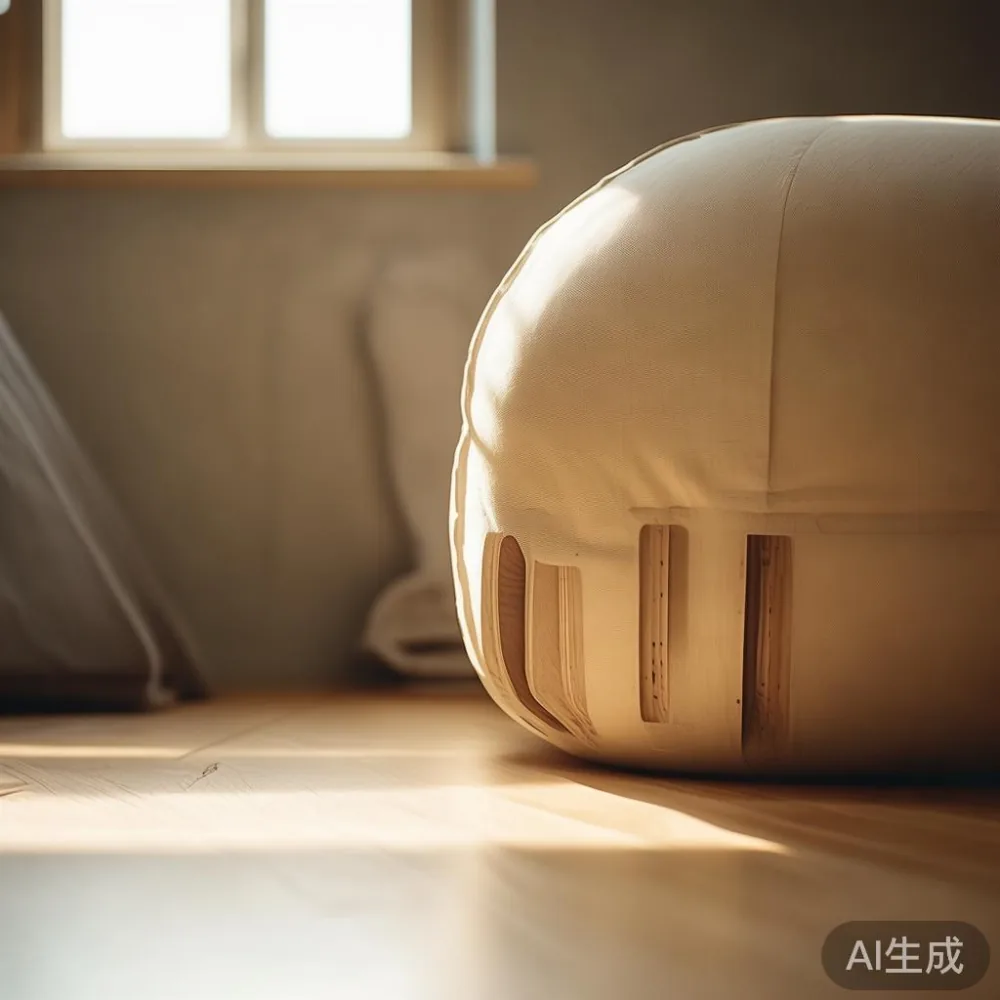
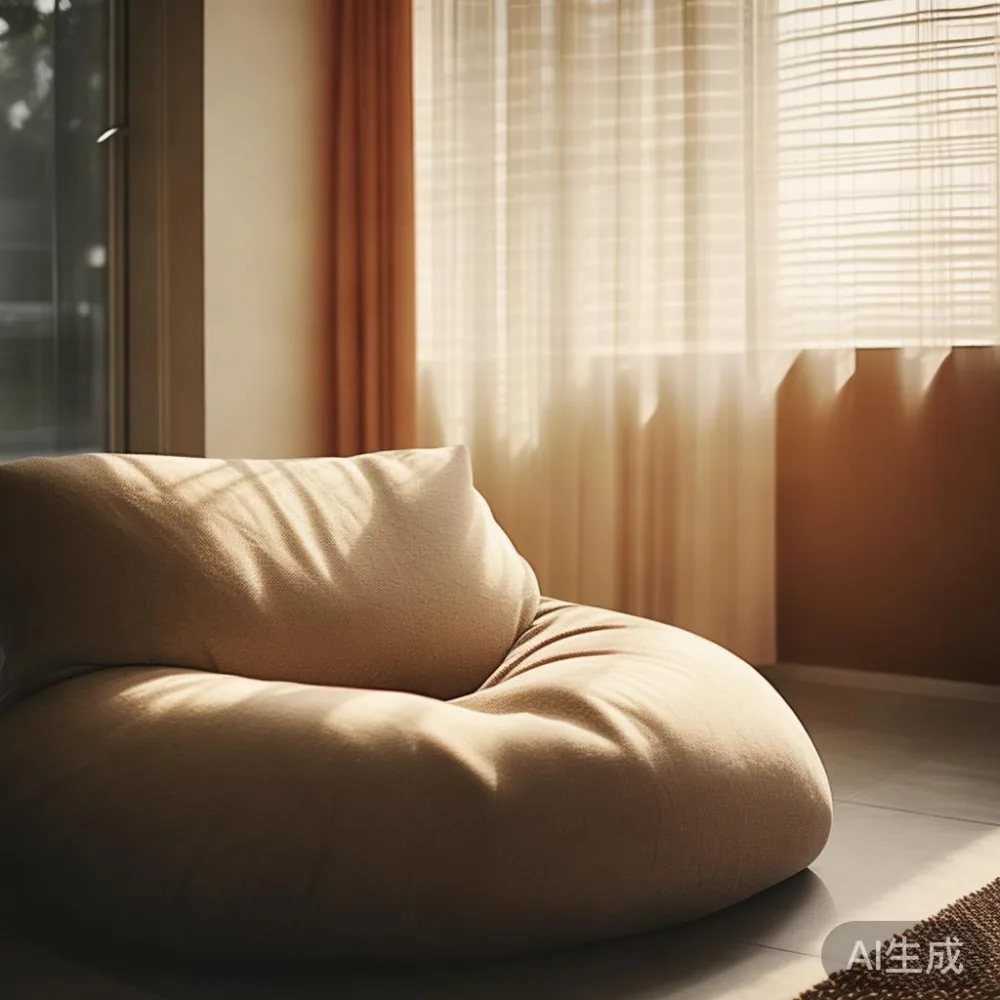
People underestimate the bean bag because they picture a giant 90 cm by 90 cm sphere from 1998. The current generation is structured, supportive, and surprisingly architectural. A 70 cm diameter bean bag filled with EPS beads weighs only 4.5 kg, so you can move it from the living room to the bedroom to the reading nook in five seconds. It fills a corner that an awkward chair would otherwise dominate, and on a Sunday morning a bean bag by the window with a 1.5 m wide ledge makes a reading seat for one without forcing a chair into the room layout.
I keep a grey linen bean bag next to my desk at home. When we have guests, it becomes extra seating. When we do not, it tucks under the console and disappears. In a 30 sqm studio in Punggol, a single bean bag can replace both an armchair (typically 80 cm by 80 cm, 12 kg) and a footstool. That is a real saving on floor area. For families with young kids, a bean bag is also the easiest seat to clean — the outer cover usually unzips and goes into a 7 kg front-loader washing machine, which most Singapore households already own.
If you want to try one before committing, MIDHILL's showroom at the Foshan headquarters displays around a dozen cover fabrics including boucle, velvet, and washed linen. The boucle covers cost about SGD 25 more than the standard cotton canvas, and they are the ones that photograph well in an HDB with downlights.
How do I mix light luxury styles without spending a fortune on an interior designer?
Light luxury is a continuum, not a single look. French light luxury leans on soft curves, cream fabrics, brushed brass, and tapered legs — think of a dining table with cabriole legs in pale oak. American light luxury leans on cleaner lines, deeper colours, oversized proportions, and a leather or boucle sofa. Post-modern light luxury pulls in geometric shapes, mirror panels, and mixed metals for a sharper, slightly 70s-flavoured look that suits compact flats well because the shapes feel curated rather than flat.
If you are weighing a light luxury sofa vs French provincial sofa for your living room, the practical difference is silhouette depth. A French provincial sofa typically sits 95 cm deep and has a rolled back that measures 110 cm tall — beautiful in a 35 sqm living room in a Bukit Timah condo, but dominating in a 4-room HDB. A light luxury sofa at 88 cm deep and a 78 cm back height gives you about 18 cm of clearance behind it, which is enough to walk to the window without turning sideways. Both can come in solid wood frames; the difference is the visible wood tone and the shape language.
For bedroom pieces, post-modern light luxury brings in fluted wardrobe doors and reeded drawer fronts. A fluted-door wardrobe at 180 cm wide looks heavier than a flat slab-door wardrobe at the same size, even though they weigh the same — about 84 kg for a four-door unit. Pick the fluted door if your walls are plain; pick the slab door if your floor has visible patterns such as the wood-grain vinyl planks now common in Punggol BTOs.
Is Japanese bed design actually worth the higher price in a small flat?
The question of "is Japanese bed worth it" comes up often with my buyers in Singapore, and the answer depends on room depth. A Japanese bed frame is usually a low platform at 28 to 35 cm off the floor, with a slatted headboard no taller than 70 cm. In a 2.8 m ceiling, that gives you 2.45 m of vertical air above the mattress, which makes a small bedroom feel taller. The bed frame also sits closer to the floor, so the visible floor area expands and the room reads larger.
The compromise is mattress height. A 25 cm low-profile foam mattress on a 30 cm platform brings the sleep surface to 55 cm — fine for most adults but uncomfortable for anyone with hip or knee issues getting out of bed. For elderly parents in a flexi-flat in Bedok, the Japanese style is often the wrong choice. For a young couple in their first BTO, it is one of the cleanest space-saving moves available. Prices for a queen-size solid wood Japanese-style bed frame from MIDHILL start around SGD 689 for the frame only, and around SGD 1,290 with a matching pair of nightstands.
What about dining tables for four in a 9 sqm dining corner?
In a 4-room HDB, the "dining area" is often an L-shaped corner about 2.4 m by 1.8 m. A round dining table at 90 cm diameter seats four with chairs tucked in at 65 cm — a workable option if your corner is square. A rectangular table at 140 cm by 70 cm seats four along the long sides without chairs poking into the corridor. Anything larger than 160 cm long becomes uncomfortable in a HDB because two diners will feel cramped against opposite elbows.
If you host eight people twice a year, do not buy for eight. Buy an extending solid wood table from the Modern for dining room collection; it should go from 120 cm (four seats) to 180 cm (six to eight seats) using a single butterfly leaf stored inside the table. The leaf weighs 9 kg, so you can extend the table in under three minutes without tools. Solid oak extending tables start around SGD 1,150, which compares well with engineered wood tables at SGD 600 that tend to warp by month 18 in Singapore's 80% average humidity.
Are Japandi and Coastal furniture still worth exploring in 2026?
Japandi blends Japanese minimalism with Scandinavian warmth: pale ash or oak, simple joinery, low profiles, and matte hardware. Coastal uses white-painted timber, cane inserts, linen fabrics, and brass details. Both work well in Singapore HDBs because the colour palettes bounce natural light around the room, and both tend to use solid wood rather than veneer, which holds up against humidity if you seal the pieces every two years.
For shoppers comparing the top 10 Japandi furniture brands in 2026, weight and joinery matter more than the brand name. Solid ash frame with mortise-and-tenon joinery, weighing around 24 kg for a dining chair, will outlast a hollow-core chair at 7 kg by at least five years. Coastal pieces from MIDHILL arrive with a water-based matte sealant rather than a glossy lacquer, which is easier to refinish — and MIDHILL offers lifetime refinishing on structural pieces. In practice that means a Coastal coffee table bought now can be sanded and resealed in year 12 for SGD 180, instead of replaced for SGD 650.
For shoppers comparing 2026 Italian light luxury furniture lines, a useful rule is to check whether the piece is real wood or "wood-effect." Italian light luxury often uses a thin walnut or oak veneer over an engineered core. MIDHILL's similar Italian-influenced dining chair weighs 5.8 kg and uses solid beech — about 35% heavier than a veneered chair at the same price point of roughly SGD 240 to SGD 290 each.
How much should I actually budget for a full small-flat refresh?
For a realistic 4-room HDB in Tampines or Bedok, here is the working budget range in SGD before the 9% GST. A solid wood queen bed frame runs SGD 1,050 to SGD 1,650. Two nightstands come to SGD 480 to SGD 720. A 180 cm wardrobe runs SGD 1,890 to SGD 2,400. A 1.6 m three-seater sofa in light luxury fabric runs SGD 2,100 to SGD 2,900. A marble table entry piece runs SGD 380 to SGD 520. A dining table for four, extending, runs SGD 1,150 to SGD 1,690. Four dining chairs run SGD 960 to SGD 1,160. A bean bag in linen cover runs SGD 189 to SGD 329. Add a TV console at 150 cm wide for SGD 690 to SGD 980. The total, mid-range, sits between SGD 8,900 and SGD 11,800 for the core pieces.
That feels high until you remember that MIDHILL pieces arrive with a 10-year structural warranty and lifetime refinishing, which works out to roughly SGD 90 per year over a decade for the wardrobe alone — cheaper than the SGD 220 per year most insurance riders charge to cover cheap flat-pack furniture damaged by humidity. Delivery to a Singapore address takes 35 to 50 days by sea from Foshan, with free shipping on orders above US$350 (about SGD 470) including lift-up to the door of your unit. Returns are accepted within 14 days for unopened cartons, which gives you time to check the lift, the corridor widths, and the actual spot where the piece will live.
Which mistakes do Singapore buyers make most often with solid wood furniture?
The single biggest mistake is buying furniture bigger than the lift. Measure the lift at your block before ordering a wardrobe taller than 1.95 m or a console wider than 1.55 m. The second biggest is ignoring humidity. HDB humidity sits around 70 to 80% year-round, and air-conditioned bedrooms drop to 55%. Solid wood expands and contracts, so pieces that arrive in winter in Foshan can arrive in Singapore tight, and loosen within a week. Quality makers account for this by kiln-drying the timber to 10 to 12% moisture content before assembly. The third mistake is mixing too many wood tones. Pick two — typically a warm oak for floors and furniture, plus one contrasting piece in walnut or ash — and stick to them.
The fourth mistake is assuming all bean bag covers are interchangeable. Branded covers from MIDHILL use a child-safe YKK zip with a fabric flap behind it to keep beads from leaking. Generic covers often skip the flap, so beads escape into the room. A single escape event can lose up to 30% of the fill in 12 months. Buy covers with a visible inner liner.
Can one well-chosen piece really change how a small flat feels?
Yes, and the piece is usually not the largest one. In my colleague's Tampines flat, the single change that did the most was replacing the 220 cm three-seater with a 175 cm light luxury sofa in pale boucle. We removed 45 cm of width from the longest piece in the room. We then added a 90 cm round marble table on the wall side as a coffee/entry piece, slid in a single bean bag that lives next to the console, and gave the dining table a 140 cm extending top instead of the original 180 cm fixed top. After moving the bed frame to the longer wall, the bedroom gained 50 cm of usable floor, which now fits a small work-from-home corner with a 120 cm solid wood desk.
The total expenditure came to about SGD 9,400 before GST, and the room went from feeling crowded to feeling curated. That is what good furniture is supposed to do at every price point — make the room feel like yours, not like a storage unit you happen to sleep in.