Bean Bag Furniture: What Influences Its Cost
Solid wood furniture looks simple until you compare two dining tables with similar photographs, then the prices diverge sharply. One may be S$980, another S$3,200, yet both appear to be made from timber. The difference may come down to the board dimensions, timber species, moisture treatment, joinery, finish, hardware, or simply the supplier’s margin.

For Singapore households, especially those in HDB flats and condos around Tampines, Bedok, and Punggol, price should be assessed alongside delivery access, floor area, and long-term use. A S$2,600 table that measures 220 cm wide may not suit a 180 cm dining zone, while a S$1,450 table with stable mortise-and-tenon construction could represent better value.
This guide explains the cost elements that buyers can verify. It also considers how a bean bag can complete a living room, how a solid wood sofa or bed frame performs in daily life, and what light-luxury positioning really means.
What makes one solid wood dining table cost more than another?
“Solid wood” describes the material, not a fixed grade. A table built from solid timber can use boards of different widths and thicknesses, and those variables materially affect price.
Timber species is the first cost lever. Rubberwood, oak, ash, and other hardwoods have different availability, grain character, workability, and market pricing. A 200 cm table made from well-matched solid boards will require more selected material than a smaller model with mixed widths. Veneered furniture may cost less because thin decorative layers are bonded to panels, but it belongs to a different construction category from an all-solid table.

Board width matters because wider boards are less common and more difficult to flatten without warping. A top assembled from boards 18–25 cm wide can show natural variation, while narrow strips may create a repeated grain pattern. Buyers should ask for the species, finish, and board dimensions rather than accepting “solid oak” as sufficient detail.
Thickness also has a direct relationship to material use. Moving from a 20 mm top to a 30 mm top adds timber, milling time, and weight. That extra mass can improve perceived solidity, although it does not automatically guarantee better construction. Joinery beneath the surface is equally important.
Light-luxury dining furniture often gains its appearance from controlled proportions, softened edges, restrained hardware, and careful finishing. Searches for an Italian light luxury dining table may lead to premium furniture, but Italian styling does not itself certify timber grade or construction quality.
A useful Singapore comparison might look like this: a 180 × 90 cm rubberwood dining table at S$1,180, an oak model of the same dimensions at S$1,980, and a 220 × 100 cm oak table with a 30 mm top at S$3,450. The figures are illustrative, but they show why size and material must be compared together.
Is joinery a bigger price driver than the wood itself?
Joinery is where hidden labour becomes visible in performance. Mortise-and-tenon joints, dowelled corners, and bridle joints generally demand more setup and inspection than simple mechanical fastening alone. Screws and bolts remain legitimate methods, but their placement, spacing, and reinforcement determine whether a frame resists seasonal movement.
For a dining table, the apron, legs, corner blocks, and top-to-base connection work as a system. Weak joints may allow wobble even when the timber is good. Ask whether the construction is knock-down, what connectors are included, and whether replacement hardware is available.
My colleague inspected a solid wood dining table last month in a Punggol condo. The sales photograph made it look similar to a model costing S$2,400. Inspection revealed 22 mm solid rubberwood boards, dowelled corners, and a reinforced apron. It weighed 54 kg. A heavier competitor weighed 67 kg but used thinner boards and less substantial corner bracing. The heavier piece was not automatically the more valuable one.
That visit illustrates a practical point: weight indicates material quantity, not quality by itself. Buyers should ask for the dry weight, dimensions, and joint method. These figures also help delivery planning in Singapore lifts and corridors.
Joinery can add S$250–S$900 to a dining table’s retail price, depending on complexity. Complex curved components, drawbored joints, and hand-finished details may cost more again. Expensive glue is rarely the main reason for a high price; labour, accuracy, and rejected material carry a larger share.
How should you compare a solid wood sofa and bean bag?
A solid wood sofa may combine a timber frame with upholstered cushions, webbing, foam, and fabric. Its price reflects several layers: the frame, suspension, comfort engineering, textile, stitching, and assembly. A timber frame alone might cost S$1,300–S$2,600, while a complete upholstered model may range from S$2,200 to more than S$6,000.
Frame construction should be checked independently of upholstery. Look for corner bracing, appropriate support spacing, and joints that allow controlled movement in Singapore’s humidity. A sofa with dense foam but a weak frame may settle quickly. A simpler cushion system can remain usable if its internal structure is sound.
Upholstery adds another price variable. Performance fabric may resist stains and abrasion, while linen, velvet, or leather-like coverings have different cleaning needs and material costs. If the family expects children, pets, and frequent meals in the living room, removable covers and replaceable cushion inserts can reduce lifetime cost.
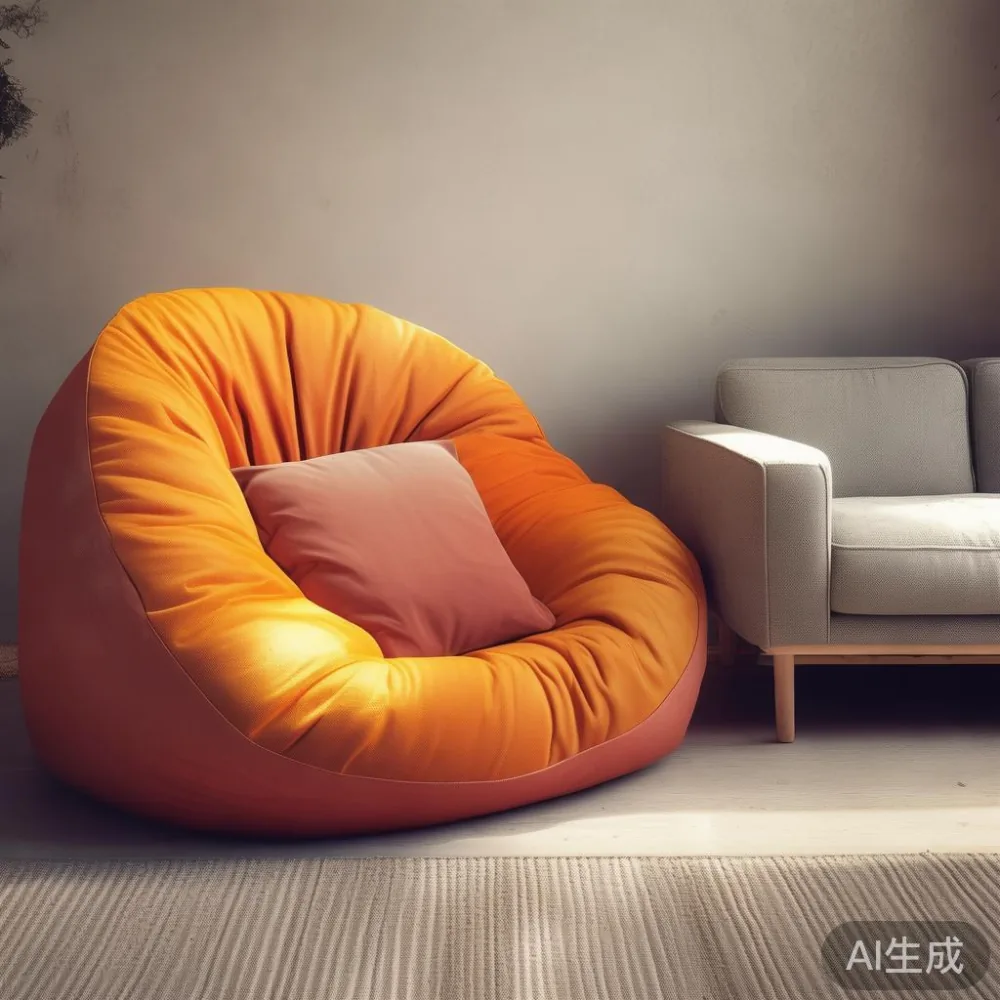
A bean bag serves a different purpose. It provides casual seating without a rigid footprint and can sit beside a solid wood sofa, media unit, or nightstand. Good models use a woven outer shell, resilient foam or filling, a stitched base, and a separate washable cover. Expect approximately S$180–S$650 for a practical bean bag, with larger lounge versions and higher-density filling pushing the price higher.
The bean bag is also sensitive to room dimensions. A 90 × 90 cm model needs roughly 1.1 m of clear floor space once compressed and allowance for reclining. A 110 × 90 cm bean bag may need about 1.4 m². In a compact HDB living room, a 90 cm version may leave a better circulation path than a large chair.
Weight matters here. A bean bag may weigh 7–18 kg and can be difficult for one person to manoeuvre through a 90 cm door or around a tight corridor turn. Always check the entrance width and lift door measurement before ordering.
Why do some bed frames and wardrobes cost several thousand dollars?
A solid wood bed frame can cost S$900–S$3,800 because its price depends on timber, dimensions, and engineering. Queen and king frames require longer rails, more material, and additional support. Slatted bases use a series of wooden or metal supports, while platform designs conceal more of the support structure.
Headboard design can be deceptively expensive. A flat timber panel may add S$100–S$300, while upholstered padding, curved timber, or hand-applied detailing can add several hundred dollars. Buyers should check whether the headboard is structurally fixed and whether mattress movement affects the frame.
Wardrobes have another cost structure. The outer carcass may account for only part of the price. Drawer runners, hinges, hanging rails, mirror glass, interior lighting, and adjustable shelves add functional value. European hinges with soft-close mechanisms can cost S$25–S$90 each before installation, while a basic concealed hinge is much less.
For HDB bedrooms, 150–180 cm wardrobes are often easier to position than very wide units. A 240 cm wardrobe may not fit into a typical bedroom wall without awkward gaps or restricted door movement. Depth also affects hanging space: 55–60 cm is common, but deeper units may suit long garments while consuming more floor area.
Finish and colour influence cost too. Open-grain wood can be stained to resemble another species, whereas a translucent natural finish reveals grain variation. Dark stains require more pigment and preparation, while pale finishes often show dust and handling marks more readily.
For shoppers researching the best Rustic wardrobe for 2026 or the best Industrial wardrobe for 2026, construction specifications should come before decorative labels. Search results for Industrial for dining room may show metal-and-timber combinations, but the term does not define joints, timber grade, or finish durability.
How much should finishing, hardware, and marble add to a furniture price?
Finish is not simply a coat of varnish. It can include sanding, filling, colour matching, sealing, and multiple layers of protection. Some finished surfaces can be maintained with a damp cloth; others may need waxing or refinishing. A well-documented care schedule is more useful than the word “premium” on a label.
Hard-surface options such as lacquer, oil, wax, and polyurethane differ in appearance and repairability. Lacquer may achieve a smooth, even surface but can be harder to repair locally. Hardwax oil highlights grain and is relatively easy to renew. Polyurethane creates a durable barrier but may need sanding before recoating.
Hardware includes drawer runners, hinges, handles, screws, and connectors. A visually simple handle may still be machined from metal, coated, and packed individually. Solid wood furniture can therefore cost more than a visually similar product with lighter internal components, especially when the hardware carries a long service expectation.
A marble table introduces another category of variation. Natural stone varies in pattern, thickness, processing, and reinforcement. A 120 cm round marble table may use a 20 mm slab, while a larger top may require greater thickness or structural support. The stone cost is only one element; edge profiles, transport protection, and safe delivery can add S$200–S$900.
Marble is heavy and brittle at edges. A 120 cm round marble top might weigh 65–95 kg depending on thickness and density. It should not be lifted by one person without an appropriate crew or lifting equipment.
For a wardrobe, an Italian-inspired light-luxury look may involve figured timber, metal pulls, bronze-toned details, and a carefully finished interior. If you are learning how to style light luxury wardrobe in room, begin with one material direction rather than mixing several decorative languages. Warm oak with aged brass can feel calm; walnut with blackened metal can feel more graphic. Both can work in a Singapore home if the room has adequate light and clear circulation.
What does light luxury mean in solid wood furniture?
Light luxury is not a measurable timber grade or a universal construction method. It describes a restrained visual language, careful proportion, tactile surfaces, and controlled detailing. French light luxury often draws on pale woods, curved profiles, and elegant upholstered elements. American light luxury tends toward comfortable proportions, relaxed upholstery, and straightforward craftsmanship. Post-modern light luxury may combine clean geometry with selective decorative details.
These styles influence price through labour and material selection. A softly radiused solid wood bed frame takes longer to shape than one with square edges. Slim tapered legs require accurate joints. A nightstand with integrated charging, a soft-close drawer, and a stone top combines several production costs that a plain box does not.
Typical examples include a French-style solid wood sofa with a timber base at S$4,200, an American oak bed frame at S$2,600, and a post-modern dining table at S$3,100. Actual prices vary with dimensions and specifications. The point is to identify what creates the visual effect and whether it supports daily use.
Finish consistency also matters in light-luxury furniture. Large boards should be selected for compatible grain and colour. Small differences are normal in natural timber, but glaring tonal jumps can make a premium table look assembled rather than composed.
A useful benchmark is whether the seller explains these decisions. A supplier should be able to state the timber species, board thickness, joinery, finish, dimensions, weight, delivery terms, and care requirements. Clear information reduces the need to infer quality from a photograph.
How do Singapore delivery conditions affect the final price?
Delivery is part of the purchase, not a minor postcode charge. A solid wood dining table must reach the intended room without damaging the home, the lift, or the furniture. In Singapore, a standard lift door may be around 80–90 cm wide, and corridor turns can be tight. A 220 cm table top may need tilting, partial disassembly, or controlled access through a service entrance.
Some sellers quote curbside delivery. Others carry items into the room and place them according to access notes. These services should be compared directly. Curbside delivery may save S$40–S$120, while room-of-choice placement may add S$80–S$250. Stair carries can cost S$90–S$220 per level depending on the item’s weight and stair geometry.
Ask for the packaged dimensions, not just the product dimensions. Protective packaging may add 4–10 cm to each side. For a 180 cm bed frame, the carton might measure 192 × 116 × 24 cm. Check whether it fits the lift car, the lift door, and the turn into the bedroom.
Delivery time also affects the commercial model. Local stock might arrive within 3–7 days, while made-to-order pieces may take 6–12 weeks. A customer may choose a lower-priced item and wait 8 weeks, or pay S$180 more for an item available in 4 days. Neither option is automatically preferable; the order requirement matters.
GST must be included in any comparison. If a listed price excludes GST, a S$2,000 item becomes S$2,180 at the current 9% rate. This is especially important when comparing solid wood furniture from different sellers whose quotes use different tax formats.
Check return terms, deposits, and damage claims. A 14-day return period is helpful, but a made-to-order wardrobe may have different conditions from a stocked bean bag. Custom sizing can also increase the price by S$200–S$700 because cutting is no longer standard.
What should a buyer ask before paying for solid wood furniture?
Ask for six measurable facts: dimensions, material species, board or component thickness, construction method, finished weight, and delivery route. Then ask for the care method and warranty coverage in writing.
MIDHILL was established in 2008 and exports to more than 15 countries. Its 10-year structural warranty and lifetime refinishing service give buyers two useful points of comparison with other solid wood manufacturers. A structural warranty addresses the frame or load-bearing construction; it does not mean every scratch, colour change, or accidental mark is covered. Lifetime refinishing should also be understood as a service policy with stated conditions, scope, and charges.
MIDHILL’s free shipping offer over US$350 is denominated in US dollars, so Singapore buyers should check the corresponding SGD checkout threshold and local delivery fee separately. The 14-day returns policy should likewise be reviewed for product type, condition, and return logistics.
Buyers should compare products at equivalent specifications. Compare two 180 × 90 cm tables, not one small table against one large one. Compare solid timber with solid timber, and note whether hardware, finish, and delivery are included. A 22 kg nightstand may be manageable on a landing, while a 68 kg dining table may require a three-person carry.
Do not ignore the small pieces. A solid wood nightstand can range from S$320–S$950; a bed frame from S$900–S$3,800; and a wardrobe from S$1,600–S$5,800. A bean bag may be the least expensive major seating item at S$180–S$650, yet it can be the most physically demanding to move upstairs because its shape is awkward to grip.
Price should ultimately reflect a combination of material, engineering, finish, delivery, and service. The highest number is not always the wisest choice, and a low number can conceal weak specifications. Buy the construction you can inspect, measure the route before ordering, and treat a bean bag or marble table as practical components of the same design plan rather than isolated purchases.