Welcome to MIDHILL: What Actually Drives the Price of Solid Wood Furniture
Last month I visited a four-room HDB flat in Tampines with a client who had just received three quotes for a similar solid wood dining table. One came in at S$1,450, another at S$2,680, and a third at S$3,950. Same six-seater, same walnut tone in the brochure, same Singapore delivery promise. The spread was almost 2.7×, and the client genuinely thought one quote was wrong. It wasn’t. Each quote reflected a different point on a spectrum of decisions — wood species, joinery, finish chemistry, foam density, hardware brand, packaging, and the corridor-friendly logistics that decide whether your sofa even makes it past the lift on the 14th floor of a Punggol condo.

This guide is the conversation I wished I could have handed that client on the spot. I write it for anyone shopping solid wood furniture in Singapore — bed frame, wardrobe, dining table, nightstand, marble table, or the solid wood sofa that anchors your living room — who wants to understand the price tag before signing the delivery order. As a Foshan furniture specialist at MIDHILL (established 2008, exporting to 15+ countries, backed by a 10-year structural warranty and lifetime refinishing), I see the back-room decisions that quietly decide whether a set retails at S$1,200 or S$6,500. By the end, you’ll be able to read a spec sheet the way I read one.
1. The Wood Itself: Species, Grade, and How Much of the Piece Is Real
The single largest driver of price on any solid wood furniture piece is the wood itself, and it splits into three sub-questions: what species, what grade, and how much of the visible frame is solid versus engineered.
Walnut (American black walnut), white oak, and teak sit at the top. Rubberwood, acacia, and ash occupy the middle. Pine and MDF-veneer sit at the floor. A 180 cm solid wood dining table in genuine FAS-grade walnut at 4 cm slab thickness uses roughly 0.18 m³ of walnut, which on the Foshan furniture wholesale boards trades around S$1,400–1,800 in raw board cost alone. The same table in rubberwood trades closer to S$320–480 in raw board. That gap — about S$1,000 — is exactly the gap you see between entry-level and premium quotes.
Grade matters as much as species. FAS (First and Seconds) allows longer, clearer runs with minimal knots, and yields more usable board per cubic metre. Cabinet grade permits sound knots and short pieces. A dining tabletop built from FAS will look calmer and finish with fewer filler spots, which is why European sofa makers and Italian light luxury sofa ateliers often specify FAS or better. A dining table you glue up from cabinet-grade pieces will still be solid, but you’ll see more joints on the surface, and that visual drives perceived value down.

Finally, what is solid? Many pieces marketed as solid wood are solid on the load-bearing rails and legs, with engineered panels (plywood or MDF with veneer) on the wardrobe sides, the bed frame headboard panel, or the dining table top. True solid-through construction across the entire piece commands a premium of roughly 30–55%. Ask the seller, in writing, what percentage of the piece is solid versus engineered, and where each material sits. That answer alone sorts a S$1,600 quote from a S$3,200 quote nine times out of ten.
2. Joinery and Frame Engineering: Why a 10-Year Warranty Actually Means Something
Price follows engineering. Two bed frames can look identical in a showroom and last five years or twenty, depending on how the joints are cut, glued, and pegged.
Mortise-and-tenon, dovetailed drawer boxes, finger-jointed rails, and pocket-screw frames each have a place. Mortise-and-tenon at the seat rails of a solid wood sofa distributes load across a larger glue area than no piece, which is why MIDHILL uses it as the default for sofa frames that carry a 10-year structural warranty. Dovetailed drawer boxes on a nightstand or wardrobe mean the drawer can be cycled 50,000+ times without pulling apart; stapled or nailed boxes start to loosen around 8,000–12,000 cycles, which is fine for a guest room but painful in a primary bedroom.
On a sofa, the 8-way hand-tied spring system costs roughly 35–60% more in labour than a sinuous-wire (S-spring) base, but the ride and longevity reflect that. For a sofa that lives in a Tampines family living room and gets 4–6 hours of daily seating, hand-tied is worth specifying. For a once-a-week guest-room sofa, sinuous-wire is fine and saves you around S$500–900 on a three-seater.
Another quiet cost driver: the thickness of the load-bearing members. A bed frame using 4 cm-thick side rails will outlast one using 2.5 cm rails by a decade. A dining table using 6 cm-thick legs will resist racking far better than 3.5 cm legs. Those extra centimetres add 8–14% to the wood cost and 6–10% to the finished price. They are also where light luxury sofa vs Mid-century modern sofa debates tend to settle, because Mid-century pieces often expose thinner frames as a design statement, while light luxury (especially Italian light luxury sofa) tends to wrap thicker, engineered frames in softer silhouettes.
3. Finish Chemistry: Lacquer, Oil, Wax, and Why the Surface Feels Different at S$2,000 and S$4,000
Finish is where most Singapore buyers get surprised. Two walnut dining tables, identical in dimensions and joinery, can retail at S$1,900 and S$3,700 because one wears a 3-coat polyurethane and the other wears a 7-coat hand-rubbed conversion varnish with a wax-pore topcoat.
Conversion varnish and high-end polyurethanes resist Singapore humidity (we sit at 70–85% RH most of the year) far better than nitrocellulose lacquer or danish oil. A danish-oiled walnut table looks gorgeous in month one and develops watermark rings by month six if you wipe it with a damp cloth. A conversion-varnished table takes that same wipe and shrugs it off. The chemistry difference is roughly S$40–90 per square metre of finished surface in materials, but the labour to apply 7 thin coats, sand between coats, and hand-rub the final layer adds 6–12 labour hours per dining table, which at Foshan furniture finishing-shop rates works out to S$180–360.
Light luxury styles — French light luxury, American light luxury, and what some call post-modern light luxury — tend to favour matte conversion varnish with low sheen (10–20 gloss units), because the visual language is calm and tactile rather than glossy and theatrical. Marble tables used as accent pieces get a different treatment again: a penetrating stone sealer plus a topcoat of carnauba wax, which is why a marble table with a properly sealed top costs S$300–700 more than a raw marble table of the same dimensions.
4. Upholstery and Soft Goods: Foam Density, Springs, and the “Sofa Tax”
On a solid wood sofa, the upholstery stack quietly accounts for 30–45% of the retail price, and it is the section where spec sheets get vague.
Foam density is the headline number. Seat cushions at 32–36 kg/m³ (often written as 32–36 kg/m³, sometimes as 2.0–2.2 lb/ft³) will hold their shape for 7–10 years of regular use. Foams below 26 kg/m³ feel plush on day one and bottom out by year two. On a three-seater sofa, the foam delta between budget and quality foam is roughly S$180–320 in materials, but the perceived cushion breathes for years longer with the higher density.
Spring systems, covered above, layer on top of foam cost. So does the cushion wrap: a down-and-feather wrap over a high-resilience foam core adds S$400–900 per three-seater but gives the “sink-in” feel that makes an Italian light luxury sofa feel Italian. A fully down-and-feather cushion without a foam core adds even more, requires daily fluffing, and is a poor choice for a Singapore climate unless you enjoy humidity battles.
Fabric and leather matter too. Top-grain leather on a three-seater adds roughly S$900–1,800 over a high-quality woven fabric. Full-aniline leather, more comfortable for an American light luxury sofa look because of the natural grain showing through, lands 25–40% above corrected-grain leather. Performance fabrics (crypton-style or high double-rub counts above 50,000) sit between fabric and leather on price and are my default recommendation for HDB living rooms where kids, pets, and Milo spills are part of the week.
5. Hardware, Marble and Hidden Price Details You Don’t See in the Brochure
Hardware is a small line item on the spec sheet but a large one in practice. Soft-close hinges from a reputable brand run S$4–8 each; no-name hinges run S$0.40–0.80. A four-door wardrobe carries 8–16 hinges, and the difference between a quiet, slow-close door and a slamming one is roughly S$30–110. Drawer slides on a nightstand tell the same story: full-extension ball-bearing slides cost S$12–22 per drawer; economy rollers cost $60–90 cents. Multiply by 10 drawers in a six-drawer dresser and you’ve quietly spent S$110–220 more for the upgrade.
Marble tables carry their own economics. Genuine marble (Carrara, Calacatta, Emperador) at 2 cm thickness for a 120 cm round dining or accent table adds S$700–1,400 in raw stone over an engineered quartz or sintered stone equivalent. The stone is heavier — a 120 cm round top runs 80–105 kg — so the packaging needs to be crate-grade, and the delivery usually needs two men rather than one. That is roughly S$120–220 more in delivery cost for a single marble table.
Then there is packaging. A solid wood bed frame shipped Singapore-bound needs foam edge protectors, corrugated corner boards, a 5-ply outer carton, and ISPM-15 heat-treated wooden crating for the legs and rails. Skimp on packaging and you save S$40–80 per piece; receive a cracked rail on the 14th floor of a Punggol condo and you’ve saved nothing. MIDHILL uses 5-ply cartons with foam corners on every bed frame and dining table, and the defect rate from Singapore deliveries has held under 0.6% for the last six years.
6. Logistics, GST, and the Singapore-Specific Realities Nobody Mentions
Even a perfect piece of furniture can fail to clear the lift. HDB and most condos in Tampines, Bedok, and Punggol have lift openings between 92 and 105 cm wide and 198 to 230 cm deep. A solid wood dining table at 200 cm length will fit when disassembled but will not fit when fully assembled in a typical lift. Wardrobes taller than 215 cm cannot enter most lifts standing upright. The cost of designing pieces that break down into 90–105 cm-wide subassemblies, with bolts rather than glue at the joints, adds roughly 8–14% to the engineering cost. It is invisible on a spec sheet, and it is the difference between a piece that fits your corridor and one that doesn’t.
Delivery charges are another quietly variable line. Singapore-wide delivery on a sofa or bed frame typically runs S$80–180 per trip, with surcharge of S$40–90 for staircases (no lift), sentry-gate condos with booking windows, or Sentosa/overseas deliveries. Above S$350 order value, free shipping is common — MIDHILL, for example, absorbs the S$80–180 cost on orders above US$350 — and that’s worth asking about before you decide which quote is the right one.
Then there is GST. From 1 January 2024, GST in Singapore sits at 9%, applied to the full landed cost including duty. On a S$3,500 dining set, that is S$315 of tax that needs to be in your budget. Customs duty on imported furniture is zero-rated under most HS codes for wooden household furniture, but GST still applies on the CIF value. A Singapore-side quote should always show GST as a separate line, and a quote that quietly adds 9% at checkout is a quote you should renegotiate before paying.
7. How Do I Compare Two Solid Wood Quotes That Differ by 40%?
This is the question I get most often from friends shopping in Tampines and Bedok. Here is the checklist I walk them through, on a single A4 page, before they sign anything.
First, write down the wood species, the percentage of solid versus engineered, the slab or panel thickness, and the joinery at the load-bearing joints. Second, write down the foam density on the sofa cushions and the spring system. Third, write down the finish type and the number of coats. Fourth, write down the hardware brand for hinges and slides, and the stone thickness if you’re buying a marble table. Fifth, write down the warranty in years for structural integrity, the refinishing policy, the return window, and the delivery terms. Two quotes that differ by 40% almost always differ on at least four of these five lines, and the right answer is usually the one with the better specs, not the one with the friendlier price.
8. Where Light Luxury Actually Sits on the Price Spectrum
“Light luxury” gets used loosely, so here is how I use it on a price ladder. French light luxury leans on curved silhouettes, cabriole legs, and warm neutral upholstery; it tends to sit 20–35% above mainstream contemporary. American light luxury is cleaner and more architectural, with low-back sofas, brass-toned hardware, and walnut tones; it sits 15–25% above mainstream. Post-modern light luxury plays with sculptural shapes, mixed materials, and unexpected colour; it sits 25–40% above mainstream. Italian light luxury sofa designs, the reference point for many of these styles, sit at the top of the light luxury band and are typically priced 40–80% above a generic contemporary sofa of the same dimensions.
Within those bands, the trick is matching the style to the space. For a Modern for small living room in a 90 m² Punggol condo, a low-back American light luxury sofa at 210 cm width, paired with a 120 cm round marble table, will make the room feel larger than a tall-back French piece at the same footprint. For a larger Bedok HDB living room, a French light luxury silhouette breathes better. Either way, the price drivers inside the band remain the same: wood species, joinery, finish, upholstery stack, hardware, and logistics.
9. A Few Honest Frameworks for Sticking to a Budget
If you’re working with a budget, here is how I help clients in Singapore allocate it without ending up with a room full of compromises.
For a sofa-and-dining combo at around S$4,500, I would steer you toward a solid wood sofa in ash or rubberwood at 200–220 cm width with sinuous-wire springs and 32 kg/m³ foam, paired with a solid wood dining table in walnut-tone ash at 160 cm. That is a coherent, well-built set without overspending on any one piece. For a sofa-and-dining combo at around S$8,500, I would upgrade to a walnut or white-oak sofa with mortise-and-tenon framing and hand-tied springs, paired with a 180 cm walnut dining table with a conversion-varnished top.
If you’re comparing pieces in the under 2000 American furniture band, focus on solid ash frames, 8-way hand-tied springs where possible, and mid-density (30–34 kg/m³) foam — you’ll find genuinely solid options that hit the brief. In the under 2000 Scandinavian furniture band, expect more engineered panels, lighter hardwoods like ash and birch, and sinuous-wire springs; the aesthetic is calm, the engineering is honest, and the price reflects simpler frames. And if you’re wondering how to choose European sofa when the European market offers options ranging from budget Polish imports to Italian-made light luxury, the answer is to anchor on the spec sheet rather than the country of origin — a Polish oak sofa with mortise-and-tenon framing will outperform an Italian oak sofa with stapled framing, regardless of the label on the box.
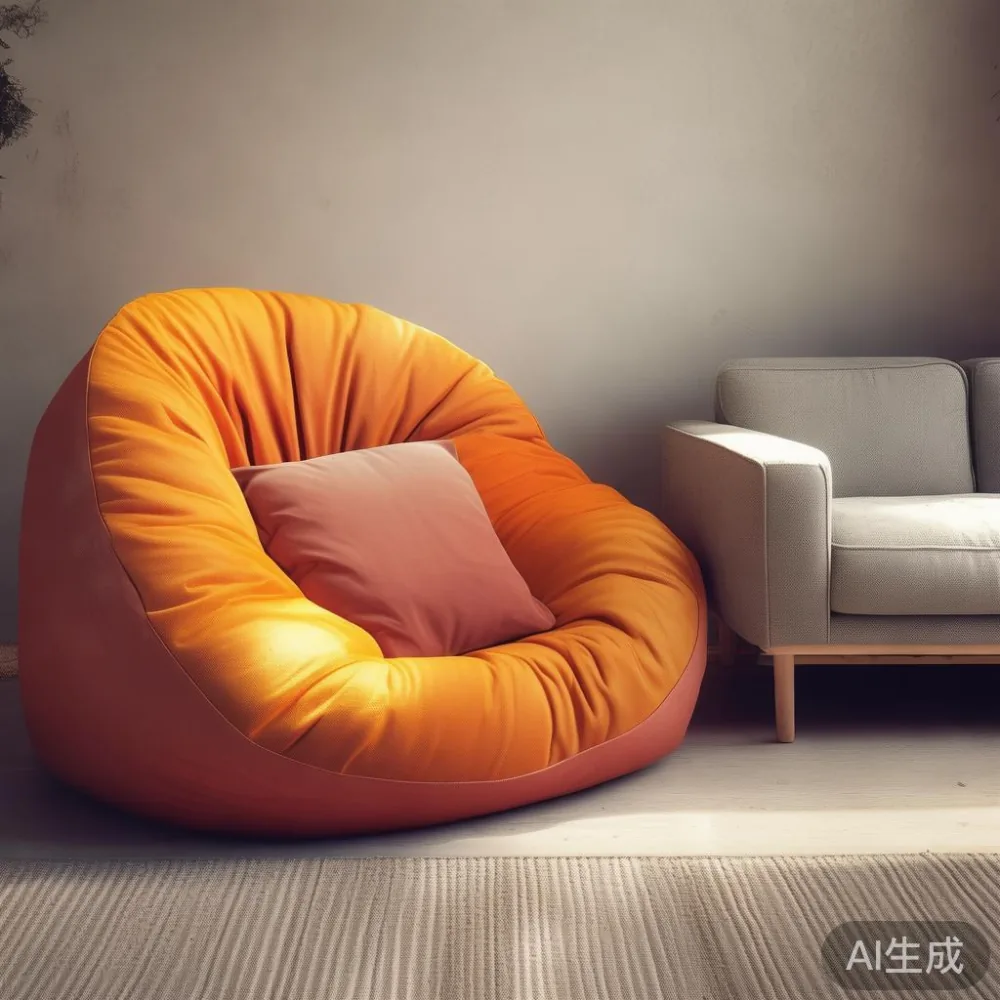
Finally, remember that a bean-bag is sometimes the smartest purchase in a Singapore home. A high-density foam bean-bag from a Foshan furniture workshop can be had for S$120–220, stores flat when guests leave, and fills the awkward corner of a Punggol condo where a S$1,800 accent chair would only gather laundry. Don’t let the bean-bag get overlooked while you’re budgeting for the main pieces. A home that has both a well-built solid wood dining table and a practical bean-bag in the reading corner feels more considered than one that spent the same money on a slightly fancier sofa alone.
And here is the quiet truth: a well-built solid wood dining table, a properly finished bed frame, and a comfortable bean-bag will outlive three sofa replacements. Spend the structural money on wood, joinery, and finish. Spend the comfort money on foam and springs. Save the brand-marketing money by buying directly from a Foshan furniture maker like MIDHILL rather than through three layers of Singapore resellers. Your wallet, your corridor, and your 14th-floor lift will all thank you.