Veneer vs Solid Wood: A Five-Year Cost Comparison for Singapore Homes
Buying furniture for a Tampines or Punggol HDB sounds simple until the receipts start piling up. I learned this the hard way last month, when my colleague in Bedok replaced a wardrobe after only 26 months because the laminate edging had curled away from the door panels. The original price had looked attractive on a Thai e-commerce listing, yet the real cost — replacement, delivery up three flights of corridor stairs, and a Saturday spent at the void deck arguing with the driver — doubled the original ticket. That moment pushed me to map out what a typical piece of furniture actually costs across 60 months in Singapore, comparing wood-veneer pieces against solid wood alternatives such as a solid wood dining table, a solid wood sofa frame, or a MIDHILL light luxury bed.
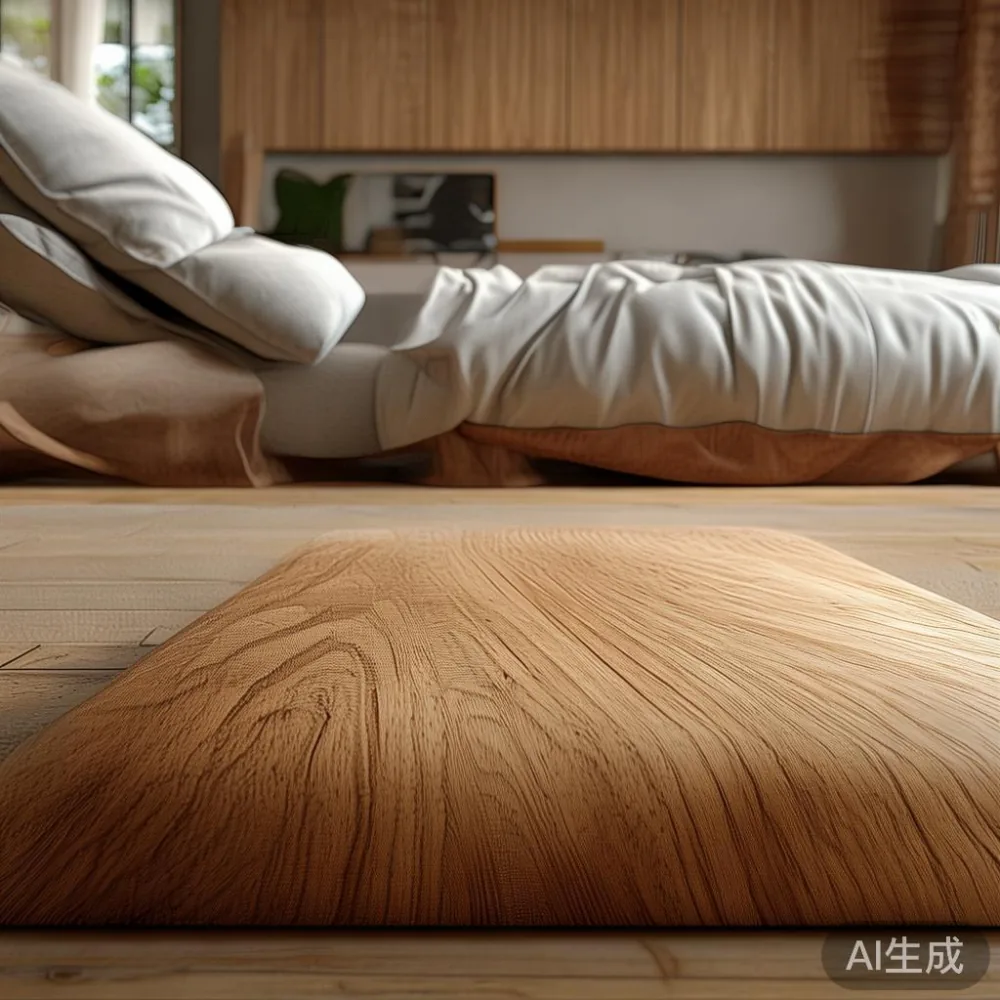
How much does a typical wood-veneer dining table cost to own over five years in Singapore?
A 180 cm × 90 cm wood-veneer dining table retails for roughly SGD 650–SGD 1,100 in Singapore showrooms. The number looks manageable on a Taobao or Carousell listing, especially when the seller offers free lifting up to the third floor and waives GST for low-value consignments. Five years later, the same owner usually budgets another SGD 380–SGD 720 for one of three outcomes: a re-veneer job on the tabletop, a replacement table altogether, or a professional polish to disguise bubbling near the heat-resistant coasters.
Veneer is, by construction, a 0.5–0.9 mm sheet of decorative timber glued onto a plywood or MDF substrate. The substrate does the structural work, the veneer does the visible work, and glue does the rest. Singapore humidity sits between 70% and 90% for roughly nine months every year. That moisture slowly swells the MDF, and the veneer skin — already thinner than a credit card — begins to lift at the corners of a dining table where hot plates rest. A second category of cost is repair: respraying a chipped edge runs SGD 120–SGD 200 per panel in local workshops. Add transport into a HDB lift (the cabin opening is usually 210 cm high × 90 cm wide, so a 200 cm tabletop has to be tilted diagonally), and a single replacement cycle quietly climbs past SGD 1,500.
What does a comparable solid wood dining table cost over the same five years?
A solid wood dining table in oak, ash, or rubberwood from a Foshan workshop typically lands in Singapore at SGD 1,450–SGD 2,250 for a 200 cm × 100 cm six-seater, inclusive of GST and door-to-door delivery. The first-year outlay is higher, but the following four years usually cost less than SGD 200 in total: a tin of beeswax once every spring, perhaps a SGD 60 refinishing session at year three if someone drags a metal chair leg across the surface. I visited a friends-and-family unit in Punggol last quarter where an oak table bought in 2019 still looked like new after five moves between rental flats, a wedding, and two lockdowns of full-time home dining.
Five-year totals are easier to compare when written on the same line. For a wood-veneer dining table in Singapore the realistic five-year outlay sits between SGD 1,100 and SGD 1,950 after factoring repair, transport, and one replacement. For a solid wood dining table of similar dimensions, the realistic five-year outlay runs SGD 1,550 to SGD 2,500, with most of the spend happening in year one. The gap narrows further once you price the time lost to coordinate repairs, the days off work waiting for a handyman, and the wear on your phone battery from endless supplier chats. If the household treats the dining table as a 10-year piece rather than a five-year piece, solid wood pulls clearly ahead by year four.
What does the same comparison look like for bed frames and wardrobes?
The pattern repeats, and usually more sharply, on vertical pieces. A wood-veneer wardrobe with sliding doors costs SGD 980–SGD 1,400 for a 240 cm × 220 cm × 60 cm unit. After five years in a non-aircon corridor or a master bedroom that catches the afternoon sun, the sliding tracks jam, the laminate begins to peel along the top edge, and a hinge replacement runs SGD 90 per panel. A solid wood wardrobe from a brand such as MIDHILL, built around a 4 cm × 6 cm mortise-and-tenon frame in ash or rubberwood, lands at SGD 2,200–SGD 3,100 with the same dimensions. Over sixty months the only real cost beyond purchase is a hinge oiling or a free track adjustment under the brand's 10-year structural warranty.
Bed frames tell the same story on a smaller scale. A king-size wood-veneer bed frame costs around SGD 750 and almost always needs a centre rail replacement by year four, because MDF cannot hold a 1.6 m span without sagging. A solid wood king bed frame costs SGD 1,400–SGD 1,950 and uses a hardwood centre rail that supports a 22 kg pocket-spring mattress without flexing. If the homeowner sleeps 7–9 hours per night on that mattress, the upgrade cost amortises into a per-night number roughly equal to a plate of chicken rice. The same logic applies to a nightstand, which survives veneer for three or four years before the drawer bottoms sag — solid wood draws cost SGD 280–SGD 380 each and tend to outlast the bed frame beside them.
Which material holds up better in HDB humidity, lifts, and narrow corridors?
Singapore HDB blocks from the 1980s to the 2020s share a few physical constraints: corridor widths of 1.2 m to 1.5 m, lift cabin openings of 90 cm × 210 cm, and a perpetually damp monsoon season. Solid wood tolerates these conditions because it breathes with the humidity. A 2.5 cm ash plank will swell 1–1.5 mm across its width in October and shrink back in February, and the joint lines will close without cracking. Veneer cannot breathe the same way; the substrate and the skin expand at different rates, and the glue line — typically a urea-formaldehyde or PVA — gives way within 36 months on most pieces I have seen in local homes.
I have watched movers dismantle a wood-veneer bookcase at a Punggol Eco block last November because the lift refused to accept the 240 cm assembled height. The bookcase cracked at the top rail during dismantling, costing the owner SGD 320 in repairs. A solid wood bookcase from the same supplier would have weighed 38 kg instead of 52 kg — denser material, but no hollow MDF core — and the mover could have angled it into the lift on its side without dismantling. For heavier items such as a marble table or a large solid wood sofa, the same logic applies: solid pieces can sometimes be moved in fewer man-hours, which trims your relocation bill every three or four years when the typical Singapore household moves once.
Should Singapore buyers choose French light luxury, American light luxury, or post-modern light luxury styles?
The light-luxury category, sometimes called light affluence furniture, leans on muted palettes, soft curves, and visible wood grain. A French light luxury solid wood dining table pairs tapered cabriole legs with a brushed-brass sabre foot; an American light luxury bed frame uses thicker posts, square edges, and darker walnut tones; post-modern light luxury borrows geometric asymmetry and pairs solid oak with a marble table for a dining or living-room anchor. All three of these styles depend on real wood grain showing through the finish, which is precisely what veneer fakes — and precisely what gives a solid piece its pricing power on resale.
When readers search locally for the best European light luxury furniture in 2026, the pieces that satisfy them are almost always solid: an oak-framed armchair, a stone-and-timber coffee table, a velvet and ash headboard. Those readers are also likely to type for sale European furniture or compare listings against the best French provincial sofa for 2026, and again the winners are the pieces with hardwood frames under the upholstery. Other adjacent briefs that consistently favour solid construction include best European light luxury furniture, under 2000 Industrial furniture, and Boho for small living room layouts — three specific briefs where MDF and veneer underdeliver within months.
What about bean-bag seating — does solid construction matter there too?
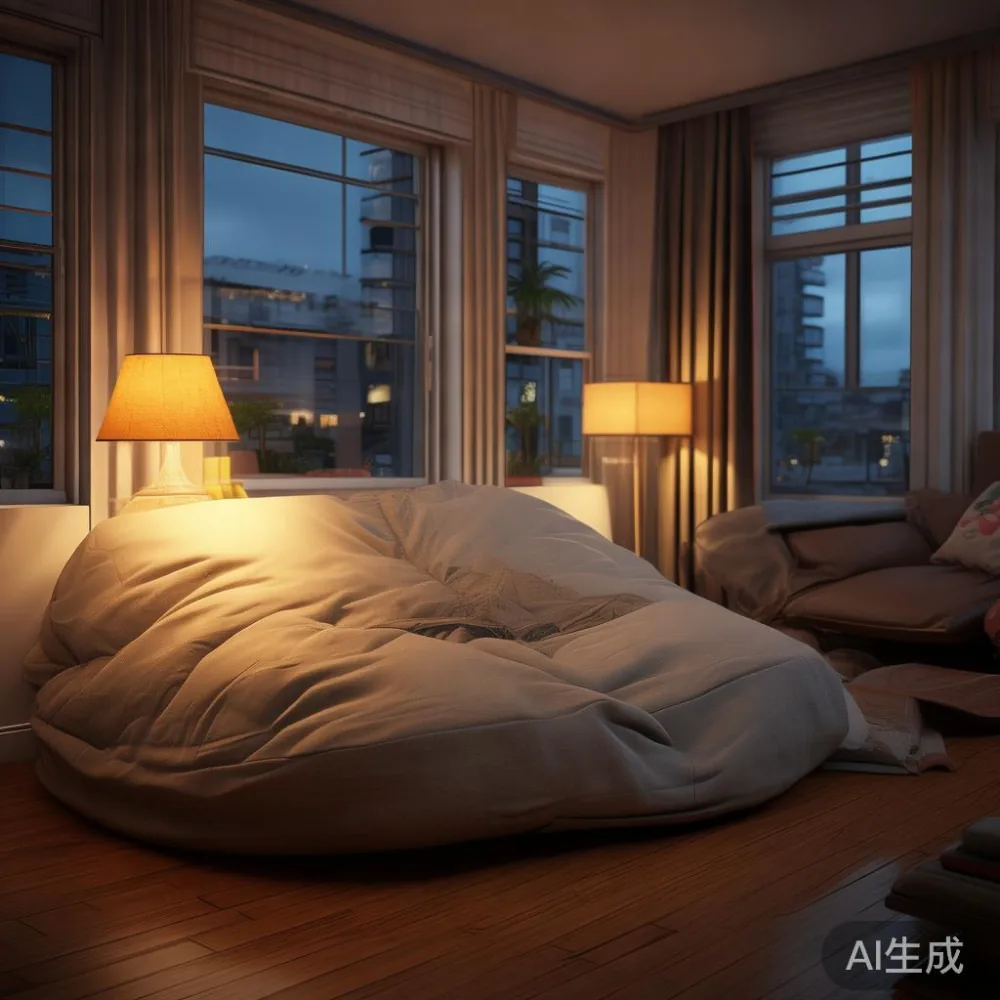
Bean-bag chairs look casual, but the cost-over-five-years analysis still applies. A cheap foam-and-PVC bean bag retails at SGD 65–SGD 120 and goes flat within nine months because the inner liner splits at the seams. A higher-end bean bag with a solid wood base, a cotton liner, and a replaceable inner bladder runs SGD 280–SGD 450 and survives three to five years of weekly use, especially when the bean bag comes with a washable outer cover and a YKK zip. The solid wood base matters because the bean bag frame takes the structural load; without it, the bag collapses inward and the bean filling migrates to the lowest point.
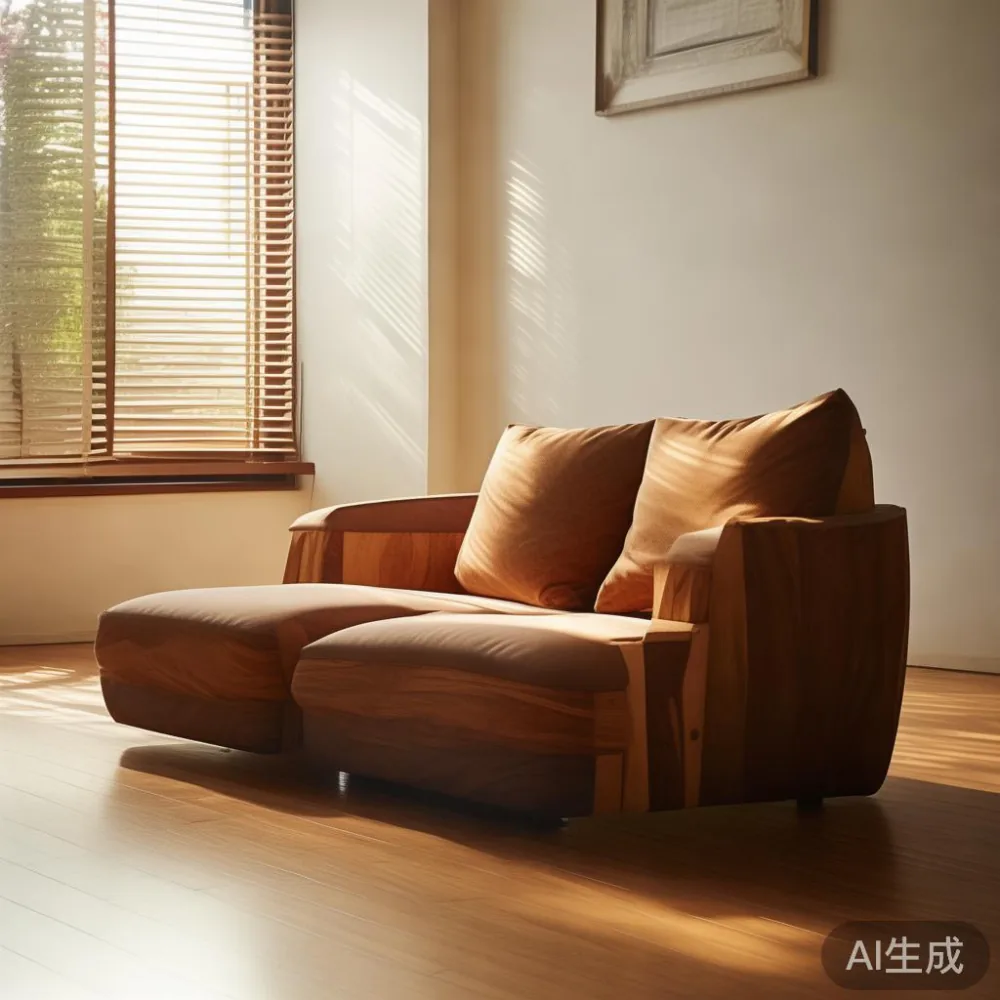
For Singapore HDB living rooms that double as a TV room and a nap zone, a solid-base bean bag is a sensible purchase if the household already owns a solid wood sofa or a solid wood bed frame. The shared wood species keeps the visual palette aligned, and the all-wood anchoring — sofa, bed, bean bag base, and coffee table — lets one refinisher service the whole set on the same day. Some families now ask the same brand (MIDHILL, for example) to supply both the bean bag base and the matching solid wood sofa so the warranty, the delivery window, and the after-care are unified under one team.
How do warranties, GST, and shipping affect the actual Singapore invoice?
GST adds 9% to every imported furniture invoice that crosses SGD 400 in declared value. For a solid wood sofa imported from a Foshan factory, the duty and GST combined usually run SGD 180–SGD 320 per piece, which gets folded into the supplier's CIF (cost-insurance-freight) Singapore price. Free shipping thresholds are common: MIDHILL waives the delivery fee above US$350, which at current exchange rates is roughly SGD 480. Below the threshold, a 180 cm dining table still attracts SGD 95–SGD 140 in landed delivery fees because the item is bulky and requires a two-man crew plus a tailgate truck.
Warranty value is harder to quantify but easy to feel. A wood-veneer piece typically carries a 12-month warranty covering manufacturing defects, which excludes almost everything that actually goes wrong in Singapore humidity. A solid wood piece from a brand with a 10-year structural warranty covers the joints, the frame, and the load-bearing components for a full decade, and lifetime refinishing is offered by several Foshan makers including MIDHILL on premium lines. Over five years, the warranty alone closes a meaningful share of the price gap, because a single replacement hinge, drawer runner, or centre rail is the kind of repair you do once on a solid piece and two or three times on a veneer piece. If a reader has a specific question about a custom order, the MIDHILL direct line is +86 188 2788 2512, reachable on WeChat, WhatsApp, and standard mobile.
Where can a Singapore homeowner verify the numbers before committing?
The cleanest test is to ask the supplier for the precise wood species, the moisture content (target 8–12% for tropical climates), the substrate under the veneer, and the warranty document in writing. A solid wood supplier will answer in one email; a veneer supplier often deflects. Then walk through the five-year cost with a calculator: purchase price, plus one expected repair, plus one replacement of consumable parts, plus delivery and disposal at the end of life. Subtract the resale value — solid wood retains 30–45% of its invoice price after five years; veneer retains 5–10%. The net landed cost of a solid wood dining table or a MIDHILL light luxury bed over five years almost always undercuts the apparent savings of a cheaper veneer alternative, especially once you include the days of stress saved by skipping one full replacement cycle.
Common questions from Tampines, Bedok, and Punggol buyers
Does a heavier piece always mean better quality? Not always. A solid oak dining table at 38 kg outperforms a hollow MDF-and-veneer table at 52 kg, because the latter's weight is mostly resin and glue. Ask for the species, the board thickness, and the joint type instead of trusting the showroom scale.
How long should a bean bag last in a HDB? A 90 kg-density foam bean bag with a cotton liner in a non-aircon utility corner lasts 12–18 months. The same bean bag with a solid wood base, an inner bladder, and a washable outer cover lasts 36–60 months.
Can a solid wood piece fit through a HDB lift? Standard cabin openings are 90 cm wide × 210 cm high. A 200 cm dining table must be tilted diagonally, which any HDB-experienced mover will do in under 15 minutes. Anything taller than 215 cm has to be partially disassembled.
Is light-luxury furniture only an aesthetic choice? No. French light luxury and American light luxury styles both require the visible grain and tactile warmth that only solid wood delivers; veneer looks acceptable in a catalogue photo but loses the texture under raking daylight.
What about marble tables? Marble table tops pair naturally with solid wood bases; the wood absorbs movement, the marble handles heat and spills. A marble-on-veneer table is a common compromise that can delaminate within three years.