Lacquered Wood, Humid Air, and a 4-Room HDB: How to Keep Your Furniture Looking New in Singapore
I learned the hard way how unforgiving Singapore’s climate can be on lacquered wood. Last month, I visited a friend’s resale flat in Bedok where a six-year-old dining table had developed a milky haze across the surface. The culprit was not the brand, the finish, or the cleaning routine. It was a combination of afternoon sun streaming through a west-facing window, an air-conditioning unit that ran only at night, and a year of wiped-on silicone polish. The good news: lacquer is forgiving when you understand what it is and what it reacts to, and the rules below work for any sealed wood piece in a Tampines, Punggol, or Bukit Merah home.
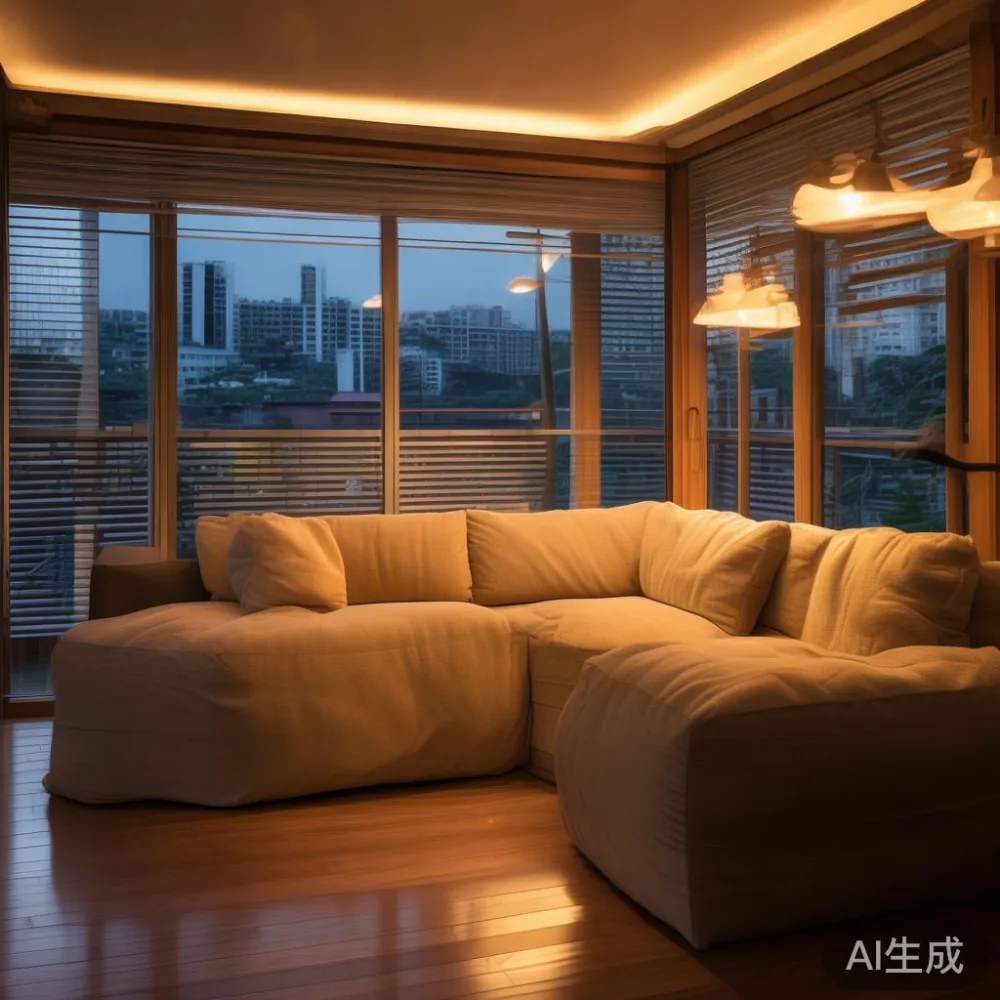
Why Singapore’s Climate is a Lacquer Stress Test
Singapore sits roughly one degree north of the equator, with average relative humidity between 78% and 88% for most of the year. A lacquered film is, in chemistry terms, a cross-linked resin layer sitting on top of solid wood. The wood underneath wants to absorb and release moisture; the lacquer on top wants to stay dimensionally stable. When the two disagree, the lacquer flexes. Over twelve to eighteen months, that flex shows up as micro-cracks along the grain, white rings under a coffee cup, or a dull, cloudy patch where the resin has lost its refractive shine.
Three local factors accelerate this. First, the daily swing between outdoor humidity (often 90% by 7am) and an air-conditioned bedroom (sometimes 45% at 3am) creates a 40-point moisture differential across an eight-hour span. Second, HDB corridor air in older blocks like those around Tampines GreenRidges carries cooking aerosols and traffic particulate that settle as a greasy film. Third, lift access limits how often owners rotate heavy items such as a 90 kg solid wood sofa or a 110 kg bed frame; many Singaporeans keep a piece in one position for a decade, which means the sun-exposed side degrades while the shaded side does not.
The 7-Day and 30-Day Routine That Actually Works
Forget the “wipe once a week with anything” advice. A predictable cadence matters more than any specific product.
Daily (under 60 seconds): after each meal, brush crumbs off a lacquered dining table with a dry microfibre cloth (GSM 300 or higher). Never use a wet cloth at this stage; you will smear oils into the grain.
Weekly: damp-wipe with a well-wrung microfibre cloth and a few drops of pH-neutral wood soap. Move the cloth in line with the grain, not across it. Wipe dry within 30 seconds.
Monthly: inspect the surface raked against a lamp. If you can see a hazy film, clean again with a 1:10 mix of isopropyl alcohol and distilled water, then apply a thin coat of paste wax (Carnauba-based, not silicone). Buff for 90 seconds.
Quarterly: rotate items that sit permanently on the surface, including table lamps, a marble table centrepiece, or a stack of books. The colour mismatch that appears under a stationary object after 90 days is, in my experience, the single most common complaint from HDB owners who contact furniture brands like MIDHILL about warranty queries.
Which master bed fits a 4-room HDB living room?
A standard 4-room HDB living room in estates such as Sengkang or Jurong East measures roughly 3.2 m by 4.0 m, and after a three-seater sofa and a TV console, you have about 2.4 m of clear wall for a bed setup; this means a master bed frame in king size (183 cm by 190 cm) is the practical ceiling, and a super-king (200 cm by 200 cm) will not fit without removing a door, while a queen (152 cm by 190 cm) leaves a comfortable 60 cm walkway on each side, fits a standard 3.0 m ceiling height with headroom for any headboard up to 120 cm, and still allows a wardrobe 180 cm wide to be delivered through a typical 90 cm HDB corridor and a 80 cm by 210 cm door frame, provided the wardrobe ships in two flat-pack modules of under 35 kg each.
Beyond raw dimensions, three more constraints shape the choice. Lift depth in most HDB blocks since the BTO reconfiguration in 2014 is 1.4 m, with a door width of 0.9 m, so any single component longer than 1.35 m must be delivered in two pieces. MIDHILL, for instance, splits its solid wood bed frames into two side rails and a slatted platform, each carton under 28 kg, which two movers can carry up a single-flight staircase in a walk-up block in Bukit Merah without a second trip. The brand also offers a 10-year structural warranty that travels with the piece, useful for owners who plan to sell their flat in three to five years.
Light-Luxury Finishes and Why They Behave Differently
“Light luxury” is shorthand for a category of finishes that sit between matte Scandinavian and high-gloss Italian lacquer. In French light luxury, the surface is usually a five-coat open-pore lacquer with a 12% sheen, meaning you can feel the grain with a fingernail but the pores do not collect dust. American light luxury trends toward a 25% sheen satin that hides fingerprints on pieces such as a solid wood sofa frame or a nightstand top. Post-modern light luxury, popular in Tiong Bahru and Telok Ayer renovated shophouses, pushes contrast: a near-matte body with a single high-gloss panel on a drawer front.
These finishes share one rule: the higher the sheen, the more obvious the haze. A high-gloss lacquer on a 220 cm dining table will show every fingerprint within 20 cm of a window. A satin will forgive it. If you are placing a piece against a wall that catches direct sun between 2pm and 5pm, a satin or open-pore finish will save you a monthly polish. In showrooms I have visited in Sungei Kadut and along Avenue 4, customers who chose satin reported wiping the surface once a week; those who chose gloss reported twice.
What to Avoid: The Mistakes That Void a Warranty
I have watched a single coaster-less coffee mug undo S$2,400 of finish. The heat differential between a 65°C ceramic base and a 25°C lacquered surface is enough to cause a permanent white ring within four minutes. Other common warranty-voiding actions include placing rubber or latex feet directly on the surface (they leave a permanent black halo within 30 days), using a silicone-based polish on an open-pore finish (it penetrates and cannot be removed without sanding), and sliding items across the surface rather than lifting them.
Air-con condensation is the silent killer. A unit that drips onto a wardrobe top, even a single drop per hour, will cause a dark spot within 60 days. Place a 3 mm felt pad under any area where the condensate line sits within 20 cm of wood. For owners who store a bean bag or a stack of floor cushions near a wardrobe, leave 5 cm of airflow behind the piece; the cloth of a bean bag can trap moisture against the lacquer for weeks, and I have seen this exact setup cause bubbling on the rear panel of a wardrobe in a Punggol BTO within eleven months.
How to Handle a Damage Mark You Already Have
White rings, light scratches, and haze can all be reversed at home. White rings from a hot cup respond to a 30-second press with a cotton cloth and a clothes iron set to low; the heat re-fuses the moisture trapped under the lacquer. Light scratches disappear under a single pass of a touch-up marker matched to the wood species, followed by 60 seconds of buffing. Haze from silicone polish is harder: it requires a 1:1 mix of mineral spirits and boiled linseed oil, applied with 0000 steel wool, then re-waxed 24 hours later.
Deep cracks, lifting veneer, or bubbling along a joint are not DIY jobs. In Singapore, the cost of an on-site refinish for a 180 cm dining table runs between S$280 and S$480, depending on access. MIDHILL offers lifetime refinishing on its solid wood ranges, which includes collection, stripping, re-staining, and three coats of fresh lacquer, and the team has handled pieces for owners in Clementi and Marine Parade whose original purchases were made a decade ago. If you are weighing a refinish against a replacement, remember that a quality lacquered bed frame in king size retails between S$1,450 and S$2,200 new, while a refinish typically costs under 25% of that.
Practical Buying Advice for a Tropical Home
Before you sign for delivery, run through a four-point checklist. First, ask for the exact sheen percentage; anything above 35% is a maintenance commitment. Second, confirm the wood species: rubberwood and acacia handle humidity swings better than ash or oak, though both can survive Singapore with stable air-conditioning. Third, ask whether the lacquer is acid-cured, water-based, or UV-cured. Water-based is the most forgiving for the home, with lower VOCs and easier spot repair. Fourth, measure the lift and corridor.
For a HDB in Tampines, a typical elevator cabin measures 1.6 m deep by 1.4 m wide, with a 0.9 m door. Anything longer than 1.55 m must be split. This matters for a dining table longer than 150 cm, a wardrobe wider than 160 cm, or a headboard taller than 110 cm. A small desk for balcony use, by contrast, is almost always a single carton and is the easiest piece to fit through any access point. MIDHILL ships flat-pack with a free delivery threshold above S$350 to most mainland addresses, and the team will do a pre-delivery access survey for 14-storey blocks where the lift cabin is the older 1.2 m variant.
Long-Term Thinking: A 10-Year View
A lacquered piece in Singapore, cared for, will outlast the lease of two consecutive HDB owners. The math is straightforward: a 4-room flat changes hands every nine to twelve years on average, and a solid wood bed frame or dining table can be re-lacquered at least four times across a 40-year life. The piece that fails in year seven is almost always the one that was placed against an exterior wall, was wiped with a silicone spray, or sat under a leaking air-con drip tray.
If you are furnishing a new BTO in Punggol or a resale in Bedok, treat the lacquer schedule the way you treat the air-con service: book it, log it, and you will not have to think about it. After the 30-day routine becomes muscle memory, the entire maintenance of a dining table, a bed frame, a wardrobe, a nightstand, and a marble table takes less than 15 minutes per week. The piece will look closer to year three than to year ten, and if the day comes when you want a different tone, a refinisher in Jurong or Ubi can have it back in your home within seven working days. That is the quiet promise of solid wood in a tropical climate: it does not demand perfection, only consistency.