Warm Minimal in a Singapore HDB: How to Match Solid Wood Furniture Without Losing the Cosy
I moved into a four-room HDB flat in Tampines last month, and the first thing I did was push every single piece of "temporary" furniture to the corridor. The corridor is 1.2 metres wide, by the way, which is the standard for most 1990s and 2000s blocks around Bedok and Punggol — a useful number to keep in your notebook when you measure a sofa. Anything deeper than 95 cm simply will not make the turn from the lift lobby into your front door without a scuff on the wall. That single measurement, more than any mood board on Instagram, decided the shape of my living room.
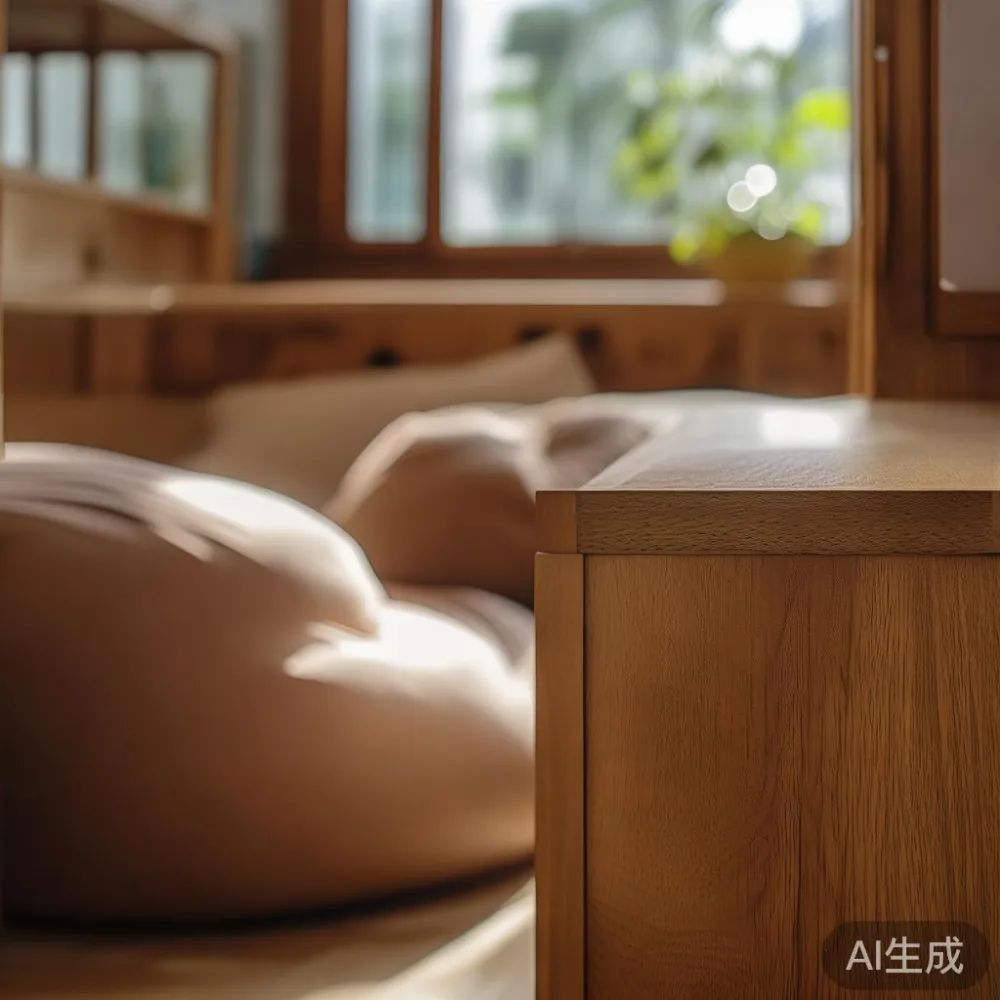
Warm minimal is not beige-on-beige. It is a quiet room that still feels lived in — a walnut grain you can actually run your fingers over, a fabric that picks up the afternoon light from the east-facing window, and exactly one or two pieces that earn their footprint. Below is the long-form guide I wish someone had handed me the week I collected my keys, with real dimensions, real SGD prices, and the small mistakes I made so you don't repeat them.
What "warm minimal" actually means in a 90 sqm Singapore flat
Warm minimal is a post-modern light luxury language: less ornament, more material honesty. The walls do the quiet work in a tone like Dulux Whisper White or a slightly muddy 00NN 83/000, and every other surface is asked to bring warmth. Walnut, white oak, ash, and travertine do most of the talking. The room is not minimal because it is empty — it is minimal because nothing is competing for your eye. In a 90 sqm HDB, the living-dining zone is usually around 22 to 26 sqm, which gives you roughly 3 metres of sofa run and a 140 to 160 cm dining table without crowding the air-con ledge.
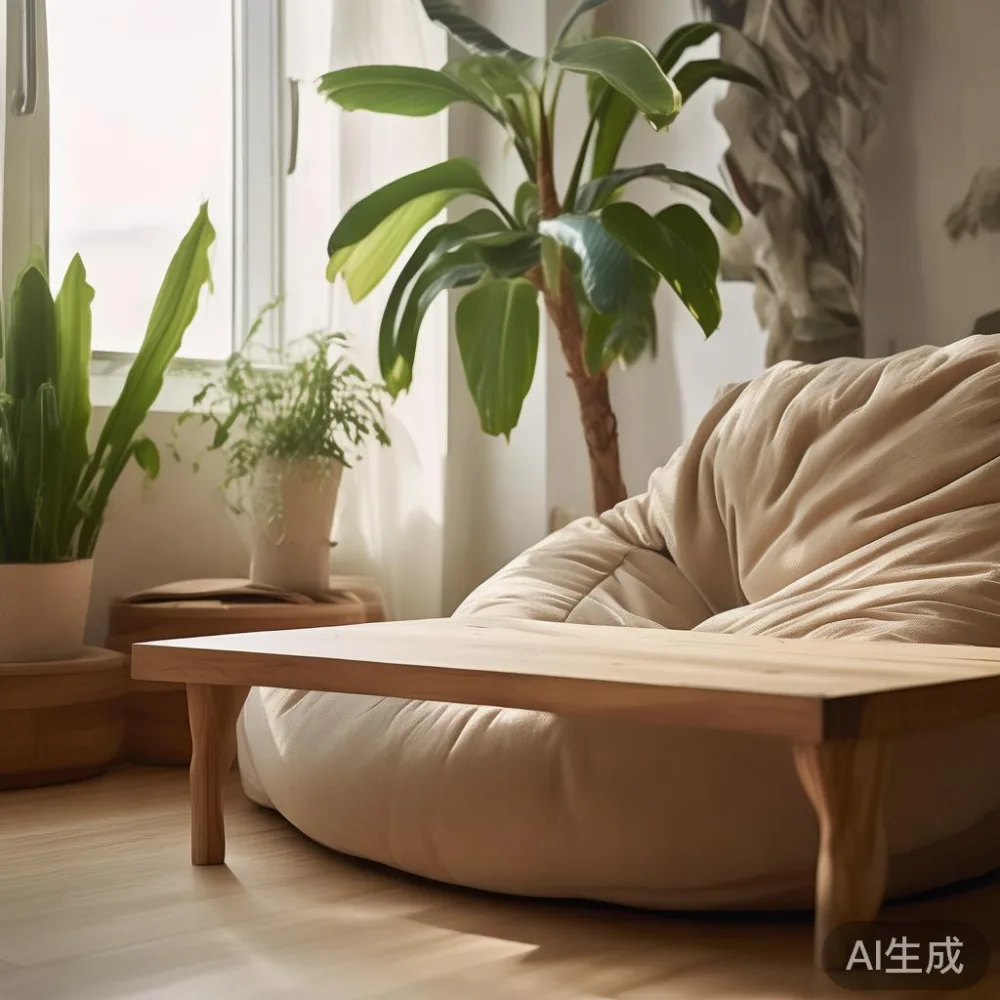
The trick is to pick two warm materials and repeat them. Walnut + boucle. Oak + linen. Travertine + raw cotton. Once you commit, every other choice becomes easier. A solid wood sofa in a walnut or white-oak frame, for instance, will quietly anchor the room against a boucle or linen upholstery without needing a single throw pillow to justify itself.
How do I choose a dining chairs for a study?
Pick one chair that is comfortable enough to sit in for ninety minutes, light enough (under 6 kg) to slide across laminate flooring without scratching it, and visually quiet enough to disappear when you are working. For a study nook carved out of a spare bedroom in a Punggol Build-To-Order flat, a solid-wood dining chair with a fabric or leather seat pad — 45 cm wide, seat height 45 cm, back height 85 to 90 cm — is the most forgiving shape, because it doubles as a desk chair, a reading chair, and a guest seat when your cousin from Bedok drops by with durian puffs.
I tested three chairs in my own study last week: a wishbone-style oak chair at S$329, a padded fabric dining chair at S$389, and an armless walnut chair at S$449. The walnut one won, because the curved back saved my shoulder blades during a 3-hour video review, and because the same grain tone tied back to the bed frame in the adjacent room — that visual echo, both resting floor, is what makes a small HDB feel designed rather than furnished.
The living room: a walnut sofa, a marble table, and one soft landing
Most Singapore sofas sold in the S$2,400 to S$4,200 bracket are either fabric-over-frame or full-leather. For warm minimal, I lean toward a three-seater solid wood sofa with a removable fabric cover — washable in our humidity, and replaceable in five years when the kids have had their way with it. A typical three-seater runs 210 to 230 cm wide, 90 to 95 cm deep, and 85 cm tall at the back. Measure your lift first: most HDB passenger lifts in Tampines and Bedok are 1.1 m wide by 1.4 m deep internally, with a door opening of around 80 cm. A 230 cm sofa will not fit standing up; it has to go in on its side, which is exactly how the MIDHILL delivery team handled mine on a Tuesday morning, in about 12 minutes from lift lobby to living room wall.
In front of the sofa, a round marble table — 80 cm diameter, 38 cm high — does more work than a rectangular coffee table in a 3-metre-by-3-metre conversation pit. Round edges, no shin bruises when the children are running past. A travertine or Carrara marble top on a walnut or black-metal base sits around S$1,100 to S$1,800 for an honest 18 mm thick slab. Below S$900, you are usually looking at printed sintered stone, which is fine, just not the same depth of veining.
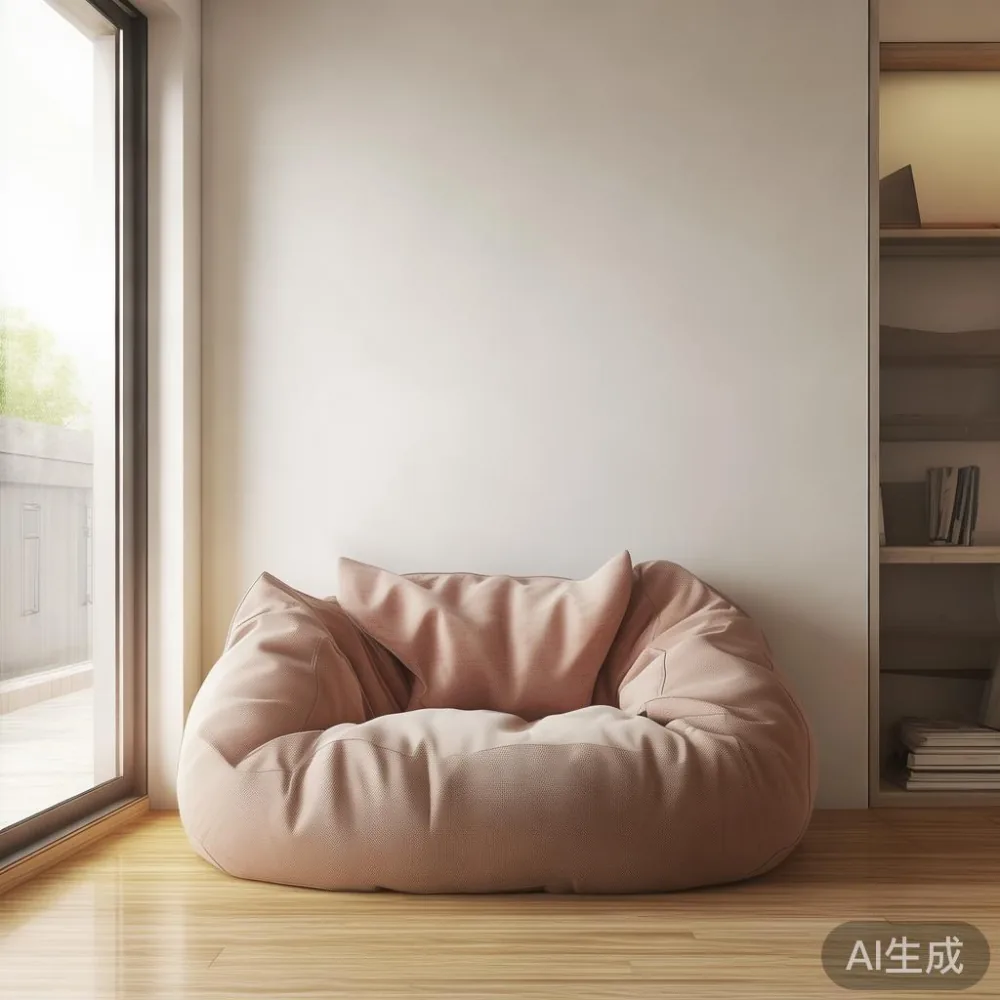
And the soft landing: this is where the site's core piece, the bean bag, earns its place. Not the S$59 big-box version that deflates by Chinese New Year, but a 90 cm to 110 cm tall filled-and-covered bean bag with a washable linen cover and a refillable inner liner. Position one opposite the sofa, angled 30 degrees toward the television, and your living room suddenly has a third seat for movie nights without the visual weight of an armchair. A good domestic bean bag in Singapore retails from S$299 to S$649 depending on the cover; budget an extra S$45 to S$70 for a refill pack of EPS beads every 18 months, which is the realistic lifespan in our 80% average humidity.
The dining zone: a real table, real chairs, and a 70 cm rule
A dining table for four in a Singapore HDB should be no wider than 80 cm if you want chairs to pass behind seated diners — that 70 to 80 cm rule saves arguments at dinner. Length for four sits at 120 to 140 cm; for six, 160 to 180 cm. A solid-oak or walnut dining table at 140 cm by 80 cm, with a 38 to 40 mm top, weighs 35 to 50 kg, which is a two-person carry from the lift. MIDHILL quotes around 14 to 21 working days for a custom-finish walnut top because the wood is air-dried, not kiln-forced, and the grain tightens properly over those three weeks.
Pair the table with chairs that have a seat height of 45 cm and an arm height no higher than 63 cm, so they slide fully under the apron and reclaim 60 cm of floor space when not in use. Four upholstered chairs at S$320 to S$420 each is a fair budget for a Singapore household; below S$260, the foam density usually drops below 28 kg/m³, which is the threshold where the cushion flattens within 12 months.
Lighting matters more than people admit. A 110 cm to 1.4 m linear pendant, hung 70 to 75 cm above the table, in brushed brass or black metal, lifts the whole zone visually. Budget S$240 to S$520 for a solid piece with a dimmable LED. If your dining zone shares the living room, match the brass tone on the marble table base and you have quietly tied two zones together without a single extra purchase.
The bedroom: a bed frame, two nightstands, and one wardrobe that does the heavy lifting
A queen bed frame in solid walnut or ash, with a low 90 to 100 cm headboard and a 25 to 35 cm underbed clearance, runs S$1,800 to S$3,400 for an honest Made-in-Foshan build, with delivery to a Singapore address typically adding S$120 to S$220 and arriving 18 to 28 working days after order confirmation. Lift access matters again: a queen slatted base arrives in two boxes, the heaviest around 38 kg, both of which will fit a standard HDB lift upright if you angle the long side along the diagonal of the car.
Flank the bed with two nightstand pieces — 45 to 50 cm wide, 40 to 45 cm deep, 55 to 60 cm tall — so the top sits 5 to 8 cm above the mattress top. Anything taller, matching the bed frame's wood tone, and you have a quiet, symmetric anchor. A two-drawer solid-wood nightstand with soft-close runners sits at S$380 to S$620 each in 2025 Singapore retail, and below S$280 you start seeing MDF cores with veneer wraps, which swell in our humidity within two wet seasons.
The wardrobe should be the only tall piece in the bedroom, ideally 200 to 240 cm tall, 180 to 220 cm wide, and 55 to 60 cm deep. Push it to the wall opposite the window so it does not block cross-ventilation — important in a Punggol BTO that does not yet have full cross-breezes. Sliding doors save 60 cm of swing clearance compared to hinged doors, which is roughly the width of a study desk. A three-door sliding wardrobe in solid ash or oak, with a soft-close system, lands between S$2,400 and S$4,800 depending on internals. Anything above S$5,500 in Singapore, you are paying for European brand markup, not necessarily better wood.
How do I keep solid wood from cracking in Singapore's humidity?
Keep the indoor relative humidity between 45% and 60% with a small dehumidifier in the bedroom and a hygrometer in the wardrobe. Solid walnut and oak move about 1 to 2 mm per linear metre across our wet-dry seasons, which is normal and not a defect. Wipe spills within 20 minutes, never place a bean bag or any upholstered piece directly under an air-con vent, and refinish high-touch surfaces every 24 to 36 months with a hard wax oil — about S$45 to S$75 a tin, applied with a lint-free cloth in two thin coats.
Wood that has been properly kiln-dried and then air-dried, the way MIDHILL finishes its walnut and ash pieces, will outlast two HDB lease renewals in Singapore. The 10-year structural warranty that comes with the bed frame I bought is not a marketing line; it is a quiet promise that the mortise-and-tenon joinery will hold, that the slats will not warp, and that the finish can be refreshed rather than replaced.
What should a first furniture budget for a new HDB actually look like?
For a four-room HDB of about 90 sqm, furnished in warm minimal and bought new from a single supplier to keep delivery free above the usual S$480 threshold, here is a realistic 2025 Singapore budget before GST:
— Solid wood three-seater sofa with washable fabric covers: S$2,800 to S$3,800
— Round marble table, 80 cm: S$1,200 to S$1,600
— One filled bean bag with washable linen cover: S$380 to S$520
— Walnut dining table, 140 cm: S$1,800 to S$2,600
— Four dining chairs: S$1,280 to S$1,680
— Queen walnut bed frame: S$2,200 to S$3,200
— Two nightstands: S$760 to S$1,200
— Three-door sliding wardrobe: S$2,800 to S$4,200
— Linear dining pendant: S$320 to S$480
Total, before the 9% GST and delivery: between S$13,540 and S$16,280. That is the honest mid-market number for solid wood, real marble tops, and a Japandi walnut fabric sofa in the living room, all bought once and kept for fifteen years. A Japandi walnut fabric sofa in particular — walnut frame, linen-blend cover, seat depth around 60 cm — is the single piece that ties the room together, because the same walnut tone reappears on the dining table, the bed frame, and the nightstands.
Three small mistakes I made so you don't have to
One: I bought a 240 cm three-seater first, then had to return it because it would not fit the lift on its side. Measure the lift diagonal, not just the door. Two: I bought a glass coffee table because it looked "light". In a warm minimal room, glass reads cold. Swap it for travertine or a low marble table. Three: I underestimated how much a single bean bag in washed linen would be used. It became the most-sat seat in the house within a week. If you have the 90 cm by 90 cm corner, fill it with one, in a colour 2 to 4 shades deeper than the sofa.
Warm minimal in a Singapore HDB is a question of repetition, not rarity. Walnut on the sofa, walnut on the table, walnut on the bed. Marble in the centre. Linen on the soft pieces. One bean bag in the corner, exactly one. The room reads quiet, the wood reads honest, and the air-con reads a little less cold at 23 degrees.