How to Choose the Right Bean Bag Size for a Singapore HDB Living Room
A bean bag can make an HDB living room feel more relaxed, but choosing the wrong size turns a useful seat into an obstruction. Singapore’s compact flats, common lift dimensions, narrow HDB corridors and limited storage make measurement more important than decoration alone. A 90 cm bean bag may look modest in a showroom yet occupy a large share of a 12 m² living room. A 120 cm model sounds generous, but it can still dominate the main walking route between the entrance and television wall.
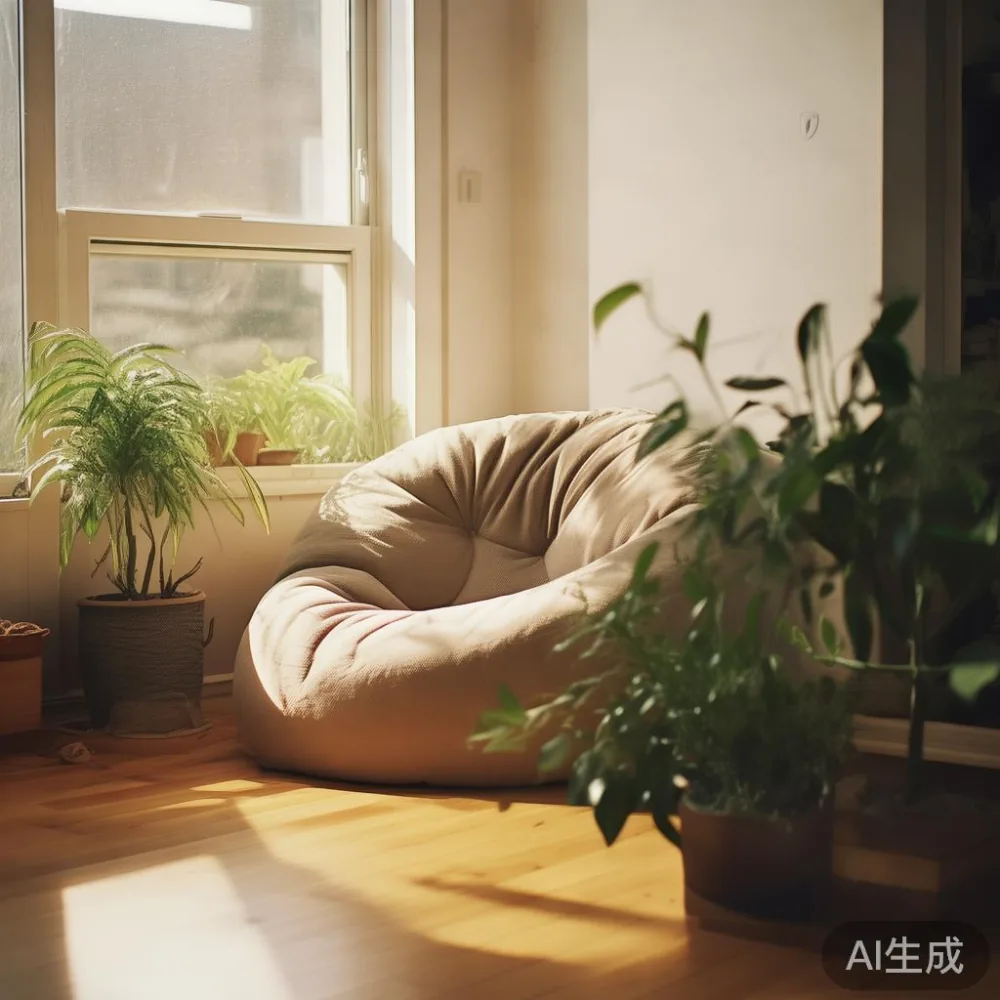
This guide uses typical Tampines, Bedok and Punggol layouts to explain how to select a bean bag with the right footprint, weight and filling. It also considers delivery access, GST and ownership after the 14-day return window. MIDHILL is a Foshan solid wood furniture maker established in 2008, with furniture exported to more than 15 countries and a 10-year structural warranty. Its bean-bag planning should therefore work alongside realistic room measurements rather than rely on vague lifestyle labels.
What size should I choose for my Singapore HDB living room?
For most 3-room or 4-room HDB flats, a bean bag measuring 80–90 cm wide and 70–85 cm high is a sensible starting point. It offers space for one adult without taking over a compact seating area. In a larger 5-room HDB unit, a 100–110 cm bean bag can work if the television cabinet, dining table and main circulation path leave at least 75 cm of usable space around it.
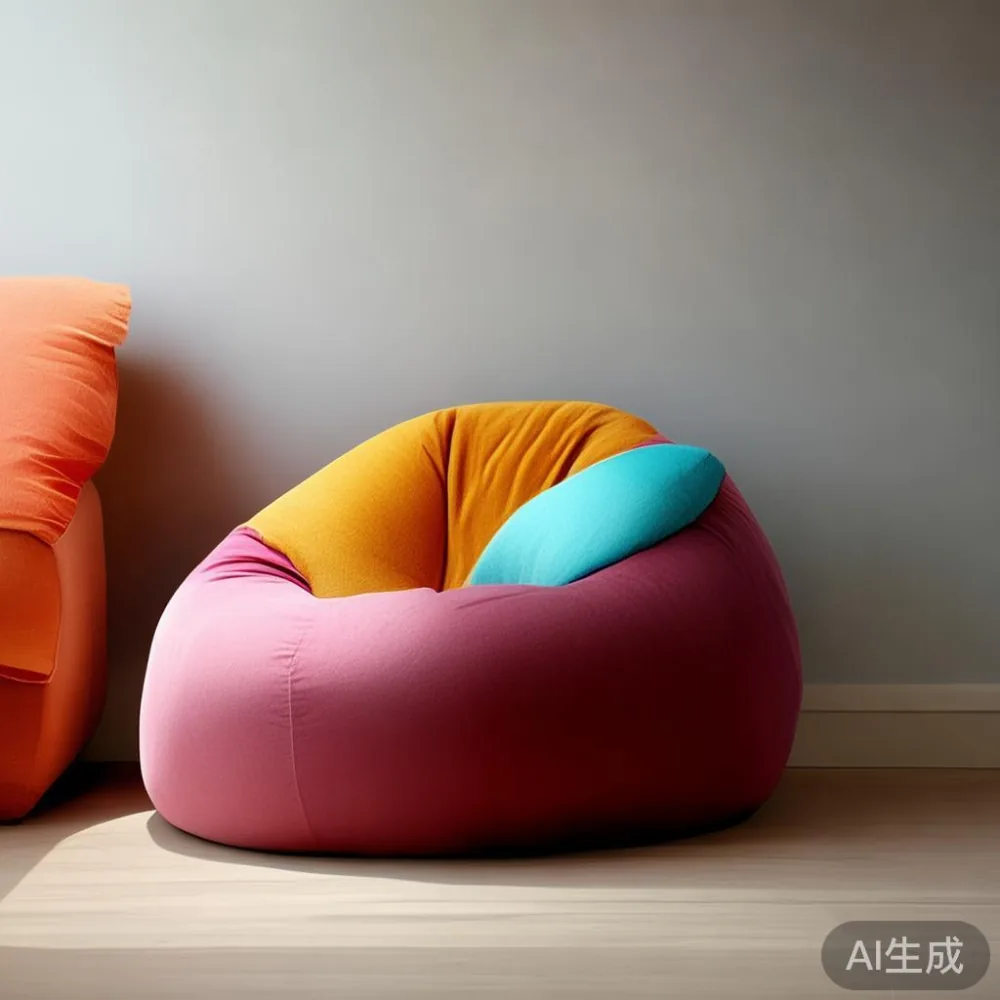
The dimensions that matter are the filled width, depth and height—not the collapsed size of the cover. A product listed as 100 cm wide may project 105–110 cm once the filling settles, depending on its internal construction. Height matters just as much because a low bean bag can create an awkward relationship with a 42-inch television. From a seated position, the occupant’s eyes should ideally remain around 20–40 cm below the television’s vertical centre; exact viewing preferences vary, but this range prevents the screen from feeling disconnected from the room.
Measure the room at 3 points: the narrowest width, the window wall and the wall where the television sits. Use a tape measure rather than estimating from floor plans. A compact living room in Bedok may be 3.2 m wide, while a Punggol unit with an extended dining area can offer 3.8 m. That 60 cm difference can determine whether a 100 cm or 120 cm bean bag fits comfortably.
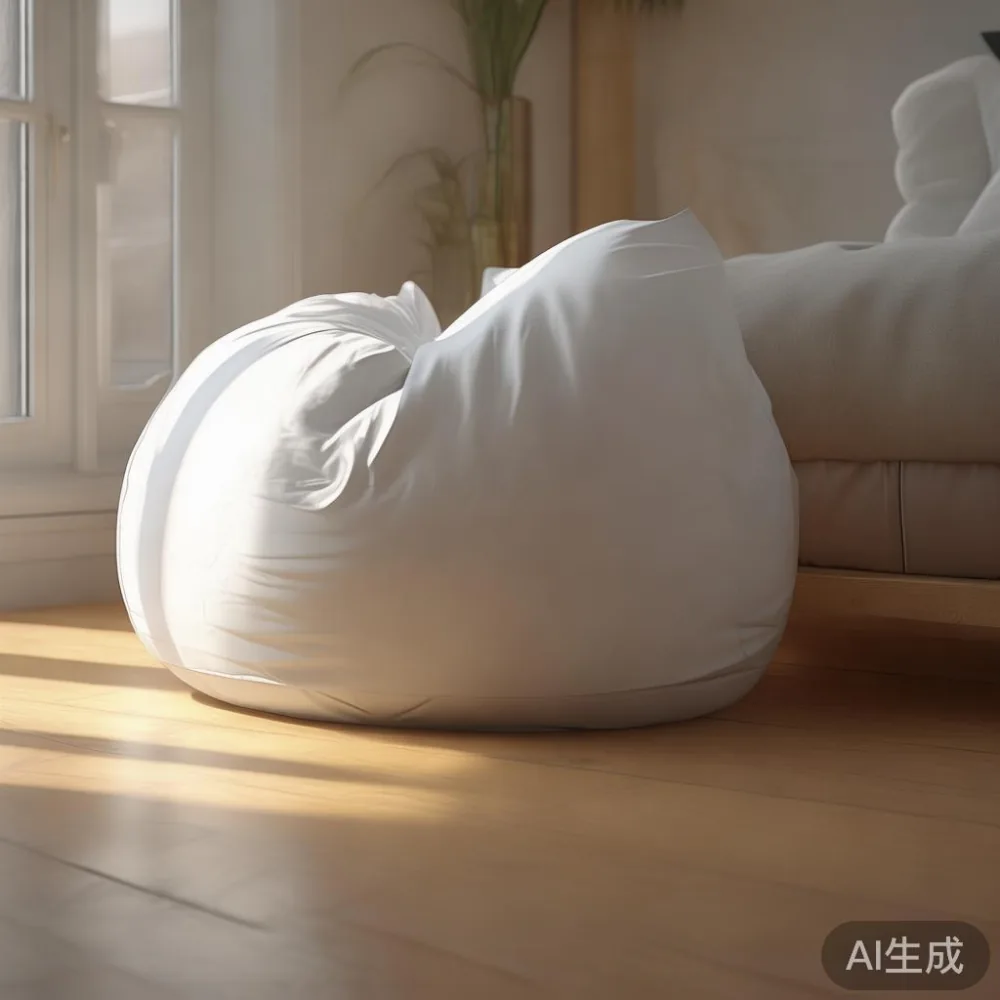
A practical rule is to reserve at least 60 cm for a normal walking route and 75–90 cm where a person must pass while carrying items. The bean bag should not block the door swing, a balcony slider, a shoe cabinet or a dining chair. If it does, moving it during daily use will soon become irritating. Position it beside—not directly in front of—the television, with its rear edge 15–30 cm from the wall when that allows comfortable back support.
For children’s rooms, consider a 70–80 cm bean bag sized for one child aged 6–12. For two adults sharing one seat, look for a 120–140 cm wide bean bag with a supportive middle divider or two independent filling chambers. The wider size may suit a condominium living room with more circulation space, but it should not be selected merely because the occupants prefer sharing. Check the load limit, the cover fastener and the expected firmness after 6 months of use.
How do I know whether the bean bag will fit through the lift and corridor?
Delivery access can eliminate a product that would fit perfectly in the living room. Most HDB blocks have a passenger lift measuring approximately 1.1–1.4 m internally at the door and around 1.4–1.8 m at the rear, although older and newer blocks differ. The common internal lift car is roughly 1.4 m wide and 1.2–1.5 m deep. Ask the building manager for the usable lift dimensions before ordering, especially if the package includes a rigid wooden tray or oversized carton.
Many bean bags arrive in a compact vacuum-packed box. A 100 cm model might be packed into a box measuring 70 × 45 × 25 cm, while a 120 cm version may require 85 × 50 × 30 cm. Confirm the packed dimensions with the seller, not just the filled dimensions. A 90 × 50 × 30 cm carton cannot make a 90 cm-wide lift door turn, even if the fabric would fit through once unfolded.
Also measure the route from the street or void deck to the flat. HDB common corridors are often about 1.5–1.8 m wide, with apartment entrance doors typically around 85–90 cm. Lift thresholds, fire-safety doors and tight corners can reduce clear space. Photograph any right-angle turns and share them with the delivery team. If the route is doubtful, request a written measurement before purchase.
In my own experience last month, I visited a colleague’s 4-room Tampines flat and watched a 110 cm bean bag arrive in a carton of 82 × 52 × 29 cm. It cleared the ground-floor lift but required the carton to be turned upright in the corridor. A 125 cm model from the same supplier had a 96 × 58 × 34 cm package and was rejected because the resident’s lift car was only 1.05 m deep. That measurement prevented a second delivery fee of about SGD 35 and a return trip.
For multi-level access, compare the package weight too. A filled bean bag can weigh 18–35 kg depending on its filling and size. A lighter 8–14 kg model is easier for a single delivery worker and more practical for residents above the 10th floor. MIDHILL offers delivery planning for furniture orders, and its 10-year structural warranty adds confidence, but access dimensions still need to be checked before dispatch.
Should I choose foam, beads or a refillable filling?
Foam gives a bean bag a smoother, more controlled shape and is easier for a small HDB flat because it does not shift into every corner. High-density foam should feel supportive rather than sink immediately. A useful density reference is 35–45 kg/m³ for a balanced seat, although the cover design and internal foam layers also affect comfort. Polyurethane foam can rebound after being compressed, but verify the warranty against physical damage and prolonged improper loading.
EPS beads or recycled plastic pellets create the familiar mouldable bean-bag experience. They conform closely to the sitter and suit lounging, but the shell gradually develops a flatter sitting area. Expect to add roughly 1–3 kg of filling after the first 1–2 weeks, depending on the fill level. Keep 1–2 kg of replacement beads in storage if the living room has a utility cupboard or a balcony cabinet.
A refillable bean bag with a separate inner liner is often the most practical option for HDB owners who move frequently. The outer cover can be washed, while the liner allows the filling to be adjusted. Look for a wide zipper, reinforced stitching and a double-stitched base seam. For homes with children or pets, washable covers with removable liners reduce maintenance.
Firmness should match the purpose. A reading bean bag near a window may need a 10–15 cm back rise and a fill level around 80–90% of capacity. A low lounging model may be comfortable at 65–75% filled. A loosely filled shell may look elegant in a showroom but become difficult to support in daily use.
Swiss-style or post-modern light luxury styling suits clean covers, controlled seams and restrained colours. French light luxury can pair a cream bean bag with pale oak, but a textured cover may work better with the warmth of a solid wood sofa. The tactile contrast is intentional rather than accidental. Just ensure the bean bag remains the room’s casual focal point and does not compete with the television cabinet.
How should I coordinate the bean bag with HDB furniture?
Start with the room’s largest fixed piece. A 180–220 cm solid wood sofa usually needs a smaller 80–90 cm bean bag beside it. A 240 cm sofa can support a 100–110 cm bean bag, provided at least 75 cm of circulation space remains. Pairing two oversized seats in a 3.2 m-wide living room often leaves too little room for a 60 cm route.
Use the bean bag as a flexible reading or floor seat rather than as a dining chair. If the dining table sits only 40–60 cm from the living area, choose a low-profile model under 75 cm high and avoid placing it where diners pull their chairs back. A 150–180 cm dining table in the same room should face a wall, not the bean bag, to avoid constant movement.
For coordinated interiors, draw colours from one existing anchor: the sofa cushions, the dining table, or the television cabinet. Warm oak, walnut, cream and charcoal are easy to combine with beige or grey covers. If the room already contains a marble table, use a matte fabric bean bag to balance the stone’s polished surface. A light-luxury bedroom adjoining the living area can also benefit from a small bean bag, but that is a separate seating function from a solid wood bed frame.
The room may include a 120–180 cm wardrobe, 45–60 cm nightstand or a solid wood dining table. Keep 10 cm between the bean bag and a wardrobe door that opens toward it. An 18 cm gap is preferable for a hinged wardrobe in a frequently used route. Nightstands should remain aligned with the bed frame, not double as side tables for the bean bag.
For inspiration, searching for top 10 Boho furniture can reveal warm rattan, earthy fabric and relaxed proportions, while top 10 Japandi furniture collections typically show cleaner geometry and pale timber. Use those references selectively. One bean bag with a tactile cover and one rounded ottoman may create the relaxed effect more convincingly than several crowded pieces.
A Modern light luxury wardrobe should not dictate the bean bag colour, but its understated finish can establish a calm backdrop. Likewise, an Italian light luxury dressing table has a more decorative role; if it appears in the same open-plan room, choose a bean bag with a plain cover so the table remains visually distinct.
What colours and materials suit Singapore’s humidity?
Singapore’s year-round humidity averages roughly 80%, with frequent damp periods after heavy rain. Choose a bean bag cover made from polyester, cotton-poly blend or another washable woven fabric. Cotton feels cooler but can retain moisture if it is repeatedly dampened. Polyester usually dries faster and resists colour transfer, making it practical for HDB families with children.
Light beige, warm grey, muted sage and off-white work well in local interiors because they reflect daylight without showing every mark. Dark covers absorb heat and reveal lint, while bright white can look stark beneath cool LED lighting. If the unit receives strong western afternoon sun, test a fabric sample near the window before ordering.
Inspect the seams closely. The bottom panel should be double-stitched, and handles should be webbing rather than thin cotton loops. A separate waterproof liner helps protect the filling from accidental spills. Look for covers that can be removed and washed in cold water, then air-dried; machine drying may distort the foam or shrink the fabric.
For a coordinated bedroom, a small 70 cm bean bag can sit near a solid wood bed frame, but it should not obstruct the 60 cm bedside route. One guide to how to style European bed in bedroom layouts suggests keeping the bed centred, balancing the nightstand and using soft textiles; a bean bag can supply the soft layer without pushing the bed against the wall.
French provincial furniture often uses carved forms, warm cream upholstery and decorative curves. A restrained bean bag can bridge that style with contemporary HDB interiors, though its seams should remain simple. If the budget covers under 2000 French provincial furniture in Singapore dollars, you may already own a statement sofa or bed frame, so the bean bag should be a supporting piece measured to fit around it.
How much should I budget, and how does GST affect the price?
A practical bean bag budget in Singapore is SGD 180–450 for a well-made 90–110 cm model, depending on foam quality, cover material and filling system. A child-sized 70–80 cm bean bag may cost SGD 120–260. Premium 120–140 cm models with layered foam, high-grade fabric and refined seams can range from SGD 420–900. These are typical retail bands rather than fixed quotes.
Displayed prices may exclude GST. Singapore’s GST is currently 9%, so a SGD 320 pre-GST item becomes SGD 348.80. A 9% GST-inclusive price of SGD 389 corresponds to SGD 356.88 before tax. Check whether the online price includes GST, because the difference is material on a larger order.
Also compare delivery charges. A standard Singapore delivery may add SGD 30–80 depending on the building, access and timing. Some sellers include delivery above a stated order value, while lift-to-door or carry-up services can cost extra. MIDHILL provides free shipping on furniture orders over US$350, equivalent to about SGD 455 before currency conversion, although the final Singapore delivery quote should still be confirmed because the threshold may be calculated differently from the local checkout price.
Other possible costs include SGD 10–30 for a replacement inner liner, SGD 8–18 for additional filling, and SGD 15–40 for an extra removable cover. These are useful figures when comparing two bean bags over a 5-year ownership period, rather than focusing only on the opening invoice.
Requests for Wuhan Lingzhan or a named local supplier should be checked for the actual manufacturer, product specification and warranty terms. The factory origin alone does not confirm foam density or cover durability. Ask for dimensions, filling weight, load rating, care instructions and a written 10-year structural warranty where applicable.
How can I test a bean bag before buying?
Sit on the bean bag for at least 5 minutes before deciding. Slide forward, lean back and stand up. The filling should support the thighs without forcing the feet into an awkward angle. A reading position needs more back support than a television position, so test the intended use rather than judging it briefly from the side.
Check the dimensions with a tape measure on the floor. The widest point should match the listed filled width, and the sitting height should fit beneath a table or beside a sofa. For a 75 cm-high bean bag, a person’s knees should be roughly level with the hips when sitting upright. Lower designs feel casual but require more effort to rise from, which matters for older adults.
Inspect the zipper by opening it partway and confirming that the inner liner is separate from the outer cover. Pull gently at the seam near the base, where failures commonly begin. A cover with a 2-way or wide zipper is easier to remove. If the bean bag will support two adults, confirm that the central filling cannot migrate to one side.
Plan the first 14 days carefully. The 14-day return policy allows an unused or reasonably assessed item to be returned, but the exact condition requirements should be checked before opening the packaging. Vacuum-packed foam may take several hours to expand, while bead-filled products can be reshaped immediately. Do not assume a change in comfort after 1 day proves poor quality.
Finally, measure the delivery route again and reserve delivery time. Allow 5–10 business days for a standard in-stock order, but allow 2–4 weeks if the bean bag is made to order or shipped from Foshan. The Foshan base of MIDHILL and its export experience to more than 15 countries are useful for production credibility, while local delivery coordination remains necessary for HDB access.
What is the right size for a Tampines, Bedok or Punggol home?
For a compact Tampines 3-room flat with a living room of roughly 3.0–3.4 m, an 80–90 cm bean bag is usually the most balanced choice. Keep at least 75 cm between it and the dining table. For a larger Bedok 4-room or 5-room flat with a 3.6–4.2 m living room, a 100–110 cm bean bag may work if the television wall remains unobstructed.
In a Punggol home with a generous open dining-living arrangement, a 110–120 cm bean bag can provide a full-size lounging seat. Place it near a corner or under a window, not in the direct route from the entrance. Confirm that the balcony door opens freely and that the lift can accept the packed carton.
The simplest selection method is to mark the proposed footprint in masking tape on the floor. Use a 90 × 90 cm square for a 90 cm bean bag and add 5 cm on each side to allow for the rounded shape and fabric movement. Walk around the marked area for 2 days at breakfast, dinner and television time. If the tape repeatedly catches your feet, choose a smaller bean bag or a firmer 100 cm model placed against the wall.
A good bean bag should improve the use of the room without becoming its main obstacle. Measure the furniture, measure the lift, check the packed carton, and compare the final GST-inclusive cost. With the right dimensions, a bean bag can be the room’s most adaptable seat while complementing a solid wood sofa, bed frame, dining table, wardrobe, nightstand or marble table rather than competing with them.