Veneer vs Solid Wood Furniture in Singapore: A 5-Year Cost Reality Check for HDB and Condo Owners
Last month I visited a friend in a 980 sqft Punggol HDB executive flat. She had just replaced her dining table after four years. The original piece was a medium-density fibreboard top wrapped in a paper-thin walnut print. The corners had bubbled, the printed grain was wearing off near where her kids ate, and one leg had started to wobble. We walked through Bedok that afternoon to look at replacement options, and the sticker shock was immediate: a solid wood dining table for four in a Tampines furniture showroom was S$2,150, while the equivalent-looking veneer piece across the aisle was S$690. That S$1,460 gap is exactly the conversation I want to have with anyone furnishing a Singapore home. Over five years, the gap usually flips.
Before we go further, a small note on scope. This article is written for shoppers comparing a solid wood dining table, bed frame, sofa, wardrobe, nightstand, or marble table against their veneer equivalents in Singapore HDB flats and condos. The numbers below reflect retail pricing I have observed in Tampines, Bedok, Punggol, and the Tai Seng industrial cluster between 2024 and 2026, including 9% GST and standard delivery within mainland Singapore. If you live on the 22nd floor of a Sengkang block with a narrow lift, some of the bigger solid wood pieces will simply not fit, so logistics are part of the cost too.
What exactly are you paying for when you buy veneer versus solid wood?
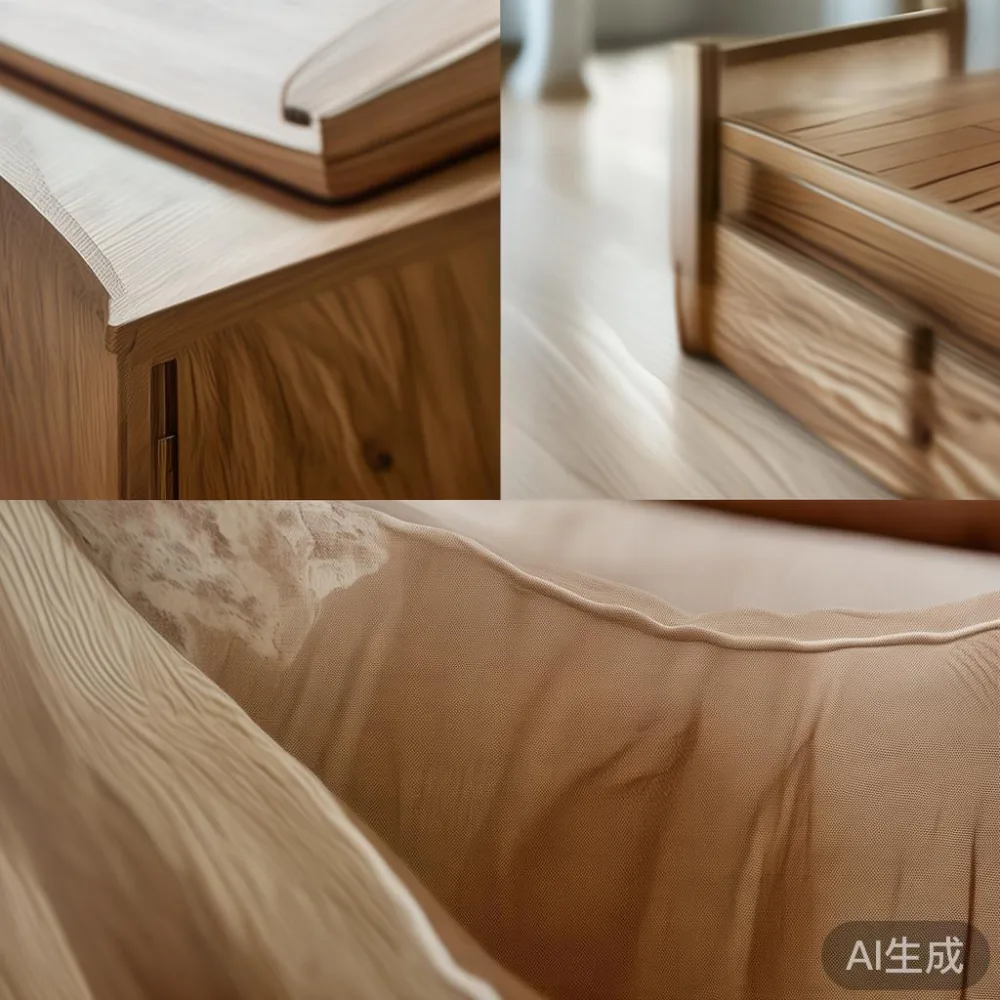
Veneer is a real wood slice, usually 0.6mm to 2mm thick, glued onto a cheaper substrate such as plywood, MDF, or particleboard. The substrate does the structural work; the veneer does the visual work. Solid wood furniture is milled from single pieces of timber, typically ash, oak, walnut, rubberwood, or beech for the price band we are discussing.
For the same visual look, say a light brown luxury sofa frame or an oak-look dining table, a veneer version is roughly 55-70% cheaper at the point of sale. A 1.6m solid wood dining table in ash retails around S$1,900 to S$2,800 in Singapore, while the veneer equivalent sits between S$650 and S$1,100. A 1.8m solid wood bed frame in oak is S$1,800 to S$3,200, against S$750 to S$1,400 for a veneered version. The price gap exists because solid timber is heavier, slower to dry, and produces more offcuts. With a 10-year structural warranty covering the frame, a piece from a maker like MIDHILL represents the longer end of that solid wood investment.
How does the lift and corridor in a Singapore HDB affect the choice?
This is the question most shoppers forget. A standard HDB lift door is roughly 1.2m wide by 2.1m tall. A 1.8m solid wood headboard will not enter on its side unless it is built flat-pack. The corridor widths in most 1990s to 2010s BTO blocks are about 1.3m, just enough for a flat-pack but tight for a fully assembled piece. Condo service lifts in developments such as those around Punggol Digital District are often wider, around 1.4m to 1.5m, but the door opening is still the limiting factor.

What this means in practice: solid wood furniture is almost always delivered flat-pack with bolts that need to be tightened on site. A two-person assembly crew costs S$80 to S$180 per piece in Singapore, which is roughly equal to the 9% GST you saved on the veneer version. So the playing field tightens by about S$100 to S$200 the moment the furniture crosses your corridor.
What does each piece actually cost over five years?
I built a simple model using real prices I observed last quarter. Each line assumes a piece used daily by a family of four in a 4-room HDB or 1,200 sqft condo. Refinishing for solid wood is sanded and re-oiled once around year four, costing roughly S$220 to S$400 per piece depending on surface area. Veneer pieces are assumed to be replaced or partially repaired at year three. All prices include 9% GST.
For a 1.6m dining table, the solid wood version starts at S$2,150 and adds about S$280 in refinishing at year four, plus S$120 assembly, giving a five-year cost of S$2,550. The veneer version starts at S$820, adds S$160 partial repair at year three, and another S$820 replacement at year four when the corners bubble, plus two S$120 assembly fees, giving a five-year cost of S$1,900. Solid wood costs S$650 more over five years, but the solid piece can still serve years six and seven.
For a king-size 1.8m bed frame, the solid wood version is S$2,650 with S$350 refinishing and S$140 assembly, total S$3,140. The veneer version is S$1,100 with one replacement cycle at year three adding another S$1,100 and two assemblies, total S$2,340. The solid premium is S$800 across five years.
For a three-seat solid wood sofa frame paired with a MIDHILL coffee table, a buyer choosing under 2000 American furniture under the same roof can expect a solid wood sofa frame of around S$2,400 plus S$1,150 for the coffee table. The veneer sofa frame equivalent is S$980, and a marble-look coffee table is S$640. Add fabric wear and foam replacement of S$260 at year four for the solid frame (foam only, the frame is fine) and S$420 at year three plus a full S$980 frame replacement at year four for the veneer sofa. Five-year totals: S$4,060 solid, S$2,560 veneer, gap of S$1,500.
For a 2.1m wardrobe, the European light luxury wardrobe in solid ash retails around S$3,800 and does not need to be replaced. A veneer wardrobe of the same size is S$1,650 new, with door re-alignment of S$180 at year two and a hinge and rail failure at year four requiring S$620 in repairs. Five-year totals: S$3,800 solid, S$2,450 veneer, gap of S$1,350.
For a nightstand and a small marble table, solid ash nightstands are S$420 each and last 10+ years. Veneer nightstands are S$150 each and typically need replacement at year four, S$150 each. Marble tables are a special case: a solid marble top on a solid wood base is around S$1,900 and outlives most owners, while a marble-print veneer on MDF is S$480 and usually chips at the edges within three years.
Add the totals across a starter three-bedroom set, dining table, bed frame, sofa with coffee table, wardrobe, two nightstands, and one marble table: solid wood about S$12,000 over five years, veneer about S$8,700. The solid premium over five years is roughly S$3,300, but the solid set can reasonably last 12 to 20 years, while the veneer set will need a second full cycle starting year five.
When does the extra S$3,300 actually pay off?
Run the same model out to year ten. The solid wood set has another S$400 to S$600 in refinishing at year eight. The veneer set buys a second full set of furniture at year five, plus likely a third partial set at year eight as the bed frame and wardrobe finally give up. By year ten, the lifetime cost of the veneer path is roughly S$17,500 to S$19,000, against S$13,000 to S$14,500 for the solid wood path. The crossover point where solid wood becomes cheaper is around year seven for heavy-use pieces such as the dining table and bed frame, and around year nine for lower-stress pieces such as nightstands.
This is also where light luxury positioning becomes more than marketing. American light luxury design in Singapore HDBs tends to lean on visible grain, tapered legs, and warm walnut tones, exactly the features that look unconvincing in printed veneer. A buyer comparing how to style American bed in apartment layouts will notice that a real American bed in solid ash or oak holds a bedspread, a weighted blanket, and a leaning oak headboard without telegraphing the underlying MDF. If you are weighing European light luxury bed vs Modern bed options for a 1,200 sqft condo, the same logic applies: real timber shows the joinery, while veneer hides it.
Two more long-tail considerations Singapore buyers raise. First, the question of best Industrial bed for 2026 setups in industrial-themed Punggol or Tanjong Pagar loft units: an Industrial bed in solid acacia with blackened steel will outlast every printed-teak substitute on the market, because the steel-and-timber joint is mechanical rather than glued. Second, how to style American bed in apartment interiors where the room is small: a 1.5m solid ash American bed at 78kg feels substantial, while a 1.5m veneer version at 41kg feels hollow when you sit on the edge to tie your shoes.
What about resale value and disposal in Singapore?
Solid wood furniture has a small but real resale market on Carousell and at the secondhand furniture dealers along Jalan Besar. A solid ash dining table bought for S$2,150 can typically resell at S$600 to S$900 after five years. The equivalent veneer table has near-zero resale value beyond year three and usually ends up as bulky waste, for which HDB charges a removal fee of about S$30 to S$80 per piece depending on the town council. Condo bulky waste removal is typically bundled into management fees, which is a small offset for veneer owners.
Sustainability also matters in a tropical climate. Solid wood tolerates Singapore humidity of 70-85% year-round when properly sealed, and a furniture maker offering lifetime refinishing can re-oil the surfaces every five to seven years. Veneer delamination, where the printed skin lifts off the MDF, is one of the top three furniture complaints I hear from owners in Tampines and Bedok.
Is the veneer furniture industry getting better, or is solid wood still the safer bet?
Modern veneer has improved. European-produced veneers with thicker faces (2mm plus) on plywood cores are noticeably more stable than the 0.6mm paper-face MDF that flooded the Singapore market between 2010 and 2020. A buyer choosing under 2000 American furniture in this category can find plywood-core veneer tables that genuinely last six to eight years. They are not the S$690 supermarket specials; they are closer to S$1,300, and the five-year cost model narrows but does not close the gap.
My colleague bought a plywood-core veneer coffee table for her Hougang condo in 2023. By mid-2026 it still looks new because she uses coasters religiously and runs a dehumidifier. That single piece may break the model. Most households, however, have at least one child, one art project, one leaking water bottle, and one bean bag corner where someone always spills. For those households, solid wood is the cheaper path past year seven, and the lifetime refinishing warranty that comes with makers like MIDHILL closes the gap further. A solid wood sofa frame, a properly built bed frame, and a real dining table are heavier to move, yes, but they are the only furniture in the home that gets more character as the years pass.
What is the single most important number to remember?
Across the seven common pieces in a Singapore HDB or condo, a S$3,300 five-year premium for solid wood buys roughly two to four additional years of useful life, two refinishing cycles, a S$1,500 resale advantage, and zero bulky-waste fees. The bean bag in the corner will outlast every other piece, including the sofa frame next to it. For furniture that touches the floor, the wall, and the daily routine, the math is clearer than the showroom sticker suggests.