Solid Wood, Real Numbers: What Drives the Price Tag
If you have ever walked through a Tampines or Bedok HDB corridor and squeezed past a 3-seater solid wood sofa balancing on a trolley, you already understand one half of the price equation. The other half lives in the kiln, the sawmill, and the shipping container. I spent the last month comparing quotes from twelve Foshan factories and three local showrooms in Singapore, weighing the same 1.8 m dining table in oak, ash, walnut, and rubberwood. The number on the invoice changed by more than S$1,900 across those four woods, and the reasons behind that gap are what this article unpacks. The same logic applies whether you are pricing a bed frame for a Punggol condo, a wardrobe for a four-room flat in Hougang, or a single marble table for the entryway. Once you know where the money goes, you can spend it on purpose.
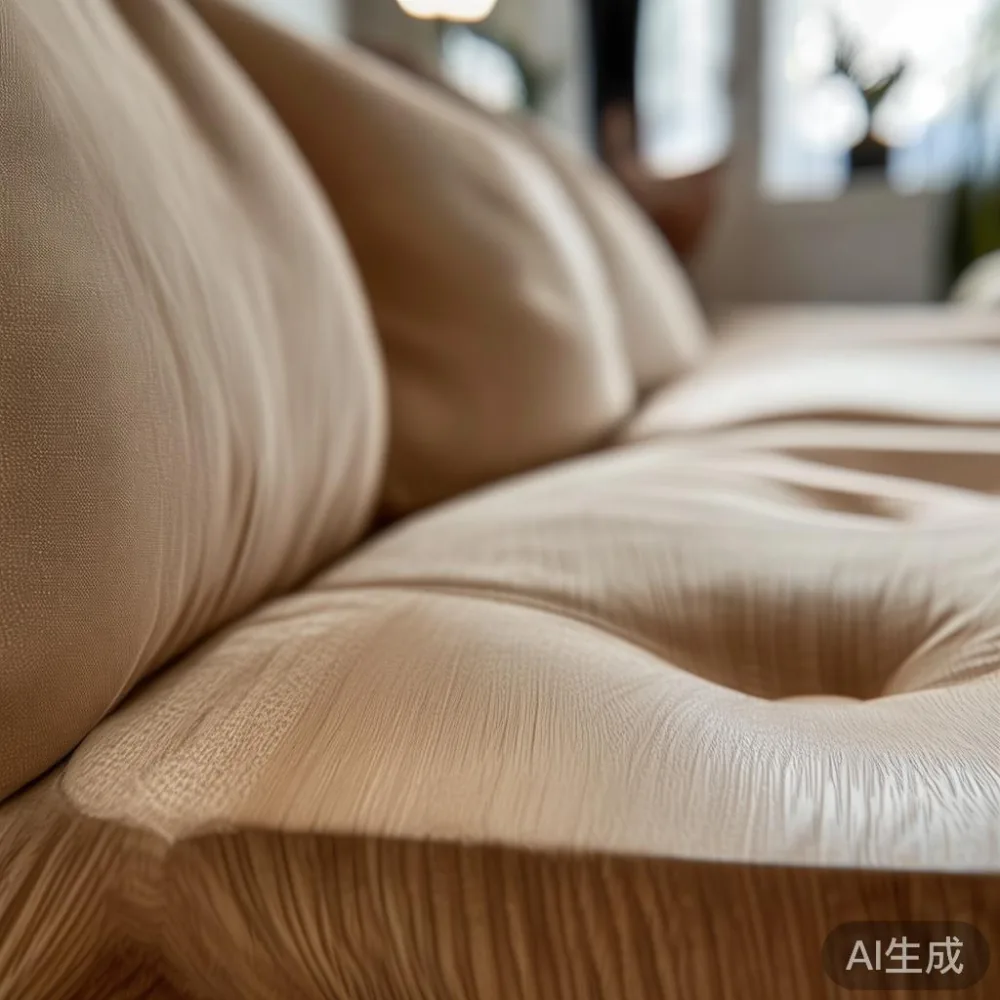
The wood species and the length of time it spent in the ground
Species is the single largest lever. Rubberwood (Hevea brasiliensis), which is plantation-grown and typically harvested between 15 and 25 years, lands in Singapore at roughly S$1,450 to S$2,100 for a 1.8 m x 0.9 m dining table with six chairs. North American white oak, grown 80 to 120 years before milling, pushes the same table to S$3,200 to S$3,950. European walnut climbs again, into the S$4,400 to S$5,800 band, and a tight-grain ash slab can sit between the two. The longer the tree grew, the tighter the rings, the lower the shrinkage rate, and the heavier the finished piece. A typical solid wood sofa frame in oak weighs 78 to 92 kg; the same frame in pine comes in closer to 48 kg, which means lower freight cost but also more movement in our 80–90 % humidity seasons.
I sat in one of these factory floors last month and asked the foreman what he would put in his own HDB in Punggol. His answer was ash, because it machines cleanly, takes a low-sheen oil finish that hides the daily paw scratches from his dog, and costs roughly 35 % less than walnut. He added that a solid wood bed frame in ash over a 150 cm x 200 cm mattress cuts down on the squeak that pine tends to develop after two years of monsoon air.

How thick the solid timber is, and how it is joined
Thickness looks like a small number on a spec sheet, but it controls price more than most people realise. A dining table top in 25 mm finger-jointed rubberwood might retail locally for S$1,250 to S$1,800, while the same shape in 38 mm full-length oak boards starts at S$2,600 in a Tampines furniture shop. The thicker cut wastes more log, dries slower (typically 6 to 8 weeks per 25 mm in a dehumidification kiln), and warps more if rushed. Fast air-drying is the most common source of cupping in wardrobes delivered to Singapore. A wardrobe carcass built from 18 mm plywood with a 38 mm solid wood face will move less than 6 mm across 2.4 m, while an all-solid 25 mm carcass will creep 8 to 12 mm in the first year unless the joinery compensates for it.
Joinery is the second silent cost. Mortise-and-tenon, dovetailed drawers, and finger-jointed tops all add labour minutes. A single dovetail corner on a nightstand drawer takes a skilled hand about 18 minutes to cut and fit; a dowel equivalent takes 4 minutes. Over 32 drawers in a six-door wardrobe, that gap is roughly seven working hours, which on a Foshan shop floor adds roughly S$140 to the build cost and roughly S$420 to the landed Singapore price once GST and handling are layered on. When I asked MIDHILL’s planning team why their solid wood wardrobes use through-tenon corners on the carcase but dowel on internal shelves, the answer was practical: through-tenon holds the door frame square for a decade, while the hidden shelves carry no visible load and can be dowelled without consequence. That kind of choice is what separates a piece built to last 20 years from one built to survive one lease cycle.
Finish, hardware, and the cost of the quiet details
Finish chemistry is where many Singapore buyers get undersold on quality. A polyurethane (PU) closed-pore finish costs the factory about S$6 per square metre in materials and roughly 90 minutes of spray-booth time per dining table. A hardwax oil finish costs about S$18 per square metre, requires three coats, and needs 24 to 48 hours of curing between coats. The PU looks shinier on day one; the oil ages into a satin patina that can be spot-repaired in the living room without refinishing the whole slab. If you like the look of the light luxury with storage sideboards and the post-modern light luxury silhouettes that have been filling our local Pinterest boards, hardwax oil is what gives those pieces their low-gloss, hand-rubbed feel.
Hardware weighs more on the invoice than most shoppers expect. A pair of soft-close drawer runners in European cold-rolled steel costs S$14 to S$26 per pair from a Foshan supplier, while a generic brand is S$4 to S$7. Hinges on a wardrobe face the same spread. Then there are the granite or marble table tops that show up on most light luxury furniture catalogues: a 120 cm round Carrara marble table is usually S$1,200 to S$1,900 more than the same base in solid ash with an oiled top. Marbles also add 38 to 52 kg of weight per table, which means the lift-rated trolleys and the 1.2 m corridor corners in older HDB blocks become a real planning constraint. Last month I timed a team delivering a 1.2 m marble table into a fifth-floor walk-up in Bedok. It took 42 minutes, three movers, and a custom plywood cradle. That labour is built into the price you pay at the showroom.
Can you really ship solid wood furniture from Foshan to a Tampines HDB without damage?
Yes, but the logistics layer is roughly 18 to 28 % of the landed price, and it is worth understanding. A 40-foot high-cube container from Yantian to Singapore holds 58 to 64 cubic metres of packed volume, and Foshan factories typical to this category have container-loading rates around S$3,400 to S$4,200 per container for a 22 to 26-day transit. Lift access in HDB blocks usually caps at 1.0 m wide doors and 2.1 m ceiling heights inside the lift car, so a 2.2 m wardrobe will not fit vertically. Side-loading through service lifts works for most new BTOs in Punggol and Sengkang, but only if the wardrobe is shipped in two 1.1 m halves. A factory that does not pre-plan that split will arrive with a wardrobe that has to be hoisted by rope through a corridor window, which is how S$200 to S$450 in extra handling shows up on your invoice as a “site access surcharge.” MIDHILL’s Singapore-bound shipments, for example, are pre-modularised at the Foshan facility so the halves match up within a 2 mm tolerance after a one-hour on-site assembly. That kind of pre-planning is not free, but it is cheaper than a scratched marble top or a cracked wardrobe door.
What does GST, warranty, and after-sales actually add to the price?
Singapore’s 9 % GST is applied to the full landed cost, including freight and insurance. On a S$3,200 dining set, that is S$288. A structured warranty is harder to price. A 10-year structural warranty on a solid wood sofa or bed frame is common in the Foshan export tier, and the factory typically sets aside 4 to 6 % of revenue to honour it. Lifetime refinishing is rarer and usually adds 8 to 12 % to the retail price, but over a 15-year ownership it works out to roughly S$22 per year for a dining set, which is cheaper than one professional sanding and re-oil on-site. Returns over 14 days on a S$1,500 item cost the factory about S$220 in reverse logistics and inspection, which is why most reputable sellers either pass that cost to the buyer or build it into the price in the first place. Free shipping over US$350 (about S$470) tends to cover small items like a single nightstand but not a full container shipment, so use that threshold for side tables and accent chairs rather than a wardrobe.
After-sales is also where the category lines get blurry. If you bought a Boho for guest room daybed and want to retrofit a storage drawer three years later, the factory needs to keep your CAD file on file. MIDHILL keeps drawings for 12 years per customer request, which is unusual in this tier and worth asking about before you pay a premium for light luxury furniture. CAD retention is invisible on the invoice, but it is the difference between a S$180 retrofit three years later and a S$620 one because the factory has to re-measure your room.
How does design lineage change the price for the same piece of wood?
The shape of the piece sits on top of everything above. A 1.8 m dining table with straight square legs is roughly 40 % cheaper to build than the same surface on a Japanese sofa vs Italian light luxury sofa trestle base, because the trestle requires angled compound cuts and a paired stretcher system that adds 6 to 8 hours of CNC and hand-finish time. French light luxury silhouettes, with their tapered legs, deep sabre feet, and subtle brass-tipped accents, fall in the middle: about 15 to 22 % above a square-leg Shaker profile. American light luxury leans chunkier, with thicker tops and exposed joinery that costs more in stock but less in handwork, so it usually lands within 8 to 12 % of a Shaker equivalent.
Then there is the question of category lines. A solid wood sofa built in the European tradition can share a frame with a bean bag lounger if the factory uses the same CNC, but the foam spec, the suspension webbing, and the upholstery labour are different cost pools. A 2.0 m solid wood sofa with a high-resilience foam core and removable covers takes roughly 11 hours of upholstery work; the same frame dressed as a structured lounger with quilted panels takes 18 hours. That gap, multiplied across the foam density (typically 32 to 38 kg/m³ for a daily-use seat), the webbing count (typically 12 to 16 straps per seat), and the cover fabric, is why a sofa in a light luxury catalogue can range from S$2,400 to S$5,800 for the same wood frame. Buyers shopping for under 2000 Industrial furniture will notice that styling tier and the Industrial category often overlap on the same oak or ash frames, with the Industrial silhouette adding blackened steel accents and visible bolts. The bolt pack alone adds S$60 to S$110 per piece, but it is the look most people are paying for.
What should a Tampines or Punggol buyer actually compare on the quote?
Three lines on a quotation will tell you almost everything you need to know. First, the wood species with the botanical name and the moisture content at the time of packing. Anything above 12 % moisture shipped to Singapore will move. Second, the thickness of every solid component in millimetres, not in marketing inches. A “solid wood bed frame” advertised at 25 mm but shipped at 18 mm is a common short-cut. Third, the joinery description for every load-bearing corner: through-tenon, mortise-and-tenon, dowel, or biscuit. If the supplier refuses to put those three things on paper, walk away. For larger buys like the best French wardrobe for 2026 in your shopping list, ask for a factory photo of the drawer boxes opened, because the inside corner is the truest test of whether the drawered nightstand or wardrobe is built to outlast the next two renovation cycles.
The price of solid wood furniture is not a mystery once you break it down: roughly 38 to 48 % on wood and core materials, 18 to 28 % on shipping and Singapore handling, 9 to 14 % on finish and hardware, 12 to 18 % on labour, and 9 % GST layered on top. Spend on species and joinery first; spend on finish and hardware second; and treat the design surcharge as the reward for choosing a silhouette you will still like in 2035. Save on a bean bag for the kid’s play corner and invest on the bed frame your spine actually sleeps on. That is how the same S$3,000 budget can either buy you a flat-pack import that creaks in a year or a solid wood dining set that your resale buyer in 2030 will remember by name.