How to Choose the Right Bean Bag Size for a Singapore HDB Living Room
I still remember the afternoon a couple from Punggol came into our Tampines showroom with a tape measure and a floor plan of their 4-room HDB. They had spent three weekends searching for a bean bag that would actually fit their living room, and every "oversized" chair they tried online had turned out to swallow half their walkway. Their brief was painfully specific: 980 mm corridor clearance to the kitchen, a 2.4 m sofa facing the TV console, and a 90 cm walkway behind. That visit is the seed of this guide, because the question they asked is the one every HDB homeowner eventually asks — how do you pick the right size when your living room is roughly 16 to 22 square metres and every centimet matters?
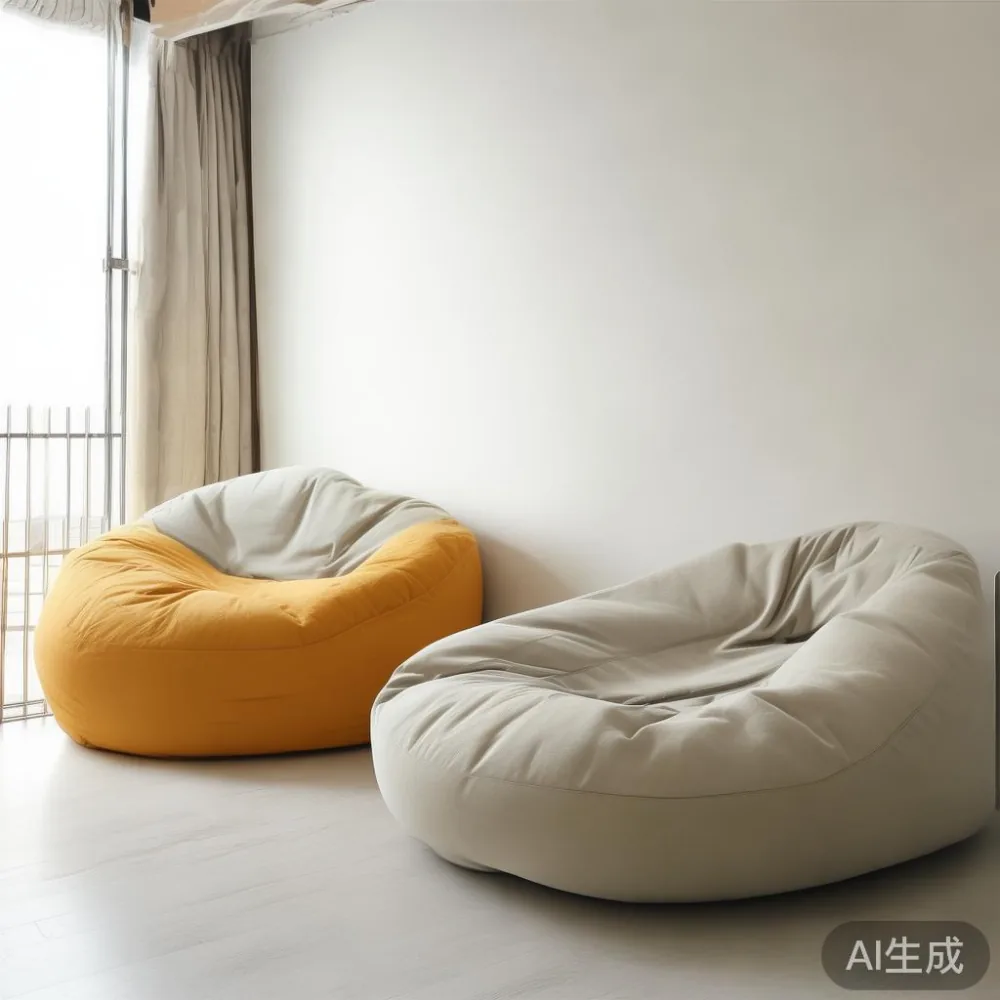
For Singapore HDB flats and most condominiums in districts like Bedok, Tampines and Punggol, the living room is rarely bigger than 4.2 m by 5.0 m. Once you place a 3-seater solid wood sofa, a coffee table and a TV console, you can be left with less than 5 square metres of usable floor area. A bean bag that looks harmless on a 1.5 m by 1.5 m product photo can quietly eat 1.2 square metres of that remaining space. In this guide, I will walk you through the way I now size bean bags for HDB living rooms, with hard numbers for room sizes, lift openings, corridor widths, and a few notes on how MIDHILL approaches solid wood and light-luxury pairings for customers here.
Why HDB living rooms demand a different sizing logic
A typical 4-room HDB flat in Tampines or Bedok gives you a living room in the 14 to 18 square metre range, and a 5-room flat pushes that to roughly 18 to 22 square metres. After a 2.2 m to 2.4 m solid wood sofa, a 1.2 m to 1.4 m TV console and a coffee table, you are usually working with about 4 to 6 square metres of clear floor. In a Punggol condo I visited last month, the owner had a 1.9 m by 1.9 m space between the sofa and the window — generous by HDB standards, yet still tight once a playmat for a toddler entered the picture.
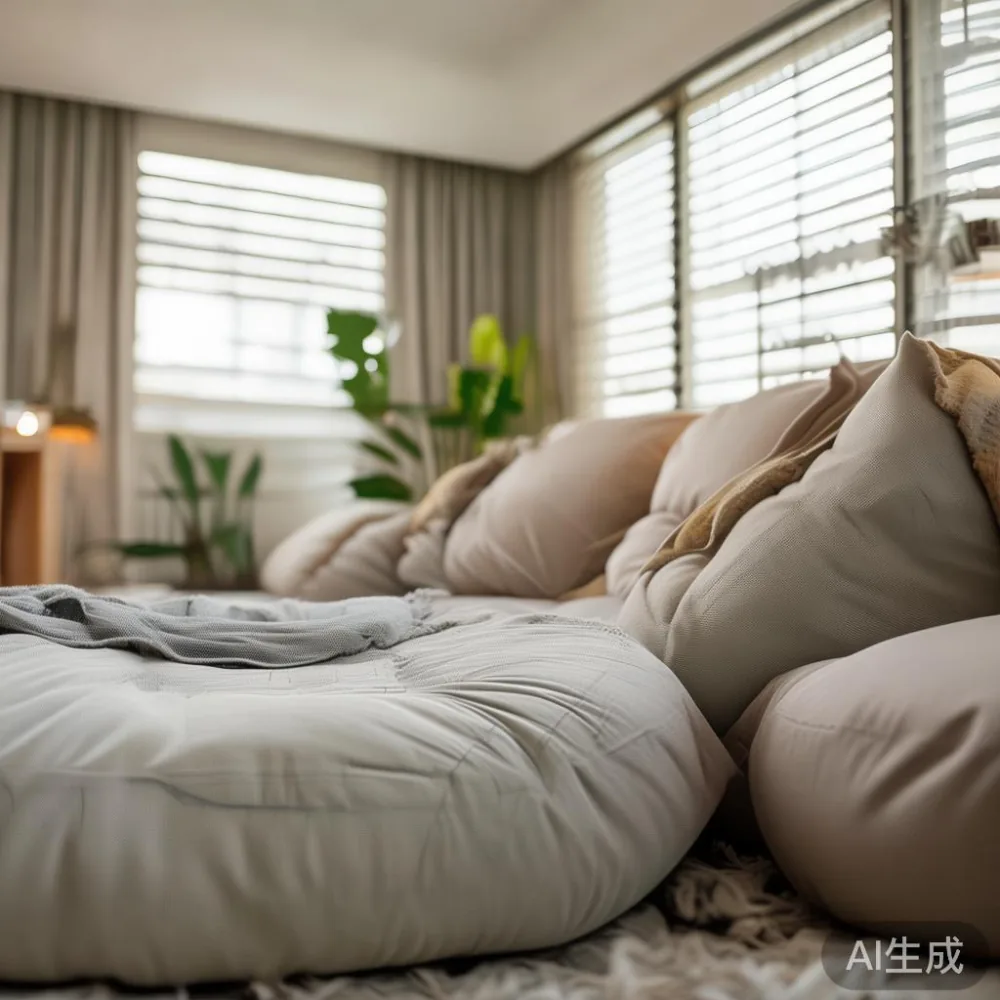
Here is where the bean bag question stops being simple. A "large" bean bag listed at 110 cm diameter covers about 0.95 square metres. An "XL" listed at 130 cm covers roughly 1.33 square metres. An "XXL" at 150 cm crosses 1.77 square metres, which is more floor space than a small armchair. The right size is not about what looks impressive in a product listing — it is about what keeps at least 70 cm to 90 cm of clear walkway around it. That 70 cm figure is the same clearance interior designers use between a sofa and a coffee table, and it is the minimum a person needs to walk past without brushing the bean bag with their hip.
One more HDB-specific factor: lift openings. Most HDB passenger lifts have a door width of 900 mm to 1000 mm, and the cabin itself is roughly 1.4 m wide by 1.6 m deep. A bean bag packed flat will compress into a long sausage shape, but the outer carton for a 130 cm or 150 cm bean bag can easily exceed 1.5 m in length. Always check the uninflated or packed dimensions against your lift, not just your living room. Many of our customers have been caught out by the corridor turn into the lift lobby — a 90-degree turn needs about 1.3 m of diagonal clearance for a long box.
How do I measure my living room before buying a bean bag?
Grab a tape measure and a piece of A4 paper. Draw the room roughly to scale — every square is 250 mm — and mark the door swing arc, the TV console and the existing solid wood sofa. Then mark a 70 cm walkway from the corridor entrance to the kitchen. The leftover rectangle is your real bean bag zone.
In numbers, here is the rule of thumb I share with customers in Bedok and Punggol:
- Living room 12 to 14 sqm (3-room HDB, some older 4-room): bean bag diameter 80 cm to 95 cm, roughly 0.5 to 0.7 sqm of floor.
- Living room 15 to 19 sqm (typical 4-room HDB): bean bag diameter 95 cm to 110 cm, roughly 0.7 to 0.95 sqm of floor.
- Living room 20 to 26 sqm (5-room HDB or premium condo): bean bag diameter 110 cm to 130 cm, roughly 0.95 to 1.33 sqm of floor.
- Anything above 130 cm diameter is rarely sensible in an HDB unless the bean bag is the main seat and the sofa is removed.
The same exercise applies if you are planning a light luxury dining table in the adjoining dining area. A 1.4 m to 1.6 m dining table for four to six seats needs about 2.4 m by 2.8 m of clear floor, including chair pull-out. People often forget that a bean bag near the dining threshold can pinch that chair-pull-out clearance by 30 cm to 40 cm, which is enough to make a chair scrape the wall every meal.
Bean bag dimensions by seat height, not by hype
Sellers love to advertise "huge" bean bags. The honest sizing logic is seat height and seat depth, which translate directly into comfort. For an average Singaporean adult between 160 cm and 178 cm tall, a usable seat height sits between 38 cm and 45 cm, the same range you would expect on a dining chair. A 95 cm diameter, 70 cm tall bean bag lands you in that range when filled correctly. A 130 cm bag typically sits you at 35 cm to 40 cm with a deeper slouch, which is great for reading but not ideal as a working-from-home perch.
If your living room doubles as a homework or laptop zone for a Primary 5 or Secondary 2 child, a 95 cm to 105 cm bean bag with a 40 cm seat height is the most versatile. I watched a family in a 4-room Punggol flat use exactly that size for two years while their son sat on it for online classes — 35 minutes of writing, 10 minutes of break, no slouching-induced back complaints from the parents, which is more than I can say for the bean bag's cousin, the cheap 70 cm pouf chair they had tried before.
When you pair a bean bag with a solid wood sofa, bed frame, dining table, wardrobe and nightstand from MIDHILL's range, the seating height has to relate back to the sofa seat height. Most of our 3-seater solid wood sofas ship at a 42 cm to 45 cm seat height, so a 40 cm to 45 cm bean bag feels like a natural extension rather than a separate object. This is one of the small reasons a curated set feels coherent rather than cobbled together.
Does bean bag fabric matter as much as size for HDB humidity?
Yes, and the reason is given to us by Singapore's climate. Relative humidity in HDB flats along the east coast sits between 70 percent and 85 percent for most of the year, and indoor temperatures stay between 26 and 30 degrees Celsius. A bean bag with a non-breathable outer cover will trap moisture against the filling, and within 6 to 12 months you will see a faint musty smell and slight sagging as the filling clumps.
Linen-blend, cotton twill and performance microfibre covers breathe far better. If you want the look of a light luxury marble table nearby — a small marble accent table with brass legs, for example — a textured fabric bean bag reads as part of the same family rather than as a casual add-on. Post-modern light luxury in Singapore tends to mix marble, brass, and tactile fabrics, and a matte linen bean bag in oat or clay fits that palette without shouting.
For households with young kids or pets, I usually point customers toward a bean bag with a removable, washable cover. A 40-degree machine wash every 4 to 6 weeks keeps the cover fresh, and the inner liner stays cleaner for 3 to 5 years. Given that a decent 110 cm bean bag in Singapore retails between SGD 220 and SGD 480, that hygiene cycle adds real value over a 5-year horizon.
Bean bag placement, walkways and the HDB corridor rule
The HDB corridor outside your unit is technically common property, but the strip immediately inside your front door belongs to you. Most HDB main doors are 900 mm to 1000 mm wide and swing inward at 90 to 110 degrees. That arc eats roughly 1.4 square metres of floor near the entrance. If you place a bean bag within 60 cm of the door swing, you will feel it every time you carry groceries in.
Two practical placement patterns work well in Tampines and Bedok 4-room flats I have measured:
- Corner bean bag placement: 90 cm to 110 cm diameter bag in the corner diagonal to the sofa, with 70 cm clearance to the TV console and 50 cm to the wall. This pattern frees the centre of the room and keeps the walkway clean.
- Reading-nook placement: a 95 cm to 105 cm bean bag beside a floor lamp, opposite the sofa, with at least 80 cm of clear path to the balcony door. This works if your balcony door is at the side rather than behind the sofa.
For a light luxury dining table setup in the same flat, leave a 90 cm to 100 cm gap between the bean bag zone and the nearest dining chair pull-out. This avoids the awkward dance of standing up from a bean bag directly into a pulled-out chair. French provincial for dining room furniture often uses chairs with deeper seats around 50 cm, so the clearance numbers shift upward by 5 to 10 cm.
Pairing a bean bag with a solid wood sofa, bed frame, dining table and the rest
The trick to making a bean bag look intentional in an HDB living room is to treat it as the soft counterpoint to a structured set. A solid wood sofa, bed frame, dining table, wardrobe, nightstand and the occasional marble table anchor the room with straight lines and warm grain. A linen bean bag in a curved silhouette softens those lines without competing with them. MIDHILL's showrooms in Foshan and the regional display pieces we ship to Singapore tend to follow this logic, and I have seen it land well in compact flats from Jurong to Sengkang.
If you are weighing whether a light luxury sofa is worth it over a standard upholstered one, the same logic applies to a bean bag. A light luxury sofa worth it for an HDB is one whose seat height, fabric breathability and frame warranty match the room's constraints. A light luxury sofa worth it is rarely the cheapest option on Carousell or Facebook Marketplace — those second-hand pieces often have sagging foam and sun-faded fabric after 2 to 3 years in Singapore sunlight.
For shoppers looking at the best Japandi wardrobe for 2026, the same principles apply: measure twice, allow 70 cm of clearance for the door swing, and choose breathable materials. The phrase best Japandi wardrobe for 2026 gets thrown around a lot on lifestyle blogs, but the practical test is whether the wardrobe's depth — usually 55 cm to 60 cm — fits your bedroom without pushing the bed frame into the walkway. A well-proportioned wardrobe and a well-proportioned bean bag are bought with the same tape measure.
How much should a quality bean bag cost in 2025?
For a Singapore buyer in 2025, a well-made bean bag in the right size for an HDB living room should land in this range, inclusive of GST at 9 percent:
- 95 cm to 105 cm, cotton-linen blend, removable cover: SGD 180 to SGD 320.
- 110 cm to 120 cm, performance fabric, double-stitched: SGD 280 to SGD 520.
- 130 cm, premium filling, replaceable inner liner: SGD 420 to SGD 780.
- Custom-size or branded light luxury bean bag: SGD 600 to SGD 1,200.
Shipping from overseas warehouses to a Singapore HDB unit runs SGD 60 to SGD 140 for standard delivery over 14 to 28 days, with white-glove lift-up service adding SGD 80 to SGD 150. Orders above USD 350 from MIDHILL ship free under our standard sea-freight terms, and delivery to a Tampines or Bedok address typically takes 18 to 28 days door-to-door from our Foshan warehouse, inclusive of GST paperwork and a 14-day return window if the dimensions do not work out.
Common sizing mistakes I see in HDB showrooms every week
Three errors come up again and again in conversations with customers in Punggol, Sengkang and Bukit Batok. The first is buying a 150 cm XXL bean bag for a 14 square metre living room. It looks dramatic for a week and then blocks 1.77 square metres of floor for the next five years. The second is buying a 70 cm pouf chair and expecting it to seat an adult comfortably — a 70 cm bag has only about 38 cm of usable seat width, which is fine for a child but cramped for anyone above 170 cm of height. The third is ignoring the lift, as I mentioned earlier. A boxed 150 cm bean bag rarely fits cleanly into a 900 mm HDB lift without tilting, and the resulting scuffs on the door frame are an unwelcome first impression.
A fourth, less obvious mistake is treating the bean bag as a stand-alone object. A 110 cm bean bag placed next to a heavy mahogany sideboard reads as an afterthought. The same bean bag next to a slim walnut console, a marble table, and a brass floor lamp reads as part of a curated American light luxury or French light luxury scheme. The size is identical; the context changes everything.
Final checklist before you click "buy"
Run through this short list before you commit. It is the same list I walk customers through in our Tampines viewing appointments, and it has saved more than one household from a buyer's regret.
- Measured living room width and length, with door swing arcs marked.
- At least 70 cm walkway kept clear from the corridor to the kitchen or balcony.
- Bean bag diameter chosen so its floor footprint plus 70 cm clearance fits inside the leftover rectangle.
- Outer carton length checked against the lift opening (900 mm to 1000 mm) and the corridor turn (about 1.3 m diagonal).
- Cover fabric breathable and removable; inner liner replaceable.
- Seat height between 38 cm and 45 cm for adult use.
- Total landed cost in Singapore dollars, inclusive of 9 percent GST and delivery.
If you would like to cross-reference the bean bag size against a solid wood sofa, bed frame, dining table, wardrobe, nightstand or marble table from MIDHILL's Foshan workshop, send through your floor plan and we will mark up the clearances with you over a 30-minute video call. The Wuhan Lingzhan export desk handles the GST and delivery paperwork for Singapore addresses, and white-glove installation can usually be added for SGD 120 per room. With the right numbers in hand, a bean bag stops being a gamble and becomes the softest, most forgiving seat in your HDB living room.