Bean Bag Buying Guide for Singapore Homes: Size, Comfort and Care
A practical bean bag buying guide for HDB and condo homes in Singapore, covering sizes, materials, prices, delivery, humidity and care.
- What size bean bag should I buy for a 3-room HDB flat?
- Are bean bags comfortable enough for everyday use in Singapore?
- What materials can handle Singapore’s humidity and humidity-related mould?
- How much should I expect to pay for a bean bag in Singapore?
- Can a bean bag fit into a small condo without blocking the TV or dining area?
- How long does delivery and setup take in Singapore?
- Is a bean bag better than a sofa or an office chair for my home?
- How do I stop a bean bag from flattening or losing its shape?
- What should I check before paying for a bean bag online?
What size bean bag should I buy for a 3-room HDB flat?
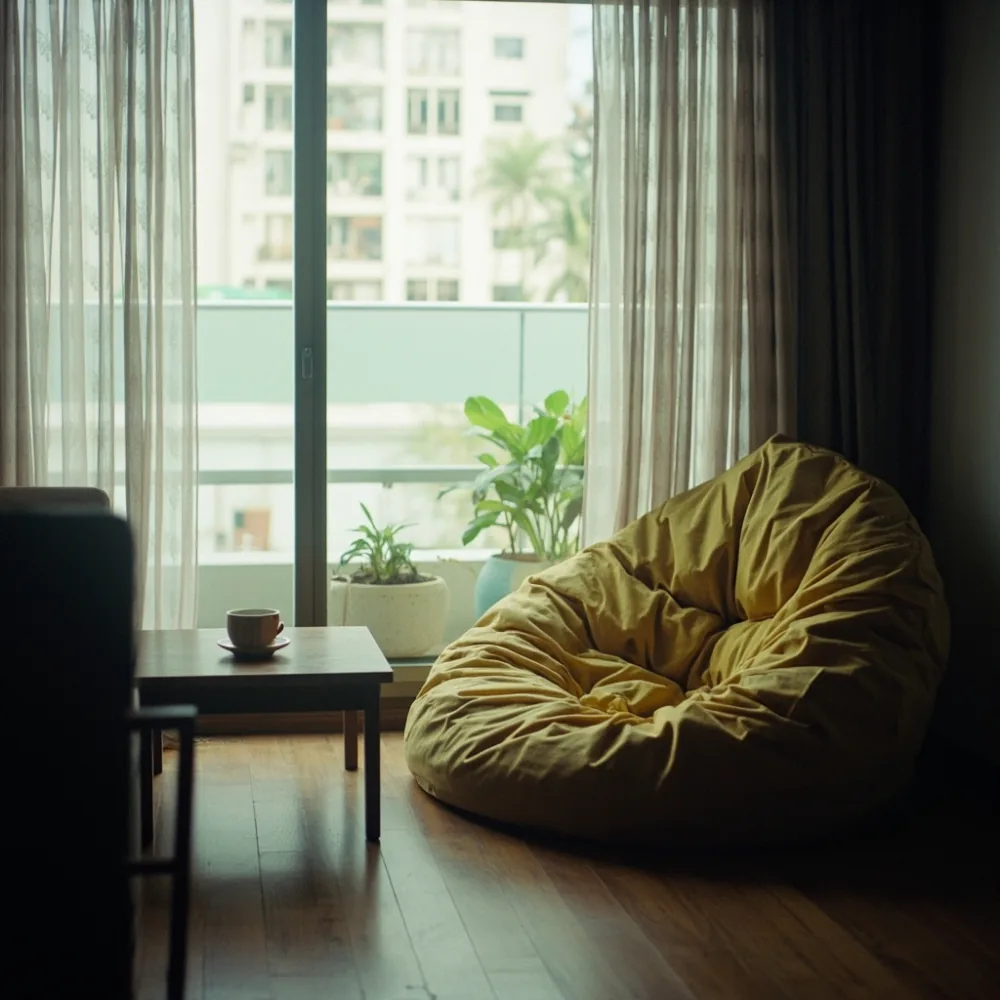
Match the bean bag to available floor area
Match the bean bag to the available floor area by measuring the intended corner, then leave the television, dining zone and main circulation routes unobstructed. For a typical three-room HDB living room, a roughly 90 × 90 cm bean bag is a practical starting point, but check the furniture already in place. Avoid doorways and narrow passages.
Consider the main user’s height
Consider the main user’s height and preferred posture before choosing the filled height. A shorter adult may need more back support, while a taller user may sink into a low design. The bag should support the hips without pressing awkwardly into the shoulders or lower back. Compare filled dimensions, not compressed dimensions listed for shipping.
Leave space for walking routes
For a typical 3-room HDB flat, I usually start with a 90 × 90 cm bean bag rather than an oversized floor cushion. That size feels substantial for an adult without taking over the living room. A 3-room flat may have around 60 to 75 sq m of usable area, but usable floor space matters more than the headline size of the home. Living rooms often need to accommodate a television console, coffee table and dining set, so the bean bag should remain a flexible seat rather than the room’s dominant object.
Choose a bean bag around 90 cm wide if you want to lounge, read or watch television and can tuck it under a table when guests arrive. For a larger 100 × 100 cm model, check the sofa and coffee table dimensions before ordering. I would aim for at least 60 cm of clear walking space around a frequently used bean bag. Avoid placing it directly in front of a doorway or beside a narrow corridor.
Height is also useful. A person around 155 cm may feel more supported by a 75 cm-high filled bean bag, while a taller adult may prefer a lower, broader design. The listed dimensions should include the filled shape, not just the compressed product in its box. If you are replacing an existing seat, measure the old chair and compare the new bean bag’s footprint with your HDB or condo layout.
- 3-room HDB: 90 × 90 cm is usually the safer starting point.
- 4-room or larger HDB: 100 × 100 cm may work if circulation remains comfortable.
- Condo living room: choose a washable cover and a shape that can be moved easily.
Are bean bags comfortable enough for everyday use in Singapore?
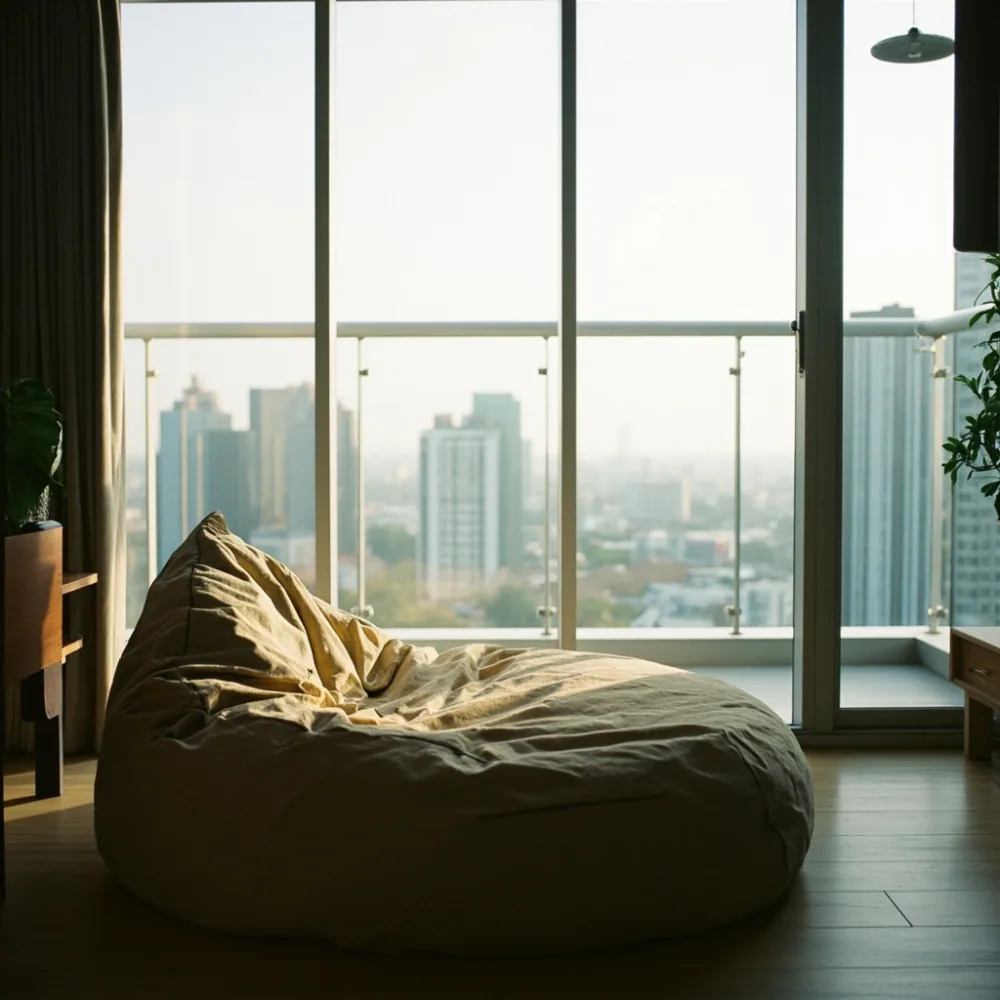
Understand the filling
Leave space for walking routes by keeping about 60 cm of clear space around a frequently used bean bag. Do not block the route from the entrance to the kitchen, dining chairs or television console. If people must pass behind the seat, measure the narrowest point after the filling has settled, and choose a smaller or movable model.
Test the seating position
A bean bag can suit everyday use when its filling provides a stable base, back support and enough loft for changing position. Polystyrene pellets are light and resilient, while foam can feel softer but may settle over time. Test the seat if possible: avoid a design that leaves the hips lower than the knees or forces the shoulders forward.
Choose a cover you can clean
A bean bag can be comfortable for daily use, but comfort depends on the filling and the way it supports your body. I prefer a bean bag that can sit upright with a backrest and still relax into a reclined position. Pure polystyrene pellets are light, resilient and easy to move. Memory foam or shredded foam feels softer initially but can settle more quickly. Polypropylene fibre is another common option, often giving a fuller appearance and a softer surface.
Do not judge comfort from the product photo alone. Sit in the bean bag for at least 10 minutes if a showroom sample is available. Check whether your hips sink below your knees, whether your lower back feels unsupported and whether the upper edge presses into your shoulders. The best shape is usually one that lets you change position without repeatedly rearranging the filling.
For Singapore, a removable and washable cover is more useful than a delicate decorative fabric. Everyday use brings in sweat, dust and food particles, while a rainy-season window can introduce dampness. I would choose a tightly woven polyester or similar synthetic cover for a family home. If you want a leather-look bean bag, check whether the surface is genuine leather or PU, and ask about cleaning with a damp cloth.
Bean bags work well as small space furniture because they can move from the living room to a bedroom. They are less suitable as the only dining chair, however, unless the model includes a firm base or back support. For a home office, use a proper task chair for long working hours and treat the bean bag as a short-break seat.
What materials can handle Singapore’s humidity and humidity-related mould?

Select mould-resistant fillings
Choose a cover you can clean according to the care label. A removable, machine-washable cover is useful in a family home because it can handle sweat, dust and food spills more easily than fixed delicate fabric. Polyester or similar synthetic material is generally straightforward to wipe clean. Check seam construction and whether the filling can be removed separately.
Look for removable washable covers
Select mould-resistant fillings and fabrics that dry quickly. Polystyrene pellets absorb little water, while exposed foam should be protected from dampness. Use a breathable, washable cover and keep the bean bag away from open windows during heavy rain. Air it fully before storing it, and clean seams and trapped debris without soaking the filling.
Prevent trapped moisture
Humidity does not automatically ruin a bean bag, but moisture left inside the filling or cover can cause mildew and odours. Singapore’s relative humidity commonly ranges from roughly 65% to 85% through the year, depending on weather and the building. I pay attention to breathable covers, quick-drying fabrics and fillings that do not absorb large amounts of water.
Foam fillings should be sealed or protected from direct dampness. Polystyrene pellets are less vulnerable to water than loose foam, but the outer cover still needs care. If your bean bag arrives in breathable fabric, keep it away from an open window during heavy rain. Do not place it against a wall that feels cold or damp, and avoid storing it in an enclosed balcony cabinet before it is completely dry.
Use a protective washable cover if children or pets are likely to create spills. Vacuum the seams and remove loose debris before cleaning. Follow the care label rather than pouring detergent directly onto the material. Air the bean bag in a dry, shaded area, and avoid a clothes dryer unless the manufacturer explicitly permits it.
For solid-wood alternatives in the same room, understand the difference: a wooden chair may withstand humidity better, but its joints, veneer and finish still need sensible care. MIDHILL, a Foshan solid-wood furniture maker established in 2008, offers a 10-year structural warranty on its solid-wood products. That is useful context when comparing bean bags with more conventional furniture, although it is not a warranty claim for a bean bag unless the brand explicitly covers one.
How much should I expect to pay for a bean bag in Singapore?
Compare the value of the filling
Look for removable washable covers, preferably with a separate base or two-piece construction. This allows the outer fabric to be washed without disturbing the filling. Confirm the care instructions, zipper design and drying method before purchase. In humid conditions, clean spills promptly and avoid enclosing a damp bag in a cabinet or storage bag.
Factor in delivery and assembly
Prevent trapped moisture by maintaining ventilation and following the manufacturer’s cleaning instructions. Vacuum seams and remove debris, then air the bean bag in a dry, shaded area. Do not pour detergent directly onto the material or use a dryer unless permitted. Allow the filling and cover to dry completely before compressing, covering or storing the bag.
Check what the price includes
For a new bean bag in Singapore, I would budget about SGD 120 to SGD 220 for a standard fabric model in a typical size. A larger 100 × 100 cm bean bag with a thicker cover or upgraded filling may cost SGD 220 to SGD 350. Entry-level models with minimal covers can fall below SGD 100, but I would compare the warranty, dimensions and filling rather than chasing the cheapest option.
Watch for prices that seem too good. A low-cost bag may use thin padding, a non-removable cover or compressed filling that needs several days to regain its shape. A premium price does not guarantee better comfort either. The useful comparison is kilogram weight, filled dimensions, cover composition, filling type and the seller’s after-sales support.
Delivery is usually a separate line item. A standard Singapore delivery charge may be around SGD 20 to SGD 50, with larger or upper-floor deliveries possibly costing more. Some listings include delivery and assembly, while others deliver to the lobby only. In a high-rise condo, ask whether the courier can bring the item to the unit door, reserve a loading bay and move it to your level.
Because prices move, treat the figures here as planning ranges rather than permanent quotes. Ask the retailer for the final price, delivery timeframe and warranty in writing before payment.
| Bean bag option | Typical filled size | Approx. weight | Typical price | Best for |
|---|---|---|---|---|
| Compact fabric | 80 × 80 × 75 cm | 5–7 kg | SGD 90–140 | Children’s rooms and occasional seating |
| Standard adult | 90 × 90 × 85 cm | 8–10 kg | SGD 120–220 | HDB living rooms and condo lounges |
| Large lounge | 100 × 100 × 90 cm | 10–13 kg | SGD 220–350 | Spacious living rooms and reading corners |
Can a bean bag fit into a small condo without blocking the TV or dining area?
Measure before ordering
Budget according to the filled size, filling quality and cover rather than buying the cheapest listing. A standard adult-sized fabric bean bag may cost around SGD 120 to SGD 220, while larger or thicker versions may reach SGD 220 to SGD 350. Compare weight, dimensions, cover composition, filling type and after-sales support before paying.
Use a low-profile shape
Factor in delivery and assembly by checking whether the quoted service reaches your unit door or stops at the lobby, whether a lift or loading-bay booking is included, and whether stairs add a surcharge. Ask for the delivery charge in writing. Large bags may also need two people to move safely, especially in high-rise buildings.
Plan the storage position
Yes, if you measure the available area and think about circulation. A compact bean bag can replace a bulky occasional chair in many condos, especially in districts such as Jurong East, Woodlands, Paya Lebar or Tampines, where compact living and efficient layouts are common priorities. The key is to keep the television viewing distance and dining access clear.
Measure the living room at its widest and narrowest points. Note the coffee table, console, dining chairs and the route from the main door to the kitchen. A bean bag should not touch the dining chair legs if someone needs to push back when standing up. In a studio or one-bedroom condo, a 80 × 80 cm model may be easier to accommodate than a 100 × 100 cm bag.
Look for a design that can be compressed or partially deflated for storage. A two-piece cover with a separate base is often more convenient than a single sewn cover because you can remove the filling for cleaning. If you want a bean bag with a more tailored appearance, search for custom furniture options or a made-to-measure cover; these can cost more but may suit an unusual corner better.
- Keep at least 60 cm between the bean bag and a frequently used walkway.
- Allow 90 cm or more from a television for comfortable viewing.
- Confirm that the filled bag can pass through the HDB or condo entrance.
How long does delivery and setup take in Singapore?
Ask about the dispatch timeframe
Check what the price includes before payment: filled dimensions, filling quantity, cover material, removable components, delivery terms and any applicable warranty. Confirm whether assembly is required or simply lifting the item into place. A low price may indicate a thin cover, non-removable design or filling that needs time to regain its shape.
Prepare for the delivery day
Prepare for the delivery day by measuring the entrance, lift, doorways, stairwells and intended position. Clear the route, reserve parking or loading access if required, and protect floors near the entrance. Have someone available to receive the parcel, inspect the cover and seams, and move the filled bag without dragging it.
Allow time for the filling to settle
I allow about 5 to 10 working days for a standard in-stock bean bag, with another 2 to 5 working days for certain islandwide deliveries. Custom covers or made-to-order fillings can take 2 to 4 weeks. These are realistic planning ranges; the retailer should provide a clearer estimate for your address and product.
Some bean bags arrive compressed and need to be opened, shaken or rolled before use. Leave the bag in a well-ventilated room for 24 to 48 hours, then redistribute the filling by hand. It may take several days to reach its final shape. If the product arrives in a vacuum-packed bag, check the instructions before cutting it, because vacuum packs can sometimes require several days to expand fully.
For HDB buildings, arrange a delivery window when someone can receive the parcel. Lift or lobby arrangements may differ by block. For a condo, confirm whether the driver has access to the resident car park and whether the building requires a loading-bay booking. A courier who only delivers to the lobby will not necessarily help carry a 10 kg bean bag upstairs.
Ask in advance about the time charged if the delivery fails, whether assembly is included and whether the packaging can be removed. For bulky items, I prefer to see the final package dimensions as well as the product dimensions.
Is a bean bag better than a sofa or an office chair for my home?
Compare support and flexibility
Allow time for the filling to settle. Standard in-stock bean bags may need several working days after delivery, while custom covers or made-to-order fillings can take longer. Compressed or vacuum-packed filling may need 24 to 48 hours to expand fully. Open, shake, or roll the bag as instructed, then redistribute the filling by hand and avoid heavy use during the first few days.
Think about daily tasks
Think about daily tasks. A bean bag suits lounging, reading, gaming, and flexible seating, but it offers less stable support for dining, prolonged desk work, or caring for a child. A dining chair is better for upright meals, while an office chair with adjustable height and lumbar support is preferable for regular computer use. Choose based on how the seat will actually be used each day.
Match the seat to the room
A bean bag is better than a sofa when your priority is flexible seating, a compact footprint or a casual reading position. It is better than an office chair when you only need occasional support and want to move the seat easily. For long workdays, a conventional task chair with adjustable height and lumbar support is usually the better choice. For overnight guests, a sofa bed or daybed provides more dependable sleeping support.
The comparison is also about how the room is used. A bean bag can be moved under a dining table for extra seating, but a standard dining chair is more suitable when people need to sit upright for meals. A sofa can anchor a living room and provide storage if you choose a model with a compartment; a bean bag usually offers less organisation.
Look at the dimensions, weight and firmness of each option. If you are building a coordinated living room, you might pair a bean bag with a durable fabric sofa rather than treating it as the only seat. If you want a formal look, solid-wood furniture may be more appropriate; MIDHILL’s solid-wood range is made in Foshan and backed by a 10-year structural warranty, giving buyers a different material and support profile from a soft bean bag.
| Choice | Comfort for lounging | Upright support | Footprint | Main limitation |
|---|---|---|---|---|
| Bean bag | Excellent | Moderate | 80–100 cm wide | Filling can settle |
| Fabric sofa | Good | Good | 160–220 cm wide | Uses more floor space |
| Task chair | Low | Excellent | 55–70 cm wide | Not intended for relaxing |
How do I stop a bean bag from flattening or losing its shape?
Rotate and redistribute the filling
Match the seat to the room. Measure the available floor area and leave enough space to move around the bag. Bean bags work well in bedrooms, playrooms, and informal living areas, while sofas suit larger living rooms and task chairs belong at desks. A typical bean bag may be 80–100 cm wide, compared with 160–220 cm for a sofa and 55–70 cm for a task chair.
Avoid heavy daily loads
Avoid heavy daily loads to prevent uneven compression and damage to the seams. Do not use the bean bag as a step, storage platform, or permanent seat for heavy objects. Change your sitting position regularly, rotate the bag every week or two, and redistribute loose filling gently. Keep sharp items and pet claws away from the cover and inspect high-wear areas periodically.
Follow the care instructions
All-soft bean bags will compress with use. The filling can usually be redistributed, but the cover may eventually lose some tension. I rotate the bag every week or two and add handfuls of filling if a refill is permitted. A separate inner liner makes this easier because the cover can be removed without opening the whole bean bag.
Avoid sitting permanently in the same position, especially with a laptop or heavy object placed on one side. Do not use the bean bag as a step, and keep pets from repeatedly biting or nesting in the seams. Vacuum the cover gently, following the manufacturer’s directions.
Check the care instructions at purchase. Machine-washable covers are convenient, but the foam may need 24 to 48 hours to dry. A damp inner liner in Singapore’s humid conditions can develop a musty smell. If the product has no refill option, buy a spare filling bag only after confirming the type and volume specified by the seller.
For households seeking a lower-maintenance seat, a firmer bean bag with a detachable cover is usually more practical than a very soft lounge model. Ask for a written guide covering cleaning, refilling and warranty claims.
What should I check before paying for a bean bag online?
Verify the product specifications
Follow the care instructions. Vacuum the cover gently and use only the recommended cleaning method; check whether it is machine-washable and whether the filling or inner liner must be removed first. Let washed components dry completely in a ventilated area to prevent musty smells. If refilling is allowed, confirm the filling type and required volume before buying a replacement bag.
Read the warranty and returns policy
Verify the product specifications, then read the warranty and returns policy before paying. Confirm the all told dimensions, weight, firmness, filling type, cover material, care requirements, and whether assembly is needed. Check who bears delivery, lift, and failed-attempt charges. Ensure the return policy covers size suitability, damaged parcels, and custom items, and retain the receipt and packaging until you have tested the bag.
Check delivery access
Before paying, I check the filled dimensions, material, filling type, weight, cover removability and warranty. Product pages sometimes show only the compressed size, so I ask for the dimensions after expansion. I also confirm whether the stated price includes the cover, filling, delivery and assembly.
Read what is excluded from the warranty. A 2-year or 5-year warranty may cover certain manufacturing defects but not ordinary flattening, stains from misuse or damage caused by dampness. Check how a claim is made and whether replacement parts are supplied or only the product is replaced.
For Singapore delivery, provide the full postal unit number, block, tower and phone number. Confirm whether the courier carries items into the unit, and whether lift or lobby access affects the price. If you are buying for an HDB flat, check whether the delivery is acceptable at the lobby and whether the retailer provides a carrying service.
Finally, look for a physical sample or clear photographs from multiple angles. Ask a family member to sit in it before ordering if the bean bag is for a shared living room. A comfortable bean bag should feel supportive at the first glance, not merely soft, and it should remain useful after the novelty wears off.
Frequently asked questions
Which bean bag size is best for a small HDB living room?
A 90 × 90 cm bean bag is a practical starting point for many 3-room HDB flats. It gives an adult a comfortable seat without taking over the room. Measure your coffee table and keep at least 60 cm of clear walking space. A smaller 80 × 80 cm model works better in studios and tightly planned condos.
Are bean bags suitable for Singapore’s humid weather?
Yes, provided the filling and cover are protected from moisture. Choose quick-drying fabric, a removable washable cover and a filling that does not readily absorb water. Air the bean bag after cleaning, keep it away from persistent dampness and avoid storing it while damp, as trapped moisture can encourage mildew and odours.
How much does a bean bag cost in Singapore?
Expect roughly SGD 90 to SGD 140 for a compact model, SGD 120 to SGD 220 for a standard adult bean bag, and SGD 220 to SGD 350 for a large lounge design. Delivery may add about SGD 20 to SGD 50. Compare filled dimensions, filling type, cover quality and warranty rather than price alone.
How long does bean bag delivery take in Singapore?
Allow about 5 to 10 working days for an in-stock standard model, with islandwide deliveries sometimes requiring another 2 to 5 working days. Custom covers can take 2 to 4 weeks. Confirm the lead time, delivery location and whether assembly is included before making payment.
Questions about sizing, fabric or delivery?
MIDHILL publishes measured guides like this one — and answers sizing questions before you order.
See the collection