What to Check Before You Buy a Sofa You Cannot Sit On
The title sounds absurd, but if you have ever tried to wrestle a 2.4-metre solid wood sofa up the staircase of a Tampines HDB block while the kind neighbour shouts timing instructions, you already know the joke is on us. Last month I visited a friend in Punggol who had just signed the delivery order for an oak three-seater that, on the website, looked slim and gallery-worthy. When two men tried to angle it past the lift door at Block 324A, the armrest caught the mirror, and my friend spent the next hour negotiating a S$180 scrape repair. The sofa itself was fine. The check-the-sofa-before-you-buy checklist was not fine. That afternoon, scribbled on a notebook at the kopitiam downstairs, this article was born.

I have spent more Saturdays than I would like to admit measuring HDB corridor turns, muttering at lift dimensions, and translating centimetres into shoebox units for confused family members. The phrase "you cannot sit on" is a polite way of saying: you should not buy anything until you have checked it standing up, lying down, tilted, and squeezed through a 1.1-metre doorway. Everything below comes from that notebook, plus a few hard-earned numbers from furniture buyers across Bedok, Toa Payoh, and a particularly narrow walk-up in Tiong Bahru.
Why does a sofa you cannot sit on matter at all?
Because the sofa you cannot sit on today becomes the wardrobe door that scrapes next month, the dining table that will not fit up the spiral, and the bed frame that lives in the corridor overnight. A 2.8 m solid wood sofa sounds romantic in a Jurong East condo showflat, but in a 1990s HDB in Bedok, the lift opening is usually 1.0 m wide and 2.1 m tall, and the corner from the lift lobby to the flat door swings through a 1.5 m turning radius. If you cannot move a piece in your head, you cannot live with it on the floor. Treat the sitting test as a moving test first.
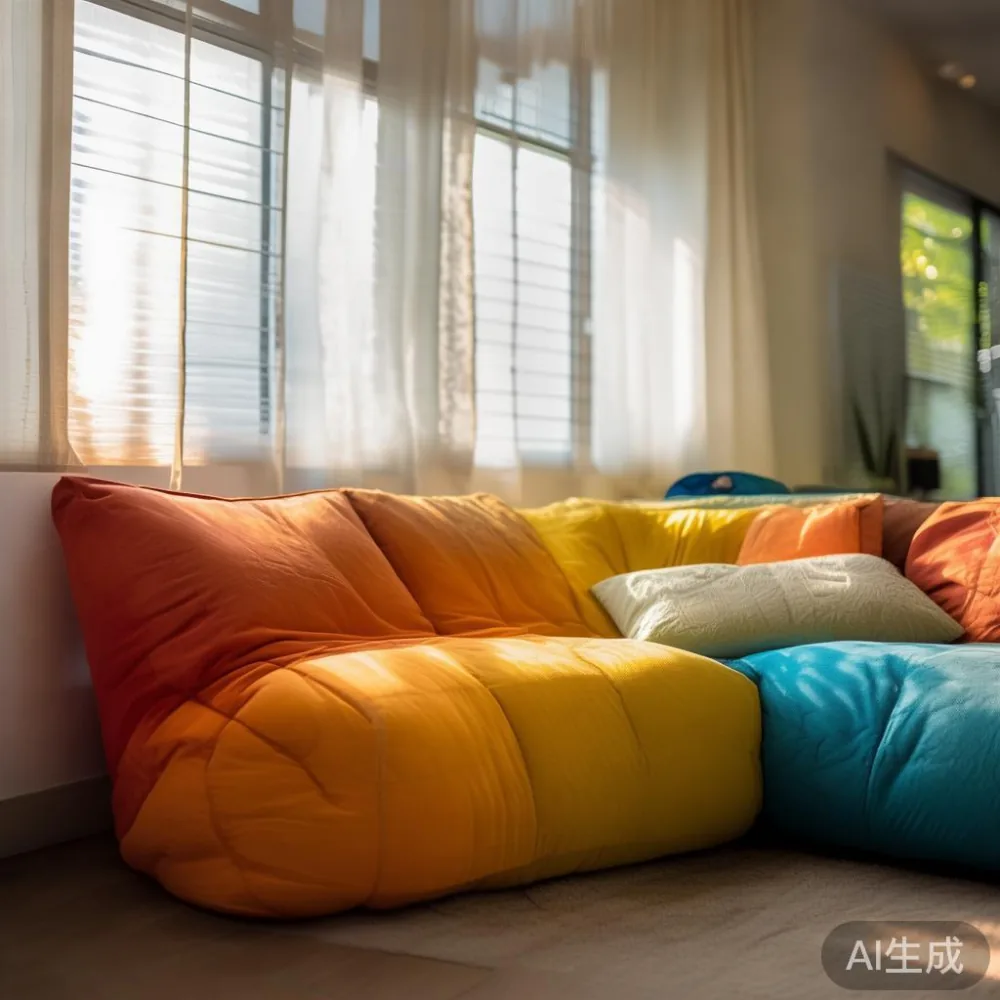
What measurements do you actually need to write down before clicking pay?
Three numbers. Write them on a piece of paper and tape it to the wall above your router, because you will forget:
1. Your lift door (height × width, in centimetres). Most Singapore lifts are 2.1 m tall by 1.0 m wide, but newer condos in Punggol sometimes run 1.1 m or even 1.2 m. Anything over 2.2 m tall will require a stair carry, and stair carries in HDB blocks quote S$120 to S$260 per floor depending on the turn radius and the number of men (usually two, sometimes three).
2. Every internal doorway the piece will pass through. HDB bedroom doors are typically 0.81 m wide; condo doors can be 0.9 m. A solid wood wardrobe that is 1.0 m deep will not pivot through an 0.81 m opening unless you remove the doors, which most delivery teams will not do for an oak piece because the weight can warp the panels.
3. The diagonal of the largest box or assembled piece. Diagonal is the magic number everyone forgets. A 2.0 m × 0.9 m sofa on its side has a diagonal of roughly 2.19 m, and that diagonal must clear the lift ceiling AND the corner of the lift car. If it does not, your sofa stays downstairs overnight and you pay a redelivery fee of S$60 to S$120.
Is European wardrobe furniture worth it?
European wardrobe furniture earns its keep when the panels are 18 mm to 25 mm thick, the hinges are 110-degree soft-close, and the carcass uses real birch ply rather than MDF with a wood-look laminate. For a 3-door wardrobe that measures 1.8 m wide by 2.2 m tall by 0.6 m deep, expect 95 kg to 130 kg packed, and a quoted delivery window of 21 to 35 working days because most European makers ship from Hamburg or Gdansk. In Singapore dollars, the landed figure for a decent European wardrobe runs S$2,400 to S$4,800 including 9% GST, whereas a comparable Chinese-made solid wood wardrobe in the French light luxury style sits at S$1,800 to S$3,200. The European version wins on hinge cycles (rated 100,000 versus 50,000) and on the honesty of the wood grain, but loses on lead time and on the ability of the local warehouse to swap a damaged panel in 7 days. If you need it for a resale HDB and you are moving in 6 weeks, the calculus tilts away from Europe.
How does light luxury translate into something you can actually lift?
Post-modern light luxury is the current phrase floating around Pinterest moodboards, and it usually means a slim silhouette, a neutral palette (warm grey, oat, bone white), brushed brass feet, and one accent material such as travertine or book-matched veneer. The trick is that the look is light, but the bones are not. A post-modern light luxury dining table with a sintered stone top on an ash base can weigh 60 kg to 85 kg, and the top alone, at 1.8 m × 0.9 m, will not fit through an HDB door if the door has been replaced with a fire-rated one that swings inward. I tested a 1.6 m marble table last month at a friend's new condo in River Valley; the lift accepted it but the corridor turn refused, and the crew had to walk it down nine floors by the service stairwell, adding S$320 to the bill. The lesson is that light luxury is a finish language, not a weight class. A solid wood sofa in American light luxury style with a kiln-dried oak frame and 8-way hand-tied springs still tips the scales at 70 kg to 95 kg for a three-seater, and that weight is your friend when the lift alarm goes off.
Which bean bag and soft seating choices quietly solve the moving problem?
Here is where the site's core product comes in. A well-filled bean bag ships in a flat box of roughly 70 L to 120 L, weighs between 6 kg and 14 kg empty, and inflates with 200 L to 400 L of EPS beads once it lands in your living room. That is the rare piece of furniture a HDB buyer can carry up three flights on the MRT without a contractor. If you live in a walk-up in Tiong Bahru or a maisonette in Marine Parade, the bean bag is the chair you do not have to fight. A friend in Bedok Reservoir replaced her 2.4 m solid wood sofa with two 150 L bean bags and a small oak frame for the TV, and her monthly cleaning time dropped from 45 minutes to 12 because the covers zip off. For households with one child under six or a cat that thinks rattan is a scratching post, the bean bag category quietly outperforms half the engineered wood furniture on the market.
The same logic applies to modular seating. A modular solid wood sofa that splits into three pieces, each under 0.9 m wide and under 35 kg, will clear any HDB lift and any corridor turn. MIDHILL ships several modular oak sofas in this configuration, and the 3-seater variant breaks into a 0.85 m armrest module, a 0.80 m centre, and a 0.85 m chaise, all under 30 kg each. That is the kind of number that should sit on every product page, and most do not bother to print it.
How do you read a product page like a furniture buyer instead of a furniture browser?
Three things on the page tell you almost everything. First, the packed dimensions in centimetres, not just the assembled dimensions. Second, the gross weight in kilograms, broken down by carton if there are more than one. Third, the lead time in working days, and whether it ships from a Singapore warehouse (3 to 7 days), a Johor warehouse (7 to 14 days), or a factory in Foshan (30 to 60 days by sea). If the page shows only one of those three, treat the price as a starting offer rather than a final figure.
For a 3-seater American bed frame, the safe numbers are a packed weight between 55 kg and 80 kg across three cartons, a king-size assembled footprint of 1.98 m × 2.13 m, and slats spaced under 7 cm so a pocket-spring mattress does not sag through. A good seller will print the slat spacing, the centre-rail count (two is minimum for a king), and the distance from floor to the top of the side rail (38 cm to 45 cm is the comfort zone for sitting on the edge).
What about nightstands, marble tables, and the small things that quietly ruin your day?
Nightstands look innocent because they are small, but a solid oak two-drawer nightstand typically weighs 22 kg to 28 kg, and the marble-topped variants run 32 kg to 40 kg. A marble table in the same light luxury language is heavier still: a 1.2 m round travertine top on an ash base can hit 55 kg, and the top alone, if it ships in one piece, will not survive a 1.0 m lift door unless you tilt it to 70 degrees, which two movers can do and one mover cannot. Always ask whether the marble top is one slab or two halves joined with a colour-matched resin. Two halves are easier to carry and easier to replace if the first slab chips in transit.
The wardrobe category has its own quiet failure mode. A 2.4 m wardrobe with mirrored doors is the single most-damaged item in Singapore furniture deliveries, because the mirror faces outward and the cardboard corner protectors are usually one layer. Reject the delivery if the outer carton shows a corner crush deeper than 3 cm, because the mirror inside will have a star crack you only notice three months later when the morning sun hits it.
What does a fair warranty actually look like in Singapore?
Ten years on the frame is the mark of a maker who is confident in the joinery, and lifetime refinishing on a solid wood piece is a quiet promise that the maker plans to be around in 2036 to honour it. Read the exclusions. Most warranties exclude commercial use, exposure to direct afternoon sun through a west-facing HDB window (a real problem in Punggol and Sengkang), and humidity above 80% RH, which a ground-floor maisonette in Bukit Timah can hit during a monsoon week. A 14-day return window is generous by local standards, but the S$80 to S$150 collection fee for large items means a return is rarely free in practice. Free shipping over S$480 (about US$355) is the line where the math starts to favour ordering one large piece rather than two small ones.
MIDHILL's published terms sit in this band, with a 10-year structural warranty on the solid wood sofa and bed frame ranges, lifetime refinishing on the dining table collection, and free delivery above S$480 across mainland Singapore including the Sentosa gateway. That is a sensible set of promises, and it is the kind of paperwork a buyer should screenshot before paying.
Where do most buyers lose money, and how do you keep the budget?
Three places. The redelivery fee (S$60 to S$120) when the first attempt fails because the piece will not clear the lift. The stair carry fee (S$120 to S$260 per floor) for walk-ups. And the scratch repair on the corridor wall or the lift lobby mirror (S$80 to S$220). The way to keep the budget is to spend S$40 to S$80 on a pre-delivery site visit by the seller's team. Most Foshan exporters serving Singapore will arrange this for orders above S$1,500, and a good visit ends with a floor plan marked in pencil showing the lift, the turn, the doorway, and the final resting spot of each piece. Ask for the marked-up plan in PDF. If the seller refuses, the seller knows the numbers are tight.
A second saving comes from the GST arithmetic. From 1 January 2024, GST is 9%, and on a S$3,200 dining table that is S$288, which is non-trivial. Overseas shipping to Singapore is GST-rated on the landed value including insurance and freight, so a US$1,200 (about S$1,620) seat from an American maker ends up costing S$1,766 at your door. Local sellers absorb this differently, and a fair landed quote shows the GST line separately.
What is the one-page cheat sheet I would tape to the fridge?
Measure the lift door in centimetres. Measure every internal doorway. Compute the diagonal of the largest packed box. Confirm the slat spacing and centre rail count on any bed frame. Ask whether the marble top is one slab or two. Ask whether the sofa splits into modules under 35 kg. Ask for the warranty exclusions in writing. Ask whether the seller has done a site visit for the address, not just for the postcode. If the answers are clear, the sofa you cannot sit on is a sofa you can actually live with.
Buying furniture in a Singapore HDB is a small logistics project wearing the costume of a styling decision. The romance is in the wood grain and the brass foot; the romance ends at the lift door. Get the numbers right, and the rest is just choosing between warm grey and oat.