Sizing a Bean Bag for a Singapore HDB Living Room: A Practical Sizing Guide
Most HDB living rooms I measure in Tampines, Bedok, and Punggol flats fall between 12 and 22 square metres once the kitchen counter, TV console, and dining table are placed. That sounds like a lot on paper, but after you mark out a 220 cm sofa, a 120 cm coffee table, and the corridor clearance to the balcony door, you are usually left with a 2 m by 1.8 m floor patch that doubles as walkable space and a casual lounging zone. Last month I visited a colleague's 4-room BTO in Sengkang with a 13.8 sqm living room, and we laid out three different bean bag sizes on the floor with painter's tape before she placed an order. Within forty minutes we had a clear answer for her layout — and a clear answer on which sizes would have made the room feel cramped. That is the kind of measurement-first thinking I want to walk you through below, with Singapore-specific constraints built in.
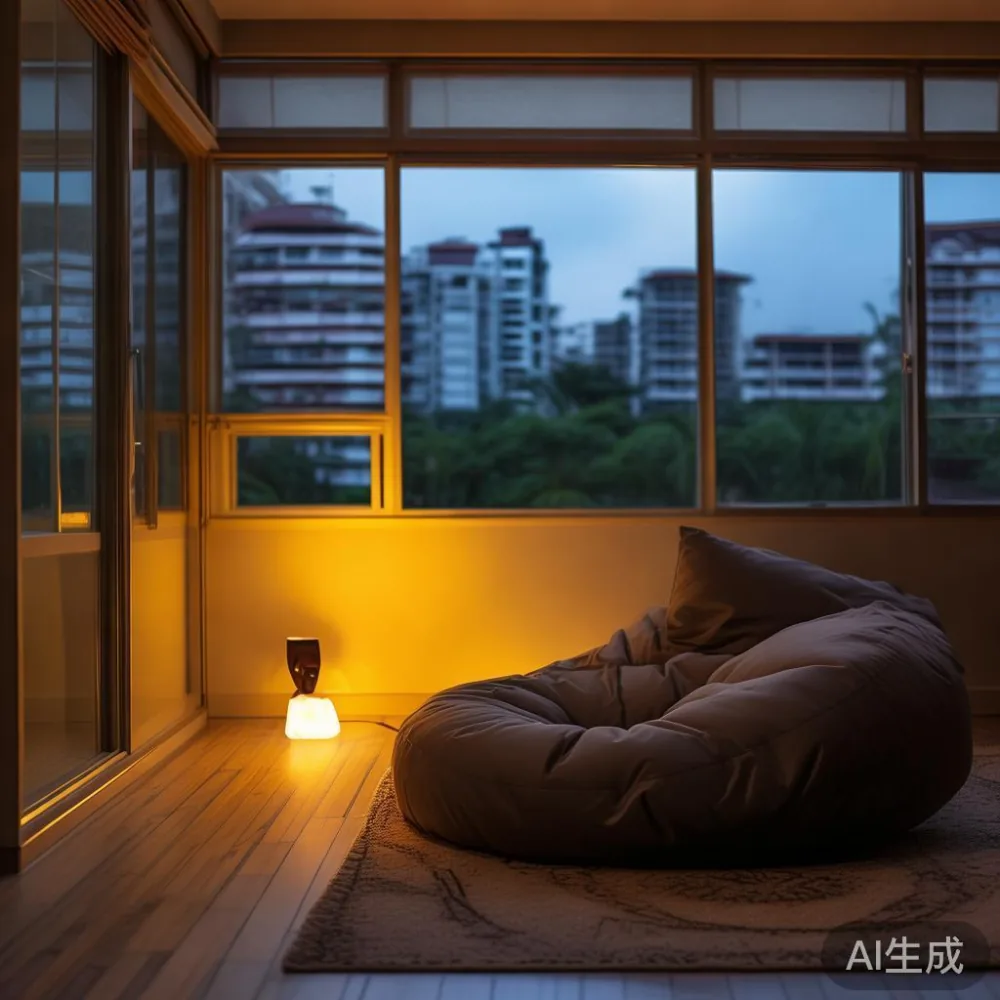
If you have ever ordered a large floor cushion online and discovered it swallowed half your living room , you already know why size matters more than colour or fabric. A bean bag that is too small fails at comfort; a bean bag that is too large fails at circulation, opening doors, and getting through the lift on delivery day. In Singapore HDB blocks, the standard passenger lift car is roughly 1.1 m wide by 1.4 m deep with a door opening of about 0.9 m, so anything packed above 1.1 m on its longest side is worth checking before checkout. MIDHILL ships compressed-and-roll-packed bean bags from Foshan, and the cartons on the larger 130 cm and 150 cm models sit around 65 x 65 x 110 cm — they fit a HDB lift, but barely, and only if you stand the box upright.
How do I choose a sofa bed for a HDB living room?
Pick a sofa bed whose mattress footprint is at most 10 cm narrower and 15 cm shorter than your shortest usable wall, and whose assembled depth (with the back folded down) leaves 70 cm of walking clearance to the TV or balcony door. For a typical 4-room HDB living room that means a 140 cm wide by 190 cm long sofa bed, not the 160 cm show-floor favourite you saw on Instagram.

That is the rule I apply to any convertible piece in a HDB — sofa beds, daybeds, ottomans that unfold, and yes, oversized bean bags that fold flat for guest use. The single biggest mistake I see in resale flats along Bedok Reservoir and Punggol East is buying a show-floor sofa bed that is 160-180 cm wide, then trying to angle it past the kitchen door during delivery. The lift fits, but the corridor turn into the unit does not. A 140 cm sofa bed is also easier on the wallet: at MIDHILL the linen-upholstered 140 cm model sits around SGD 1,680 before GST, while a 160 cm version jumps to roughly SGD 2,150. The 9% GST on top is a real number — for the SGD 2,150 sofa bed that is SGD 193.50 added at checkout, so a 14 cm width difference quietly becomes a 13% jump in total price.
What size bean bag actually fits a HDB living room?
For most 3- and 4-room HDB layouts, the right bean bag is 100-130 cm in diameter, with a filled height of 70-90 cm. Anything under 90 cm reads as a child's floor cushion; anything over 140 cm eats the room.
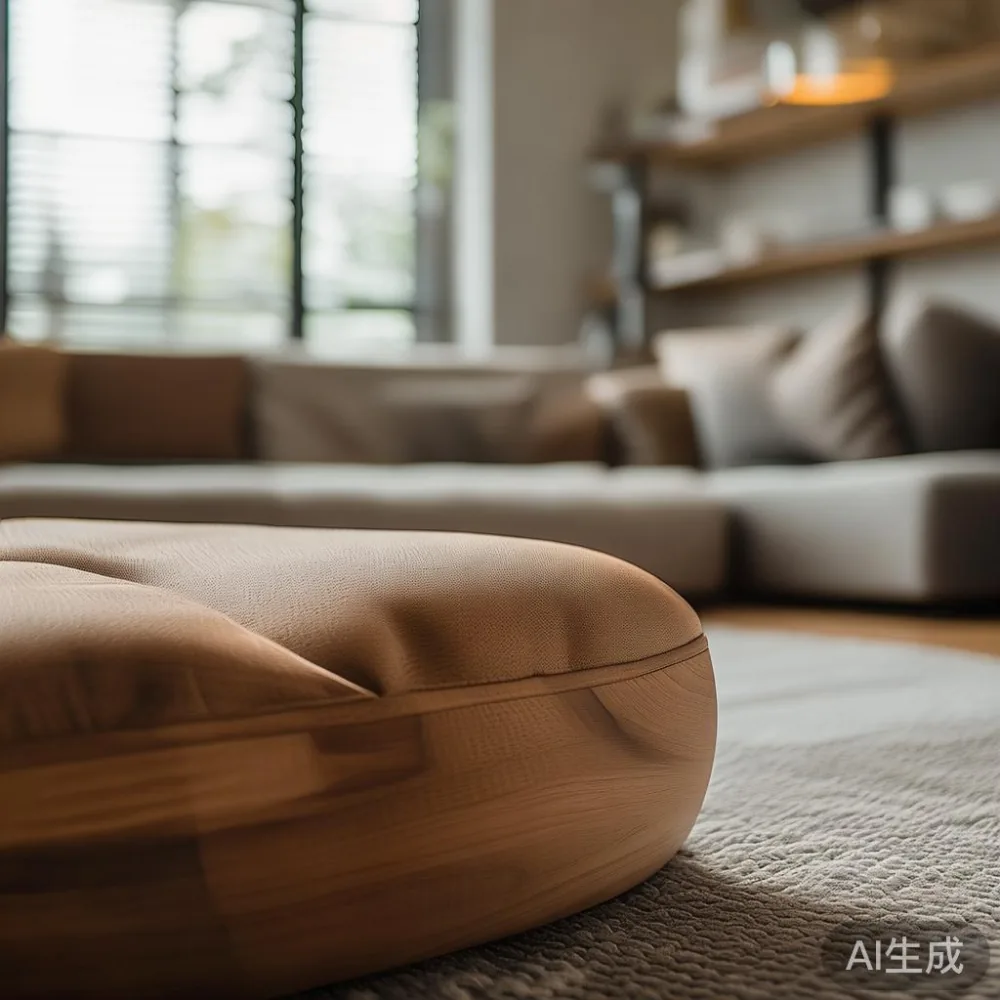
The numbers below are what I recommend to friends in Tampines GreenRidges and Hougang RiverCourt after I have measured their spaces in person:
- Studio apartment (under 30 sqm total) or study nook: 80-100 cm round bean bag, roughly 6-9 kg filled weight. Best as a reading chair, not a lounger.
- 3-room HDB (4-5 sqm of free living space): 110 cm round or 90 x 110 cm pear-shape, filled height around 75 cm. Filled weight lands between 14 and 18 kg depending on EPS bead density.
- 4-room HDB (the common 12-18 sqm living room): 130 cm round or 120 x 140 cm lounger, 22-28 kg filled. This is the sweet spot for a couple or a parent with one child.
- 5-room HDB or executive maisonette: 140-150 cm round, 32-40 kg filled. Only worth it if you have a dedicated corner with at least 1.6 m of clearance on three sides.
For context, the same 130 cm bean bag that I fitted into a Punggol HDB last month has a shipping weight of about 27 kg packed, which fits comfortably in the lift and is light enough for one person to drag to the living room corner without scraping the parquet.
How do I measure my HDB living room correctly before ordering?
Measure in centimetres, not feet; sketch the room to scale on graph paper; mark every fixed item; and leave a 70 cm walking lane from the sofa zone to the balcony door, kitchen entrance, and main entry door.
Here is the order I use when I walk into a new flat. It is the same checklist I run for MIDHILL customers who send photos of their rooms before they order a solid wood sofa, a dining table, or one of the larger bean bags:
- Wall-to-wall length of the longest clear wall (where the sofa or bean bag will live). Round down 5 cm for skirting boards.
- Depth of the same wall, measured from the wall to the nearest obstacle — usually a 35-40 cm TV console or a 45 cm dining table edge.
- Door swing clearance for the main entry, kitchen sliding door, and balcony door. HDB balcony doors usually need 60-70 cm of swing or slide clearance.
- Lift car dimensions on your floor. Most HDB blocks have a 1.1 x 1.4 m car with 0.9 m doors, but newer blocks in Punggol Northshore have wider 1.3 x 1.6 m cars. Confirm with your Town Council if you are unsure.
- Corridor width from lift lobby to your unit door. Older blocks run 1.2 m; newer ones run 1.5 m. Anything over 1.5 m is comfortable for boxes up to 1.4 m on the diagonal.
If the longest free wall is under 1.6 m, drop down to a 100-110 cm bean bag. If the free wall is between 1.6 m and 2.2 m, a 130 cm bean bag works. Above 2.2 m, you have room for either a 150 cm bean bag or a proper 180 cm two-seater sofa — at which point I would honestly steer you toward a solid wood sofa frame with washable covers, because the daily maintenance of a giant bean bag is real.
Is a bean bag a sensible alternative to a sofa in a HDB flat?
For singles, couples under 35, and anyone who works from home two or more days a week, yes — a 120-130 cm bean bag genuinely replaces a small loveseat in a HDB living room, and frees up 1.2-1.8 sqm of floor space.
For families with two or more children, or anyone who entertains more than four people at a time, no — a bean bag is a complement to a sofa, not a replacement. The frame of a sofa gives consistent lumbar support for eight-hour Netflix sessions; a bean bag gives variable support that needs to be re-fluffed every week. If you are a couple in a Punggol 4-room flat, a typical set-up that works is a 180 cm three-seater solid wood sofa facing a TV console, with a 130 cm bean bag in the corner opposite the dining table. The sofa handles weekday evening lounging and guests; the bean bag handles Saturday morning coffee, gaming, and the occasional overnight guest who does not mind a 130 cm sleeping surface (which is honestly tight for anyone over 175 cm tall).
One real cost angle worth mentioning: a MIDHILL solid wood sofa frame in oak or ash starts around SGD 1,950 for a 180 cm three-seater before GST, and the cover set is removable and washable. A 130 cm bean bag with a removable, washable linen cover sits around SGD 420-560 before GST depending on fill. So the bean bag is roughly a quarter of the price of the sofa, and you can replace its cover every two to three years for about SGD 90, which is cheaper than reupholstering a sofa.
Which bean bag shape and fill work best in Singapore's humidity?
Pick a pear-shape or round with a removable, washable cover in linen or cotton-poly, and EPS bead fill rated above 25 kg per cubic metre — not shredded memory foam, which absorbs moisture and clumps within nine months in our climate.
Singapore sits at 70-85% relative humidity most mornings, and indoor humidity in a HDB without a dehumidifier can hit 80%. EPS beads are closed-cell expanded polystyrene, so they do not absorb water. Shredded foam does. After a year of daily use, shredded foam in a HDB flat tends to compress into lumpy pads that need a full refill at SGD 60-90 per top-up. EPS beads, by contrast, lose about 10-15% of their volume per year, so a 130 cm bean bag filled with 0.45 cubic metres of beads needs a 0.06 cubic metre top-up every 12 months. That is roughly a 1 kg bag of refill beads, which costs about SGD 28 delivered.
Cover material matters just as much. French light luxury interiors — think bouclé, brushed linen, soft taupe and ivory palettes — translate well to a bean bag cover if you go for a 100% linen or linen-cotton blend with a 280-320 gsm weight. Anything lighter than 220 gsm will pill within six months of daily use. American light luxury leans toward distressed leather-look PU, which wipes clean and handles spilled kopi or teh better than linen. Post-modern light luxury is the most forgiving: matte velvet covers in muted sage, terracotta, or slate grey, with a hidden YKK zip and double-stitched seams. Whatever direction you pick, the cover should be removable and machine-washable at 30°C. Hand-washing only covers last about eight months in a HDB before they start to smell.
What about delivery, GST, and warranty for a bean bag to Singapore?
Sea freight from Foshan to Singapore takes 12-18 days door-to-door, GST is 9% on the landed value, and a credible seller offers at minimum a 2-year cover-and-stitch warranty plus a fill-top-up service within the first year.
Here is the cost stack I walk customers through, using a 130 cm MIDHILL bean bag in linen as the worked example:
- Bean bag (cover + EPS fill, 130 cm): SGD 489 ex-GST.
- Sea freight, insurance, and Singapore handling: SGD 78.
- 9% GST on (SGD 489 + SGD 78): SGD 51.03.
- Landed total: SGD 618.03.
Free shipping kicks in above US$350 ex-GST, which is about SGD 480 — so a single 130 cm bean bag falls just under the free-shipping threshold, while a bean bag plus a matching ottoman or floor cushion clears it. Delivery from the Foshan warehouse to a Singapore HDB lobby typically runs 14 working days, with 2-3 additional days for last-mile to your unit. MIDHILL has been exporting solid wood sofa frames, bed frames, dining tables, wardrobes, nightstands, and marble table pieces to Singapore since 2008, so the freight paperwork — Certificate of Origin, fumigation certificate for wood components, HS codes for filled bean bags — is already streamlined.
Warranty language is the part most buyers skip, and it matters more in Singapore than in drier climates. Look for two specific clauses: (1) a stitch and seam warranty of at least 24 months, because HDB humidity stresses thread more than dry climates do, and (2) a stated policy on cover replacement — whether the seller sells replacement covers at cost, and at what lead time. MIDHILL publishes both, and the cover lead time to Singapore is 7-10 days by air for a stocked colour, or 30-40 days by sea for a custom weave.
Common sizing mistakes to avoid in a HDB living room
Five mistakes come up again and again in my conversations with customers in Bedok, Tampines, and Punggol: (1) ordering by showroom photos without measuring, (2) ignoring the dining table footprint, (3) forgetting the balcony door swing, (4) underestimating filled weight, and (5) treating the bean bag as a single-purpose chair when a washable cover turns it into a guest bed.
Each one is fixable in five minutes with a tape measure. Take the dining table first — a standard four-seater is 120 x 80 cm, a six-seater is 150 x 90 cm, and an extendable model opens to 180-200 cm. If your dining table is in the same open-plan zone as the living room, you need 90 cm of clearance around the table even when nobody is sitting, because HDB dining chairs are typically 45-50 cm deep. A 150 cm bean bag placed too close to the table will get bashed by chair backs every meal. The balcony door swing is the same story — 60-70 cm of arc, marked on the floor with tape, and your bean bag cannot sit in that arc.
Filled weight is the mistake that costs the most backache. A 150 cm bean bag filled to spec weighs 35-40 kg. You will move it for vacuuming roughly once a week. If the cover has a side handle, fine. If it does not, and you are a 55 kg person, that is a real two-person job. A 130 cm bean bag at 25 kg is much friendlier. And the last point — the guest bed angle — is genuinely underused. A 130 cm round bean bag laid flat is a 130 cm sleeping pad for a child or a small adult. A 140 x 200 cm rectangular floor sofa-style bean bag is a near-proper single bed, and at SGD 720-860 before GST it is cheaper than a folding guest bed frame.
Quick sizing checklist before you click checkout
Longest free wall ≥ bean bag diameter + 30 cm; filled height ≤ 90 cm if the bean bag sits under a window sill; cover is removable and washable at 30°C; EPS bead fill, not shredded foam; delivery carton fits your lift car with 5 cm to spare; landed SGD total inside your budget including 9% GST; warranty covers stitches for at least 24 months.
If you can tick all seven, you have a bean bag that will work in your HDB living room for at least five years. If you cannot tick two or more, drop down a size — a slightly smaller bean bag in the right cover fabric beats an oversized one that fights your dining chairs every evening. And if you are furnishing the rest of the room at the same time, the same sizing logic applies to a solid wood bed frame (always subtract 10 cm from your wall length for mattress shifting), a wardrobe (allow 5 cm clearance from the back wall for ventilation in our humidity), a nightstand (height within 5 cm of your mattress top), and a marble table (lift access permitting, as marble tops above 1.2 m often need to be hoisted, not tilted).
The honest short version: in a HDB living room, a 120-130 cm pear or round bean bag in a washable linen cover, filled with EPS beads at 25+ kg per cubic metre, and shipped via a seller with a 2-year stitch warranty, is the configuration that holds up year after year. Measure twice, order once, and you will not need to think about it again until your first cover refresh in 2028.