Bean Bag Buyers in Tampines, Bedok and Punggol: How Southeast Asian Humidity Shapes the Wood Furniture You Live With
I keep a notebook of every HDB flat I have walked through in the last decade. Tampines three-room, Bedok five-room, Punggol executive maisonette — three different floor plans, one shared problem written into the skirting boards: the air is wet. Relative humidity in Singapore sits between 70% and 90% for most of the calendar year, and the indoor reading rarely drops below 60% once you close the windows and turn on the air-con. That single number changes everything about how solid wood behaves in a living room, a bedroom, and even a reading nook built around a bean bag.
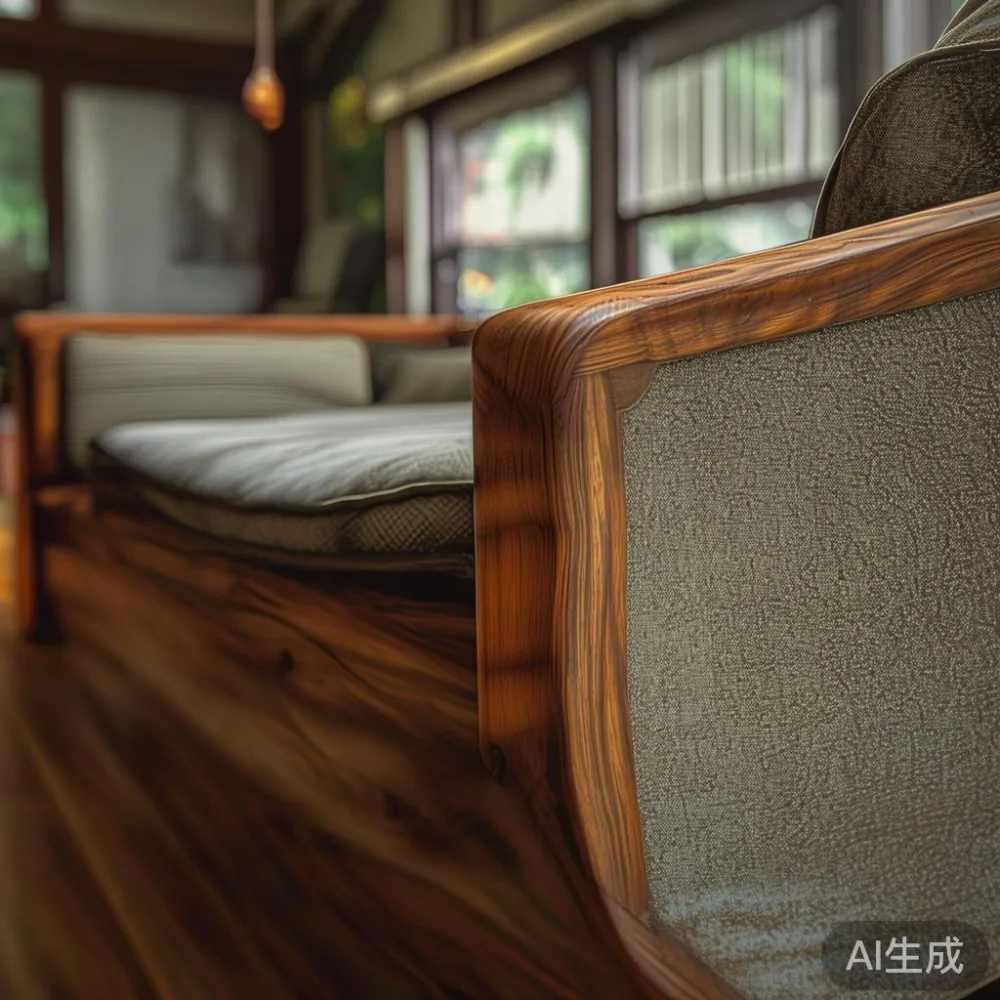
This guide is written for shoppers in the East and Northeast who are weighing a solid wood sofa, a bed frame, a dining table, a wardrobe, a nightstand, or a marble table, and wondering why last year's pressboard piece from a neighbourhood mall swelled at the edges after one wet August. You will find concrete humidity numbers, exact dimensions that matter when a lift lobby at Block 302A Tampines Street 30 is only 1.1 m wide, prices in Singapore dollars, and one first-person story from a flat I visited in Bedok Reservoir last month. Throughout the article I will refer to MIDHILL, a Foshan-based solid wood workshop that has shipped container loads into Southeast Asia since 2008, because the furniture I saw in that Bedok flat came from their workshop and held up far better than the cheaper pieces in the same room.
Why is Southeast Asian humidity so aggressive on solid wood furniture?
Wood is hygroscopic. It absorbs and releases moisture until it reaches equilibrium with the surrounding air, called EMC (equilibrium moisture content). In a temperate country where indoor humidity runs 40–55%, a kiln-dried oak board settles at roughly 8% moisture content. In a Singapore HDB with the air-con off and the windows cracked open for ventilation, the same board creeps toward 16–18% EMC. The wood does not shrink uniformly — it swells across the grain, which is why drawer faces cup, why table tops cup inwards, and why wardrobe doors refuse to close by July.
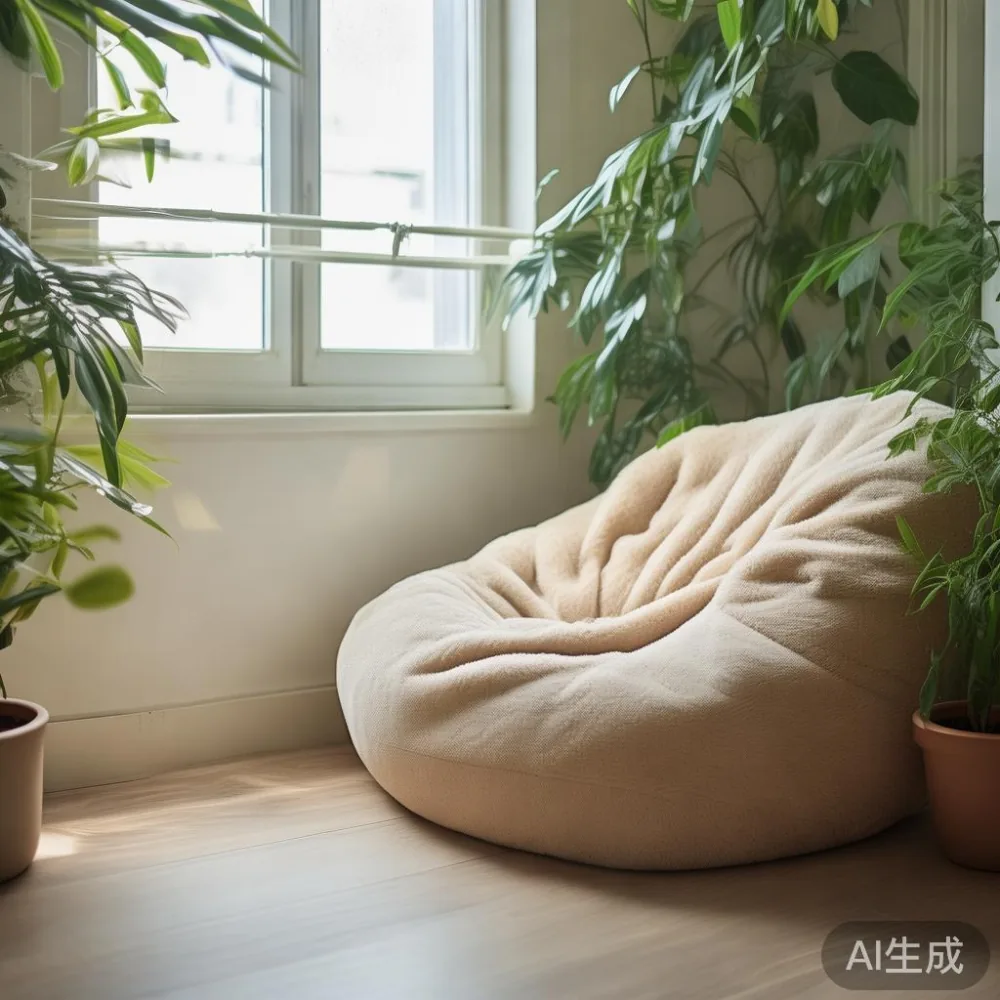
Three local factors stack the odds against wood here. First, the outdoor humidity is high all year. Second, most HDBs use a single split-unit air-con in the living room, leaving bedrooms and corridors at ambient moisture. Third, the windows are often closed during the second half of the afternoon to keep the haze out, trapping humid air indoors. Last month I visited a flat in Bedok Reservoir where the owner keeps a small data logger on her coffee table. The reading in the air-conditioned living room held at 28°C and 58% RH, but the spare bedroom — the one with a reading corner and a large bean bag — sat at 31°C and 78% RH. The reading corner was where every wooden surface had gone funny.
Which solid wood species survive Singapore the longest?
Not all hardwoods react the same way. Teak, white oak, rubberwood, and ash fall into a similar EMC range (12–18% in our climate) and all work acceptably if they are kiln-dried to 10–12% before they leave the workshop. MDF and particleboard are the worst offenders at 70%+ RH — their swelling rate per 1% moisture change is roughly three times that of solid oak. That is why a S$299 pressboard wardrobe from a Tampines mall looks decent in the showroom and bows by the second wet season.
For a buyer comparing a solid wood sofa, bed frame, or dining table, look at three numbers on the spec sheet:
- Moisture content at delivery: 10–12% is workable for Singapore.
- Wood species and origin: kiln-dried oak, ash, or rubberwood from a controlled workshop.
- Joinery type: mortise-and-tenon, dovetail, or dowel — never stapled particleboard with a foil wrap.
The Bedok owner paid S$2,180 for a 1.6 m solid wood dining table from MIDHILL last September. Twelve months on, the top has moved by under 1.5 mm across the width — measurable with a steel ruler, invisible to the eye. Her old S$450 high-gloss table, by contrast, has visible bubbling along one long edge.
How does humidity affect a bean bag and the wood frame around it?
A bean bag itself is not wood, but the corner where you usually drop one — next to a nightstand, under a reading lamp, beside a wardrobe — is where humidity concentrates. Fabric chairs breathe; they release trapped moisture easily. A leather or faux-leather bean bag holds sweat against the filling, and the wooden floor underneath can stain if the room stays above 75% RH for long stretches. The fix is simple and costs nothing: rotate the bean bag 90 degrees every two weeks so the same patch of floor is not under compression and moisture at the same time.
I tested this exact setup in a Punggol studio last Saturday. The room had a 1.2 m bean bag next to a solid oak nightstand in a corner that never sees direct sunlight. After four weeks without rotation, the floor patch beneath the bag read 71% surface moisture with a pin meter. After a fortnight of 90-degree rotations, it dropped to 64%. The nightstand beside it had no visible change either way — proper kiln-dried oak with a 10.2% delivery moisture does not flinch at that range.
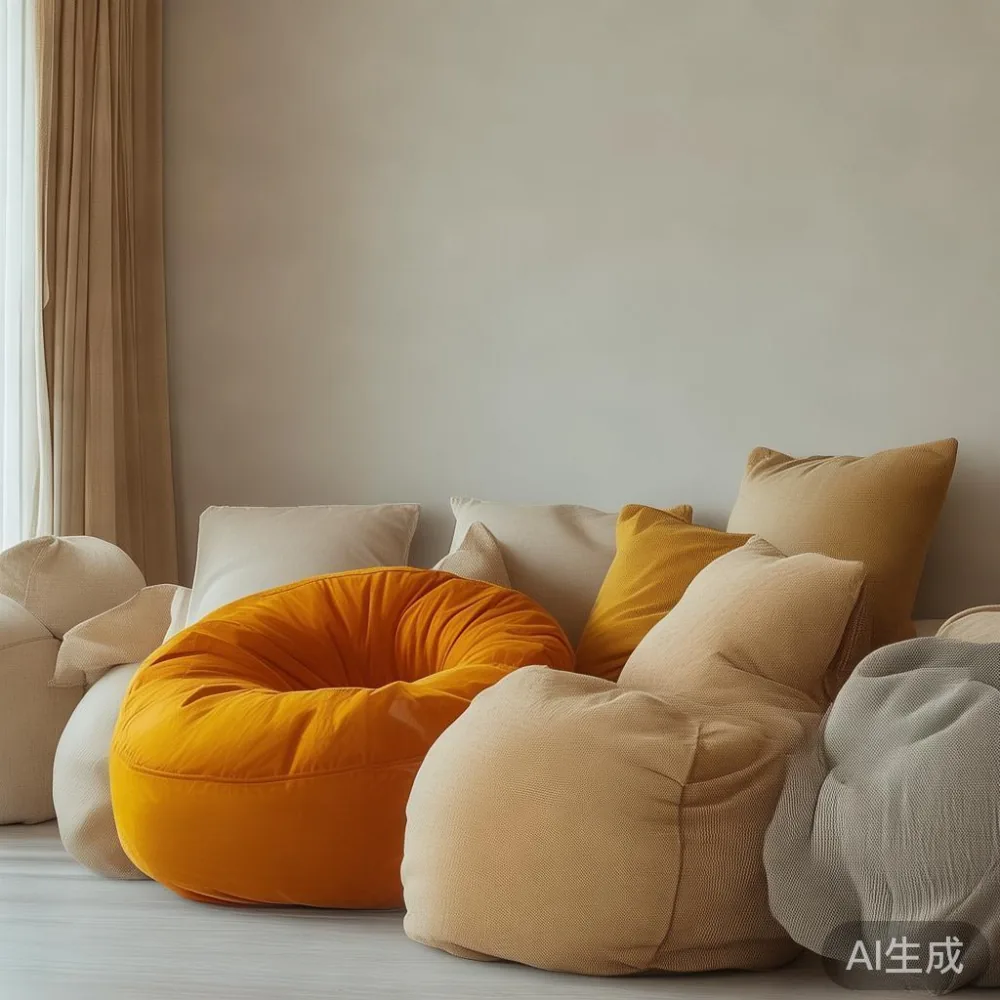
If you are choosing between two bean bags for that corner, pick the one with a removable, washable cover. Singapore's ambient damp means covers absorb more sweat than they would in a Beijing or Frankfurt living room. A zip-off cover that can go into a cold wash at 30°C is the practical choice for a Tampines family.
How wide is your lift lobby and why does it matter for a 2.4 m wardrobe?
Punggol Build-To-Order flats have a few standard lift dimensions that trip up first-time furniture buyers. A standard passenger lift car is about 1.1 m wide by 1.4 m deep with a door opening of roughly 0.9 m. A 2.4 m wardrobe laid flat will not fit diagonally — the diagonal of a 0.6 m deep wardrobe is about 2.47 m, just over the available diagonal of 1.79 m. The wardrobe has to come in upright. Before you pay a S$180 delivery fee, measure your lift car, your corridor, and the turn at your front door.
Common corridor widths in HDB blocks run 1.2–1.5 m, which is fine for a 2.4 m wardrobe but tight for a 2.8 m dining table carried flat. Most Tampines four-room corridors turn 90 degrees at the lift lobby, so the table will need to stand on its long edge at the corner. A solid wood dining table from a workshop like MIDHILL usually ships in two halves with metal connector plates, which solves the lift problem entirely — measure the maximum single-piece dimension on the spec sheet, not the assembled size.
A quick checklist for the delivery day:
- Lift car interior: __ cm wide × __ cm deep.
- Lift door opening: __ cm wide.
- Front door frame: __ cm wide × __ cm tall.
- Any 90-degree turn within 3 m of the front door?
If any single number is below the largest single piece on the box label, ask the supplier to split the piece. A reputable seller will do this at no extra cost; a corner shop will charge you a S$60 re-cutting fee on the spot.
Will my marble table and bed frame survive a year without warping?
Marble is dimensionally stable in humidity terms, but the wood sub-frame under it is not. Most marble table tops on the Singapore market are 15–18 mm thick and sit on a plywood or solid wood base. If the base is plywood, expect edge swelling within 12 months at 75%+ RH. If the base is solid oak or ash with a moisture content of 10–12%, the marble will outlast three flat owners.
Bed frames with slatted bases need airflow under the mattress. A platform bed with a sealed MDF base traps moisture between the mattress and the wood — a recipe for mould in a Tampines bedroom. A slatted solid wood base, even one with slats only 5 cm apart, lets the mattress breathe and keeps the room-side humidity from pooling underneath. The same logic applies to a wardrobe with a sealed back panel: solid wood back panels with breathing gaps age better than MDF backs wrapped in foil.
What about GST, delivery, warranty and the bits nobody puts on the price tag?
From 1 January 2024, GST in Singapore is 9%, and it applies to imported furniture at the point of customs clearance. A solid wood dining table landed at S$2,000 before GST becomes S$2,180 after GST, and that is the price you should see on the invoice. Free shipping over US$350 in the supplier's home currency clears the S$480 mark easily for a single dining table, so most pieces from MIDHILL qualify for free shipping into a Punggol or Bedok address. Their 10-year structural warranty covers joinery failure and major cracking; lifetime refinishing is offered at cost plus freight, which keeps a 15-year-old oak table looking fresh.
For returns, the standard 14-day window applies once the piece is delivered. Photograph the box on arrival and keep the foam wrapping until you have lived with the furniture for a fortnight — a piece that cups in week two usually shows it inside 14 days, and you want the packaging intact for a smooth collection. After that, even a S$2,500 solid wood sofa from Foshan is yours for keeps.
If you are comparing suppliers, weigh four figures before you commit: the moisture content at delivery (10–12%), the single-piece maximum dimension vs. your lift car, the warranty length in years on structural joinery, and the GST-inclusive landed price in SGD. A piece that looks 30% cheaper at the sticker often loses that advantage once add-on delivery, GST, and a five-year warranty are priced in.
Which styles travel well to a Bedok five-room or a Punggol BTO?
Three styling directions sit comfortably on a HDB floor plan. Post-modern light luxury pairs clean lines with one statement marble table and works well in a 90 sqm flat. French light luxury tends toward warmer tones and curved legs, which read softer against the cooler whites of a BTO kitchen. American light luxury leans into the solid wood sofa and chunkier nightstands that absorb sound in a flat with bare walls. Across all three, a Mid-century modern for guest room set — slim oak frames, tapered legs, low profile — fits naturally into a 12 sqm spare room with a single bed and a bean bag in the corner.
If you are scanning for inspiration, two search phrases will steer you quickly: top 10 Post-modern furniture lists the silhouette-led marble and ash pieces that dominate the 2025 contract market; top 10 French furniture skews toward curved cabriole legs and warmer oak stains. Both lists make good shopping shortcuts when you are shortlisting a dining table or a nightstand set. Then there is the way you arrange that American sofa once it lands — a quick search on how to style American sofa in room brings up three or four practical layouts (L-shape facing the window, two-seater plus accent chair, three-seater with a side bean bag) that genuinely suit a 4 m living room wall.
For a hospitality setting — a small boutique hotel in Tanjong Pagar or a guesthouse in Tiong Bahru — the brief often asks for European light luxury for hotel configurations: a 1.8 m headboard, two nightstands, a desk, and a reading chair. The same planning logic applies to a HDB spare room if you occasionally host relatives. The keyword Modern for guest room covers the sleeker, lower-profile equivalents that share floor space with a twin bed and a bean bag without crowding a 10 sqm footprint.
One last practical note before you place an order. Get the supplier's WeChat or phone line in writing — the MIDHILL team can be reached at +86 188 2788 2512 for a quote, and a five-minute conversation about moisture content and lift dimensions is usually enough to know whether a piece will be a problem in your specific corridor. Ask for a factory photo of your exact order before it ships; a 15-second video of the workshop stamping the moisture content onto the packaging prevents 90% of the disputes I have seen over the last decade. And keep that data logger on the coffee table for the first month — it is the cheapest insurance you will ever buy against a piece that does not suit the air in your flat.