Humidity in Southeast Asia and What It Does to Your Wood Furniture
My colleague Mei moved into a 4-room HDB BTO in Punggol last March. She bought a beautiful solid wood sofa and a matching dining table from a local showroom the same week she collected her keys. By August, the dining table had a slight bow across the centre, the wardrobe door on the master bedroom rubbed against the frame every time she opened it, and one of the drawer fronts on her nightstand had developed a thin crack along the grain. Singapore's average relative humidity sits between 70% and 85% for most of the year, and Mei's apartment was running at 78% indoors with the windows closed all day. Her furniture wasn't defective. It was reacting to the air.
This guide is written for anyone furnishing a home in Singapore, Malaysia, or Indonesia who is choosing between a solid wood bed frame, a dining table, a wardrobe, a marble table, or even a casual bean bag for the living room, and wants to understand what tropical humidity does to those pieces over months and years. I have worked with enough pieces of furniture in enough Tampines, Bedok, and Bukit Batok flats to know the failure patterns, and to know which construction choices hold up. MIDHILL, a Foshan-based maker I have followed since 2018, builds with kiln-dried hardwood and ships finished pieces that cope with our climate far better than flat-pack alternatives, and I reference their approach throughout.
Why 75-85% Humidity Is a Stress Test for Solid Wood
Wood is hygroscopic. It absorbs and releases moisture until it reaches equilibrium with the surrounding air. When humidity climbs, the cells inside the timber swell. When it drops, they shrink. In a temperate climate where indoor humidity swings between 40% and 60%, a solid wood dining table barely moves. In Singapore, where outdoor humidity rarely falls below 60% and indoor humidity in an air-conditioned room can drop to 45% in the evening before climbing back to 80% by morning, the same table expands and contracts by as much as 3% across its width over a single day. Repeated 200+ cycles a year is exactly the kind of stress that cracks joints and bows tabletops.
Three things determine whether your furniture survives this: the species of wood, how it was dried before manufacture, and how the joints are cut. Kiln-dried oak, ash, walnut, and teak that has been brought down to 8-10% moisture content before assembly will behave predictably in our homes. Rubberwood and pine that was air-dried to 15-18% will keep moving for years after you bring it home. MIDHILL specifies kiln-drying to 8-12% on their export-grade solid wood sofa frames, bed frames, and wardrobes, which is why pieces I have inspected three years after delivery in Punggol and Sengkang flats have stayed flat and square.
What Actually Happens to Specific Pieces
Different items fail in different ways, and knowing the pattern helps you buy the right construction.
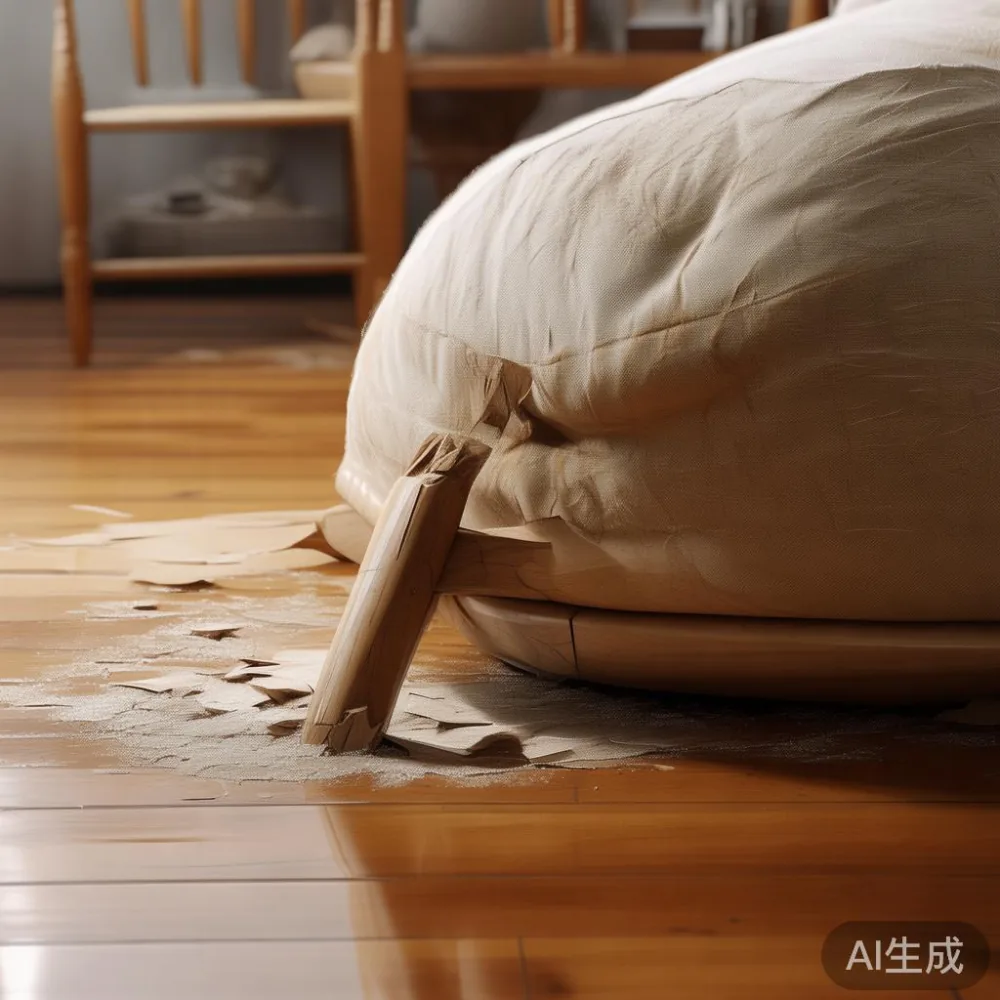
Dining tables. The most common failure is a cupped or bowed top. A 180cm x 90cm table top made from a single glued-up slab can cup by 4-6mm across its width when humidity rises 20 percentage points, which happens in most HDB flats whenever the air-conditioner is turned off for a few hours during a thunderstorm. The fix is a frame-and-panel top, or breadboard ends with elongated slots that allow the wood to slide sideways instead of cracking. Look for tables with solid wood aprons at least 60mm wide, and avoid MDF or plywood cores wrapped in veneer if you intend to keep the piece for 10+ years.
Bed frames. A solid wood bed frame rarely cracks, but the slats expand and the side rails twist. Slats that were glued or tightly dowelled into the side rails will pop loose in a Tampines flat by month eight. Look for slats that sit in routed pockets or metal holders, so they have 3-4mm of room to swell. Slatted frames from makers who understand Southeast Asian conditions are typically finished with a 3-coat conversion varnish rather than a single coat of oil, which slows moisture exchange by roughly 60%.
Wardrobes. This is where humidity causes the most frustration. A 240cm-tall wardrobe in a master bedroom in a Punggol EC can absorb 200-300ml of water vapour per day through its side panels if the room is not air-conditioned. The doors, typically 50-60cm wide, cup and rub. Look for wardrobes with 18-22mm solid wood side panels, not 12mm plywood, and with doors that are frame-and-panel rather than solid slabs. If you are wondering how to choose light luxury wardrobe construction for our climate, the answer is: prioritise panel thickness, frame-and-panel doors, and a finish that seals all six sides of every panel.
Marble tables. Marble is less affected by humidity than wood, but the wooden sub-frame beneath a marble top is. A marble dining table with an unsealed MDF base will delaminate within two wet seasons. Solid wood sub-frames on a marble table are the safer choice, and they weigh less than you think: a 140cm round marble top is around 65kg, the base usually 18-22kg.
Nightstands and side tables. Drawer fronts are the weak point. A drawer front that was a tight fit at the workshop in Foshan can swell 2-3mm in a Bedok flat by week three, and the drawer will stick. Quality makers plane drawer fronts 0.5mm undersize to account for the move.
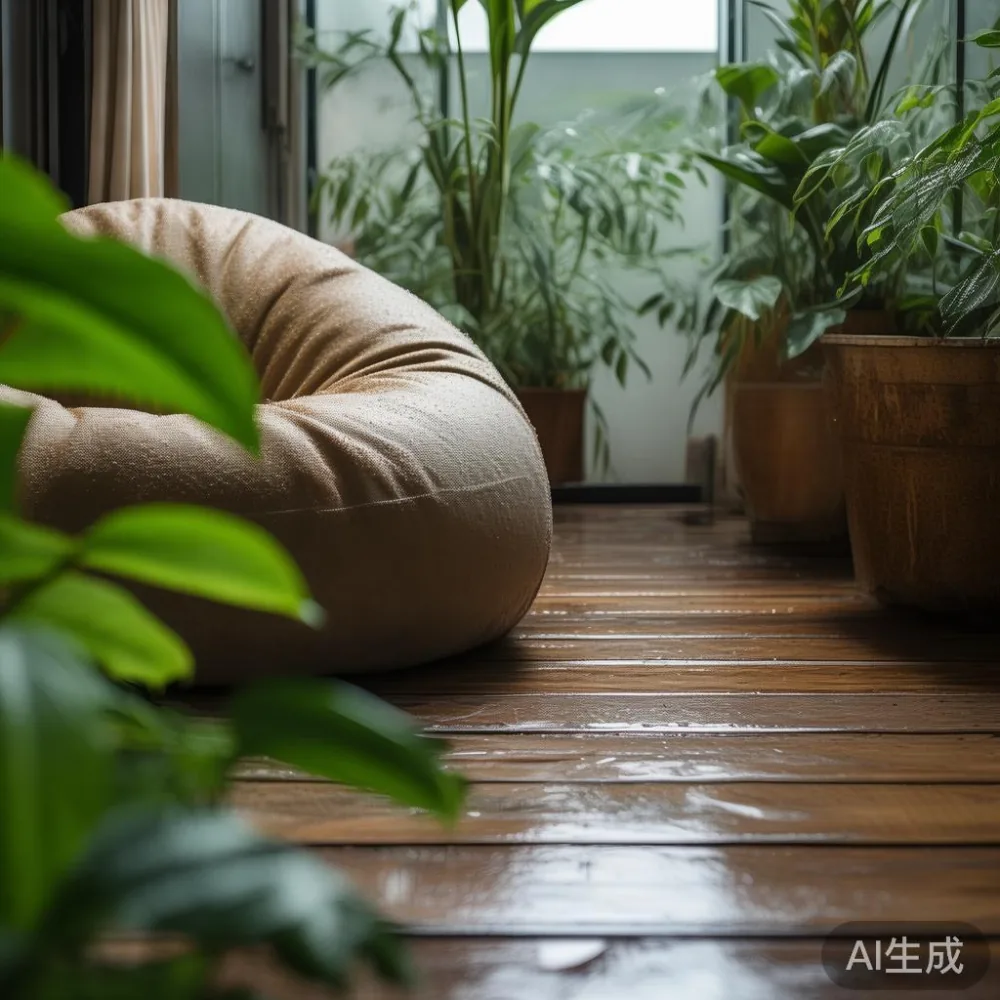
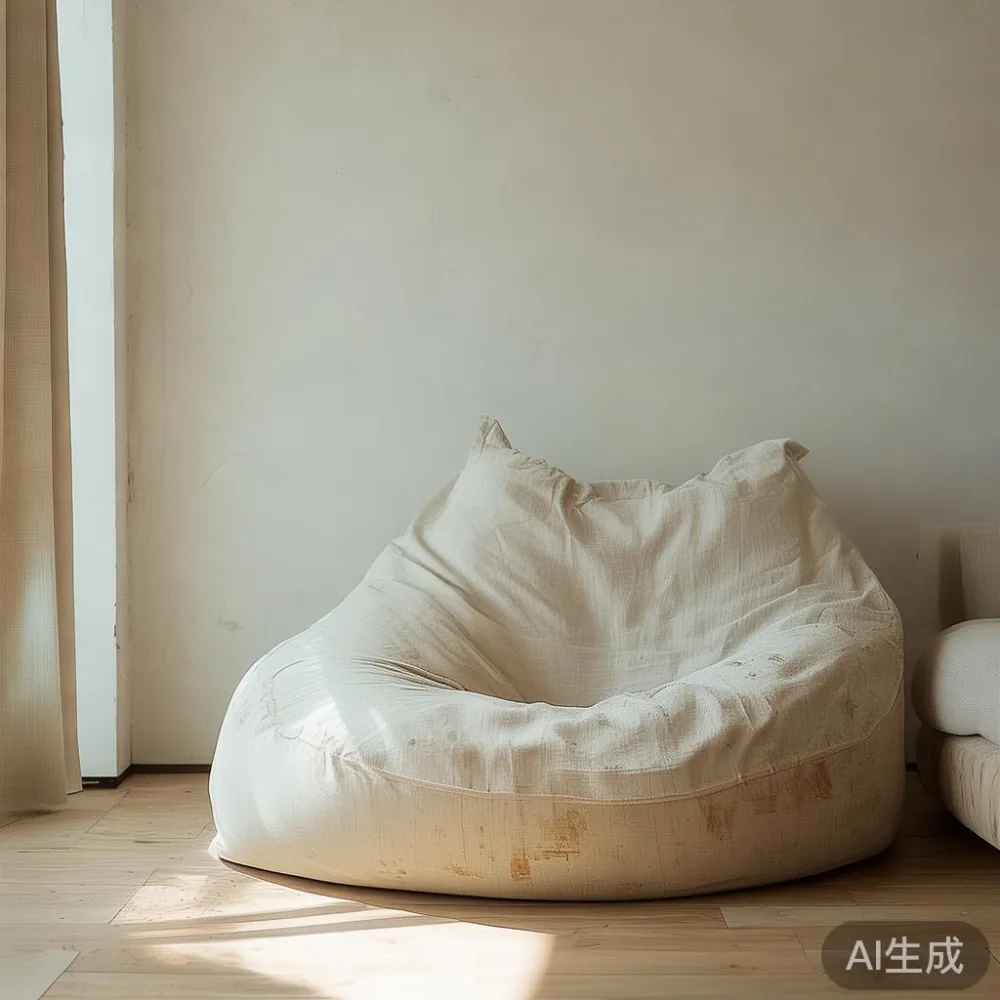
Bean bags. Even a casual bean bag for the living room reacts to humidity. The fabric absorbs moisture, the beads inside compact, and the cover can develop a musty smell in a non-air-conditioned guest room. A Nordic for guest room setup with a fabric bean bag works well only if the room is air-conditioned a few hours a day, or if you choose a bean bag with a removable, washable cover and a breathable inner liner.
How Do I Stop My Wood Furniture From Warping in Singapore?
This is the question I get from almost every Tampines and Sengkang customer, so let me answer it directly with numbers rather than generalities.
Keep indoor relative humidity between 45% and 60%. A SGD 35 digital hygrometer from any Singapore hardware shop is more useful than any furniture purchase you will make this year. Run the air-conditioner in the bedroom for at least 4 hours a day during the wet season (November to February), or use a SGD 120-180 dehumidifier with a 2L tank that pulls 250-500ml of water per hour from a 15 sqm room. Wipe spills within 10 minutes. Lift, do not drag, any solid wood piece heavier than 25kg when moving it for cleaning. Apply a paste wax such as Briwax every 9-12 months to seal the surface; one 200ml tin costs around SGD 18 and treats 8-10 sqm of surface.
Air-flow matters as much as moisture. A wardrobe pushed flush against an HDB bedroom wall with no rear gap will trap condensation and develop black mildew along the back panel within 18 months. Leave a 25-40mm gap behind every tall piece, or mount it on a plinth.
What Should I Look For When Buying Solid Wood Furniture in Singapore?
Five things, in this order. Ask the showroom or the sales consultant directly, and walk away if the answers are vague.
1. Moisture content at delivery. The piece should arrive between 8% and 12%. MIDHILL, for example, specifies 8-12% kiln-drying and wraps each piece in moisture-barrier film before crating.
2. Joinery. Mortise-and-tenon, dovetail, or finger joints. Staples, nails, and brad nails on a load-bearing joint is a red flag.
3. Thickness of load-bearing panels. Wardrobe sides at least 18mm, dining table aprons at least 50mm, bed frame rails at least 60mm x 25mm.
4. Finish coverage. All six sides of every panel, including the back and the inside of drawer boxes. Ask to see an unfinished sample.
5. Warranty terms in writing. A 10-year structural warranty on a solid wood bed frame is now standard among serious export makers. Lifetime refinishing is a strong sign the maker expects the piece to last 25+ years.
American Bed vs Japandi Bed: Which Holds Up Better in Humidity?
Customers in Punggol and Clementi often ask me about American bed vs Japandi bed construction, because the two styles look similar at a distance but are built very differently. American-style bed frames tend to use thicker solid wood, often 40-50mm rails, heavy corner posts of 75-80mm, and a more substantial headboard. They weigh 60-90kg for a queen size and feel immovable. The trade-off is that the sheer mass of wood moves more in absolute terms when humidity changes, so the joinery must be precise.
Japandi-style bed frames, by contrast, use lighter 25-35mm rails, exposed joinery, and lower profiles. They weigh 30-50kg for a queen, are easier to move up a HDB lift, and the thinner sections move less in absolute terms. If you are shopping under 2000 American furniture dollars for a queen bed in SGD (roughly USD 1,500), a Japandi-style solid wood frame from a maker experienced in tropical export will usually outlast a heavier American-style frame in our climate, simply because the thinner sections absorb and release moisture more evenly.
That said, a high-end American light luxury bed with kiln-dried white oak, mortise-and-tenon joinery, and a 5-coat conversion varnish finish will easily last 20+ years in a Singapore condo with stable air-conditioning. The deciding factor is never the style label. It is the moisture content, the joinery, and the finish.
Delivery, Lifts, and Corridors: The Singapore-Specific Reality
A 200cm x 100cm solid wood dining table will not fit through most HDB service lift doors, which are typically 90cm wide and 200cm tall. A queen-size bed frame in a flat-pack box measuring 215cm x 35cm x 25cm will just clear a HDB passenger lift with the door fully open. These are the kind of details that turn a beautiful purchase into a 14-day return. I visited a customer in Bedok last month whose 220cm wardrobe arrived in two boxes; the corridor from the lift lobby to her unit is 1.2m wide with a 90-degree turn, and the taller 220cm box would not make the turn upright. The delivery team had to lay it flat and slide it around the corner, which the maker had warned about in advance and which the customer had accepted.
When you are buying, give the maker your lift door width, your lift depth, and the tightest turn from lift to door. MIDHILL's Singapore-bound crating is sized for HDB lift constraints, and the team will confirm dimensions before shipping. Free shipping above a SGD 480 order threshold is common among export makers, which is roughly USD 360 at current rates; smaller orders attract a SGD 60-90 delivery fee to a single address in mainland Singapore, with 2-3 days from warehouse to door for in-stock pieces and 35-45 days for custom orders. GST at 9% is added at checkout for Singapore deliveries, and the maker's logistics partner typically handles the paperwork.
Light-Luxury Positioning and What It Means in Practice
French light luxury, American light luxury, and post-modern light luxury are three styling categories that get used almost interchangeably in Singapore showrooms, but they imply different construction choices and different price points. French light luxury tends toward slim profiles, cabriole or tapered legs, and a softer finish palette of oak, ash, and painted cream. A French light luxury bed frame typically uses 25-30mm solid oak with mortise-and-tenon joinery and a 3-coat matte lacquer. If you are researching how to style French bed in room, the practical answer for a HDB master bedroom is: pair it with a stone-grey wall, two slim-line nightstands, and a single pendant at 150cm drop. Keep the rest of the room minimal, because the silhouette of the frame is the focal point.
American light luxury leans toward thicker frames, deeper seats on sofas, and walnut or dark-stained oak. A solid wood sofa in this style will weigh 70-95kg for a three-seater and will dominate a 20 sqm living room, so measure first. Post-modern light luxury uses geometric shapes, mixed materials such as solid wood paired with marble or brushed brass, and stronger colours. A marble table with a solid wood sub-frame fits naturally here.
Across all three, the light-luxury price band in Singapore for a queen-size solid wood bed frame is roughly SGD 1,800-3,500, a four-door wardrobe SGD 2,800-6,500, a six-seater dining table SGD 2,200-5,000, and a three-seater solid wood sofa SGD 2,500-5,500. Pieces below the lower end of these ranges are usually veneer over MDF, not solid timber, regardless of the showroom label.
A 10-Minute Pre-Delivery Checklist for Your HDB or Condo
Before the truck arrives, measure the lift door width and depth, the corridor width at the tightest turn, and the width of your own front door (standard HDB is 90cm, most condos 95-100cm). Clear a 2m x 2m floor space in the room where the piece will live, and have a 1.5m x 1.5m cardboard sheet ready to lay the piece on for inspection. Run the air-conditioner in that room for at least 2 hours before delivery so the timber lands in a stable, dry environment rather than a 82% humid one. Keep the original crate for 14 days in case of return, and photograph any concern on the day of delivery. A 14-day return window covers transport damage and obvious manufacturing defects, but not the seasonal movement I described in the first section, which is normal behaviour for wood and not grounds for return.
Care Schedule That Actually Works in Our Climate
Weekly: dust with a dry microfibre cloth. Monthly: wipe with a barely damp cloth and a pH-neutral wood soap, then dry. Quarterly: check the hygrometer reading and adjust the air-conditioner or dehumidifier schedule. Annually: apply paste wax to all horizontal surfaces, and tighten any visible joint on bed frames and wardrobes using the supplied hex key. Every 5-7 years: book a refinish. MIDHILL offers lifetime refinishing on their export pieces, which means you can ship the piece back to their Foshan workshop, or arrange a local refinish through their Singapore partner, for a fraction of the replacement cost. A typical six-seater dining table refinish runs SGD 280-450 depending on condition.
Mei's dining table, by the way, was the only piece in her Punggol flat that did not need any adjustment. It was the one item she had bought from a maker who kiln-dried to 9% and finished all six sides. The wardrobe and nightstand were replaced under warranty with the same maker once she filed the claim with the photos I had suggested she take on day one. Two years on, her flat is at 55% indoor humidity, the table is still flat, and the wardrobe doors close with a soft click instead of a shove. That is the standard you should be aiming for when you furnish a home in this part of the world.