How to Choose the Right Bean Bag Size for a Singapore HDB Living Room
Choosing a bean bag for a Singapore HDB flat or condo is mostly a matter of dimensions. The living room may look generous in a property listing, yet the usable area can be constrained by a dining table, television console, balcony door and the path from the lift lobby to the main entrance. A correctly sized bean bag becomes a comfortable extra seat without blocking circulation; an oversized one can make a compact room feel crowded.
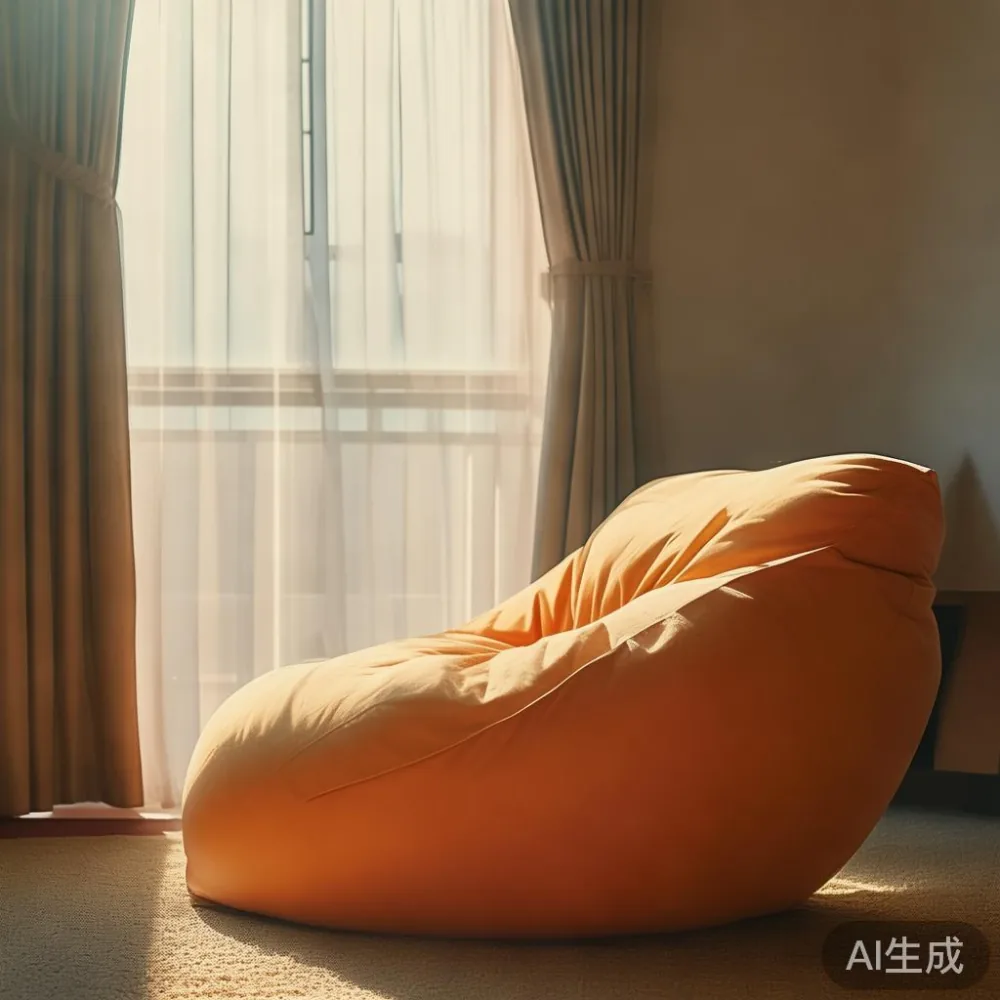
This guide uses practical measurements for Tampines, Bedok and Punggol homes, including lift, corridor and doorway considerations. It also explains how solid wood furniture can frame a bean bag without making the room feel overloaded. Prices are shown in SGD, delivery estimates are stated in days, and GST is treated as a separate 9% charge where applicable.
What size bean bag should fit my Singapore living room?
For most HDB three-room living rooms, start with a bean bag measuring 80 × 80 × 70 cm. It offers a comfortable seated position for one adult while leaving a practical 60 cm-wide walking route beside it. In a compact two-room flat, a 70 × 70 × 65 cm bean bag is often easier to manage. If your living room has a clear floor area of at least 2.4 m × 2.2 m, a 90 × 90 × 75 cm model may work, provided it does not cover the sliding-door track or balcony access.
Measure the actual room rather than relying on advertised floor area. HDB layouts can place the dining area immediately beside the sofa, while some newer BTO and Punggol units include wider windows but fixed television walls. The bean bag should occupy one defined zone, not float between the entrance and balcony. Leave at least 90 cm in front of the television, 45 cm beside the unit and 75 cm along the main route from the front door.
As a simple rule, allot roughly 1.5 m² of floor space to an 80 cm bean bag, including its pull-out zone. For a 90 cm unit, plan for about 2.0 m². Use painter's tape to mark the footprint before ordering. This takes about 10 minutes and is more reliable than judging by eye.
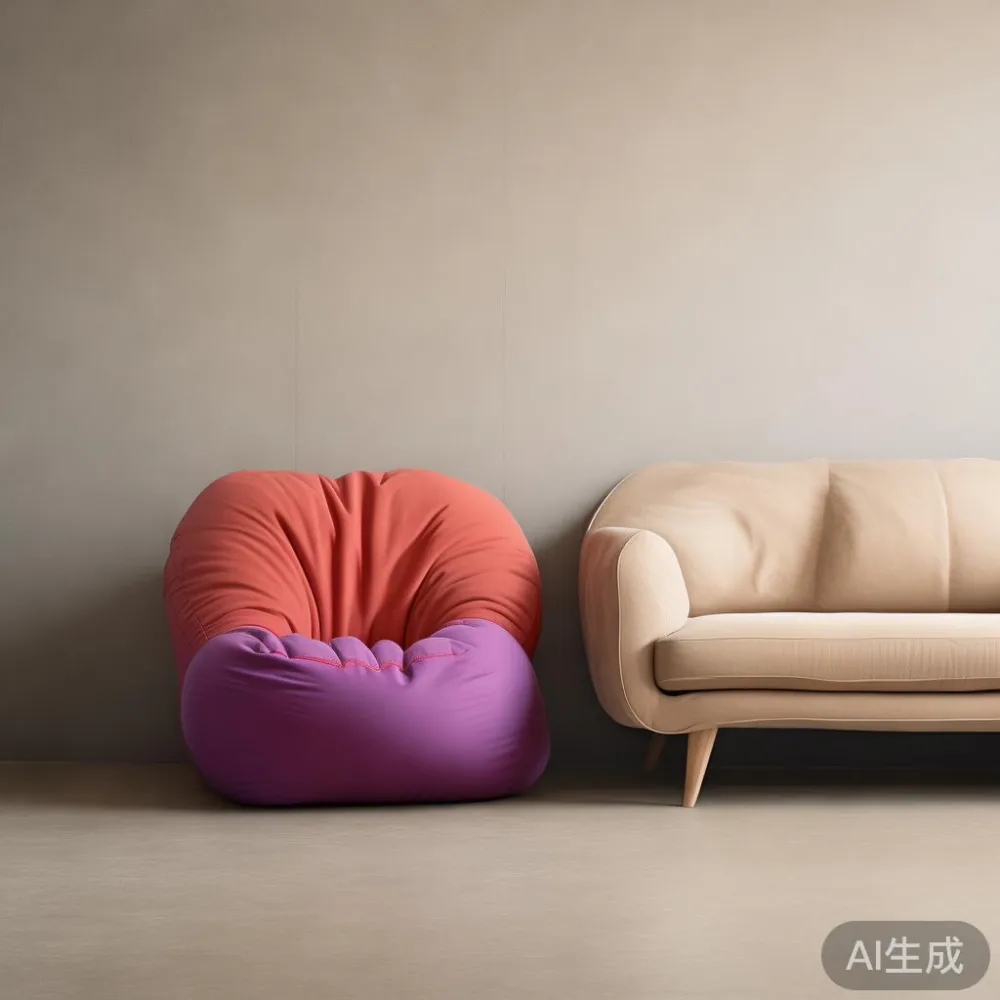
How do I measure lift, corridor and doorway access?
Measure the lift car at its narrowest point, not only the opening. A standard HDB lift may offer an internal width of approximately 110 cm and a depth of 140 cm, although refurbished buildings vary. The lift door can measure about 90 cm. If the packed bean bag is wider than 90 cm, it may need to stand on edge, which should be checked with the building management office.
Corridor widths in many HDB blocks are around 120–150 cm, with turns near the letterbox area sometimes tighter. Keep the packed package below 1.2 m in its longest rigid dimension. A collapsible bean bag can fit through a 75–80 cm doorway more easily than a rigid chair, but its carrying bag must still clear the corridor and the front-door security gate.
Do not schedule delivery until you know the lift booking rules. Some blocks allow a 15-minute service slot, while others require the mover to use a service lift at specified hours. In Punggol, where some walk-up blocks have a short path from the lift lobby, the main difficulty may be a 90 cm apartment door rather than the corridor. In Bedok and Tampines, older blocks can have longer corridors and more corners. Measure all three: door, corridor turn and lift.
Allow 7–14 days for standard islandwide delivery after the item is ready. A scheduled service lift can reduce the delivery process to 30–60 minutes. If your building charges a lift booking fee or parking deposit, ask the carrier in advance. MIDHILL can quote the packed dimensions before collection so that access can be planned without guesswork.
Which bean bag size suits adults, children and guests?
An 80 × 80 × 70 cm bean bag generally suits one adult aged 16 and above. Once filled, its usable width may be about 75–85 cm depending on the shell and filling. A 100 × 100 × 80 cm model can accommodate one adult comfortably or two smaller people, but it needs a wider room and can obstruct a main passage.
For children aged 5–12, a 70 × 70 × 60 cm bean bag is easier to manage because the child can rise without pushing the bag far backward. Children under 5 should not climb over a tall bean bag, and loose filling should be inaccessible. Buy a model with a concealed zip, stitched seams and a removable washable cover. Avoid placing a bean bag beside an open stairwell or as a substitute for a supervised child's seat.
A 90 cm unit is sensible if guests regularly visit. It can be moved from the living room to a balcony or study, but check whether the balcony threshold is high. A 5 cm step can make the bag less stable when someone stands up. For a condo with a larger lounge, a 100–110 cm bean bag may suit an open-plan area of at least 8–10 m². The limiting factor is circulation, not the bean bag's label.
Do not judge capacity by the number of beans. A 70 cm bag packed tightly may feel harder than an 80 cm bag with a controlled filling. The important measurements are seat width, back height and firmness. If you intend to recline, choose at least 75 cm in height; if you mostly sit upright, 60–65 cm is more space-efficient.
How should a bean bag work with my other furniture?
A bean bag is flexible, but it still needs a visual and physical framework. In a typical HDB living room, set it opposite the television rather than directly in the main doorway. A 160–180 cm solid wood sofa remains a practical anchor, while the bean bag adds a movable perch for a reader or guest. Keep approximately 40–50 cm between the bean bag and sofa if both face the television; a 60 cm gap is better if people need to walk behind it.
Think about the full room before adding a large coffee table. A Mid-century modern coffee table can provide useful display space, but a 110–120 cm diameter table plus a large bean bag may make a 15–18 m² HDB lounge feel narrow. A slim 90 cm table or nesting table gives more freedom. A marble table has a refined presence and is easy to wipe, yet its weight can make moving furniture around difficult; place it before the bean bag arrives.
Some owners use a solid wood sofa as the main seating and a smaller bean bag near the balcony. If a separate sofa is not part of the plan, the bean bag can occupy a corner with a narrow solid wood nightstand or side table within reach. Avoid adding a solid wood sofa, marble table and oversized bean bag without checking the floor plan. Each piece should have a distinct purpose.
For bedroom planning, a bed frame usually takes priority over floor seating. In a compact HDB bedroom, a 90 cm single bed or 135 cm double bed may leave space for a slim 40 cm nightstand, but a 90 cm bean bag could restrict wardrobe access. This is the same principle used when comparing a European bed vs Modern bed for HDB bedrooms: storage, door clearance and daily movement matter more than a style label.
What is the difference between light-luxury and casual bean bag styling?
Light-luxury styling works when the bean bag looks intentionally designed rather than like temporary floor furniture. Choose a woven or finely textured cover in oatmeal, warm grey, muted olive or dusty blue. Add one solid wood element, such as a narrow console or a solid wood sofa with straight arms. The French light luxury mood is restrained: cream walls, warm timber, understated metal details and no more than 3–4 repeated colours.
American light luxury tends to be more relaxed, using deep neutrals, wider proportions and tactile upholstery. A bean bag suits this approach particularly well, especially in a condo living room. Post-modern light luxury can pair curved or geometric forms with clean-lined storage. In that case, a round marble table beside a square bean bag creates contrast, but it should occupy only 0.4–0.5 m².
Styling a light luxury sofa in apartment is straightforward when visual weight is balanced with floor space. Keep the sofa no more than 210 cm wide in a compact HDB lounge, add a 70–90 cm bean bag, and use a 3 cm or thinner rug beneath both if a rug is desired. The rug should not lift the bean bag unevenly or create a trip edge.
Texture helps more than decoration. One linen cushion, a 40 × 40 cm throw and a small tray are enough. A table lamp placed on a solid wood nightstand can soften the corner, but the lamp's cable should run behind furniture and never across the bean bag's position.
How should I compare bean bag shells, covers and fillings?
The shell should support the fill without sagging to the floor. Look for tightly stitched seams, double stitching around high-pressure areas and a base panel rated for regular movement. A removable cover is useful in Singapore's humid climate. Choose a fabric that can be cleaned according to its care label, and check whether the cover is sold separately for replacement after 3–5 years of use.
Memory foam gives a softer, more shaped seat, while polystyrene beads allow the bag to settle into the user's posture. A mixed filling can balance both, but it should not feel excessively firm. A 70 cm bag may need 8–12 kg of loose filling; an 80 cm bag may need 12–16 kg; and a 100 cm bag may need 18–24 kg. The exact amount depends on the construction, so ask for the filled weight and firmness.
Check the packed size as well as the filled size. A vacuum-packed bean bag may compress to roughly 60 × 40 × 25 cm, while a foam-filled bag may arrive in a larger carton. The delivery weight matters for a service lift and for the building's corridor. A practical target is no more than 20 kg for one person to carry comfortably, although larger models can require two people.
For durability, look for a 3–5 year cover replacement option and a shell warranty of at least 2 years. MIDHILL's wider furniture assurance includes a 10-year structural warranty on eligible solid wood pieces and lifetime refinishing support, while the bean bag's own cover and fill terms should be confirmed separately.
What will the bean bag and delivery cost in SGD?
Budget about SGD 180–260 for a 70 cm bean bag with a washable cover, SGD 260–380 for an 80 cm model and SGD 380–520 for a 90–100 cm model with enhanced fabric or mixed filling. These are planning ranges rather than fixed quotations. A customized cover can add SGD 25–70, and a replacement inner liner may add SGD 60–110.
Add 9% GST if the displayed selling price does not already include it. A GST-inclusive 80 cm bean bag at SGD 320 would contain about SGD 26.42 in GST. For comparison, a carefully chosen solid wood side table may cost SGD 220–450 before GST, while a marble table may cost SGD 450–900 depending on the base and dimensions.
Delivery to a Singapore address commonly takes 7–14 days after dispatch, with larger made-to-order furniture taking 4–8 weeks. Ask whether the quoted delivery fee includes the lift booking, doorstep placement and assembly. At MIDHILL, qualifying orders over US$350 qualify for free shipping as stated in the brand's shipping policy, though the threshold is denominated in US dollars and is converted for checkout. For a local purchase below that threshold, request a separate SGD delivery quote rather than assuming the exact checkout treatment.
Returns are accepted within 14 days for eligible unused goods, subject to the stated return conditions. A filled bean bag that has been sat on is generally not resaleable, especially with a hygiene-sensitive cover. Confirm the return policy in writing before confirming delivery.
How can I test the size before buying?
Last month I visited a colleague in Tampines with a living room measuring about 4.6 m × 3.4 m. We marked an 80 × 80 cm square with tape and placed two 45 cm cushions on it. That simple test showed that an 80 cm bean bag would fit, but a 100 cm model would have pinched the 60 cm route to the balcony. We also checked the lift: the usable car was 110 cm wide and 140 cm deep, while the apartment door was 82 cm. A packed bag with a 70 × 40 × 25 cm carton passed both points of the route.
This kind of floor marking takes less than 15 minutes. Mark three candidate sizes, then walk through them. Sit in the position, stand up, and check the route from the sofa to the dining table and from the entrance to the balcony. Take a photograph so the dimensions remain visible when measuring later.
Online shoppers can also use the room's longest clear dimension. For an 80 cm bean bag, reserve a 90 cm square including clearance. For a 100 cm unit, reserve a 115 cm square. Add 5 cm if a narrow side table must sit next to it. This method avoids the common mistake of ordering by bean bag capacity rather than actual floor space.
Which bean bag size is right for HDB and condo homes?
For most HDB living rooms in Tampines, Bedok and Punggol, an 80 × 80 × 70 cm bean bag is the balanced starting point. It fits one adult, moves through most lift and doorway combinations and leaves room for a dining table and television console. A 70 cm model suits tighter rooms, children or occasional use. Choose 90–100 cm only when the measured lounge has at least 2.0 m² of clear area and the access route remains at least 60 cm wide.
Check the item's packed dimensions against your lift door, corridor turn and home entrance before ordering. Allow 7–14 days for standard delivery, confirm the service-lift requirements, and keep 9% GST in the final budget. The right bean bag should invite relaxation while preserving the practical circulation that Singapore apartments require every day.